La batería de iones de litio es la principal batería recargable comercial de nuestra época, alimentando desde teléfonos y portátiles hasta vehículos eléctricos y almacenamiento de red. Así que ¿Qué es una batería de iones de litio y cómo funciona realmente? La respuesta se reduce a un mecanismo elegante: los iones de litio viajando de un electrodo a otro — combinado con una densidad de energía que ninguna otra química convencional iguala. Como fabricante profesional de baterías de litio, UFOPOWER diseña y construye paquetes de litio basados precisamente en estos principios cada día.
¿Qué es una batería de iones de litio?
La batería recargable en sí no es una idea nueva: la primera química recargable, el ácido de plomo, fue inventada en 1859 y todavía arranca motores de combustión interna hoy en día. La investigación que respalda la batería de iones de litio moderna se publicó en la década de 1970, y la primera celda comercial de Li-ion llegó al mercado en 1991. En 2019, John B. Goodenough, M. Stanley Whittingham y Akira Yoshino recibieron el Premio Nobel de Química por sus contribuciones al desarrollo de esta tecnología.
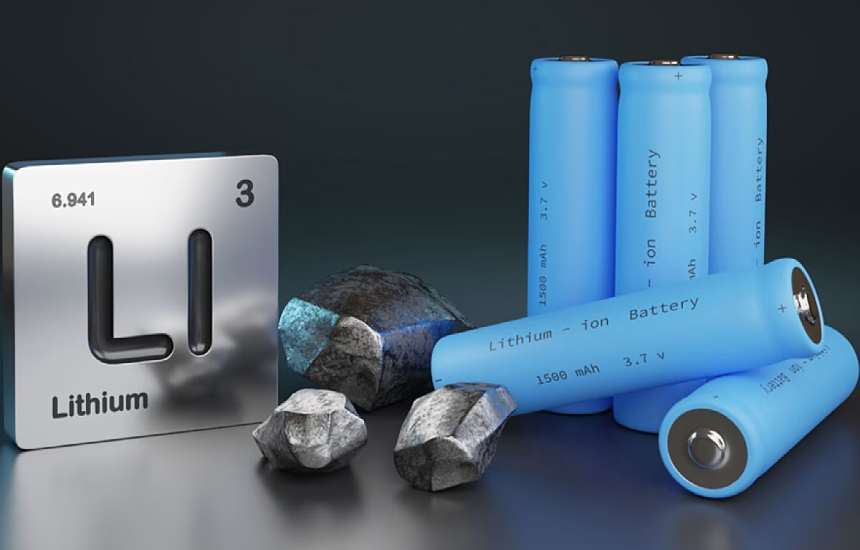
Hoy en día, la batería de iones de litio es la forma comercial predominante de batería recargable, ampliamente utilizada en electrónica portátil y transporte eléctrico. Parte de la razón es una simple física: el litio tiene el peso atómico y radio más pequeños de cualquier elemento, excepto el hidrógeno y el helio, lo que permite a las celdas de iones de litio alcanzar una muy alta tensión y almacenamiento de carga por unidad de masa y por unidad de volumen.
Cómo funciona una batería de iones de litio
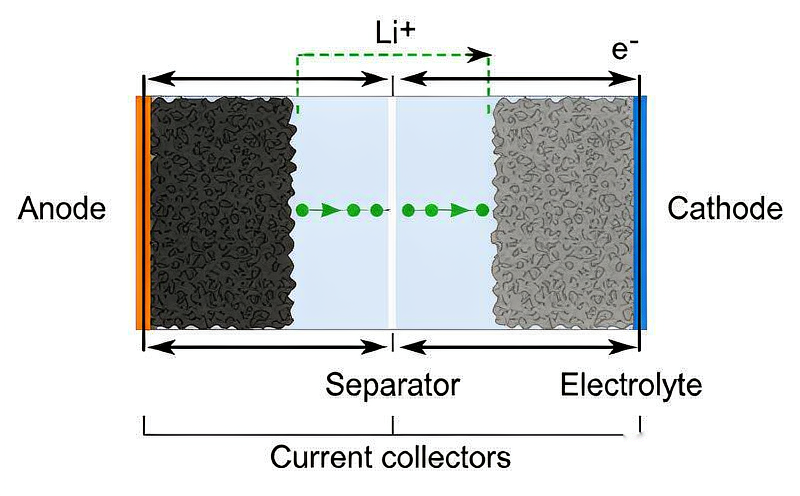
Durante un ciclo de descarga, los átomos de litio en el ánodo se ionizan y se separan de sus electrones. Los iones de litio viajan desde el ánodo, atraviesan el electrolito y cruzan una membrana semipermeable hasta llegar al cátodo, donde se recombinan con sus electrones y vuelven a ser eléctricamente neutros. La carga simplemente invierte este proceso, empujando los iones de vuelta al ánodo.
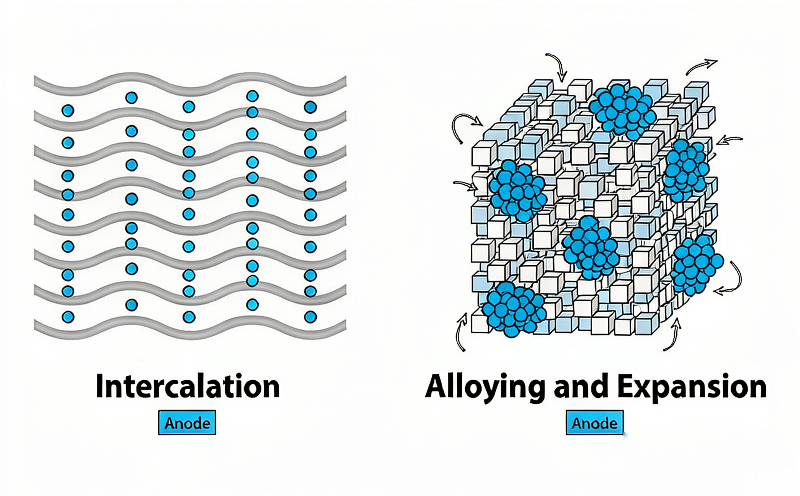
La forma en que el litio se mantiene dentro de un ánodo de grafito se llama intercalaciónLos iones se insertan físicamente entre las capas bidimensionales de grafeno que componen el grafito masivo. Dado que los iones son pequeños en comparación con la red de carbono estratificado, los ánodos de grafito no se deforman físicamente al cargarse o descargarse. Y como los enlaces carbono-carbono son mucho más fuertes que las débiles interacciones entre los iones de litio y el ánodo, la reacción de inserción es altamente reversible, lo que permite una larga vida útil del ciclo.
Li-Ion frente al Ácido de Plomo: por qué la química ganó
Comparar las baterías de iones de litio con las tecnologías de carga recargable de mayor calidad antiguas —nichel-cadmio, nicel-metal-hidruro y plomo-ácido— muestra por qué las baterías de iones de litio se han hecho predominantes. Los números a continuación provienen de investigaciones publicadas sobre baterías.
| Métrica | Ion de litio | Ácido de plomo (referencia) |
|---|
| Densidad energética | Hasta ~330 Wh/kg | ~75 Wh/kg |
| Voltaje de la celda | Hasta 3,6 V | Lower — la batería de Li-ion es 1,5–3× mayor |
| Autodescarga | ~1,5–2% al mes | Más alto |
| Mantenimiento | Comparativamente bajo; no se requiere ciclado programado | Requiere más mantenimiento |
| Efecto memoria | Ninguno | Presente en algunas químicas más antiguas |
| Metales tóxicos | Sin plomo ni cadmio | Contiene plomo |
Químicas del cátodo: LCO, LMO y LFP
Las baterías de iones de litio pueden utilizar una variedad de materiales diferentes como electrodos, y la elección del cátodo define el rendimiento de la celda. La combinación más común es óxido de litio-cobalto (LCO) como cátodo y grafito como ánodoutilizado en dispositivos portátiles comerciales como teléfonos y computadoras portátiles. Otros materiales de cátodo comunes incluyen óxido de litio-manganeso (utilizado en vehículos híbridos y eléctricos) y fosfato de litio-hierro. Las celdas de Li-ion suelen utilizar un electrolito orgánico basado en éter.
Ventajas clave de las baterías de iones de litio
Más alta densidad de energía en su clase. Hasta ~330 Wh/kg, frente a unos 75 Wh/kg para los ácidos de plomo — aproximadamente cuatro veces más energía para la misma masa.
Alta tensión de celda. Up to 3.6 V per cell, 1.5–3× the voltage of alternatives, which suits high-power applications like transportation.
Low maintenance. No scheduled cycling required to maintain battery life.
No memory effect. Repeated partial charge/discharge cycles will not make the battery "remember" a lower capacity.
Low self-discharge. Around 1.5–2% per month.
No toxic lead or cadmium.
The Limits: Where Li-Ion Still Falls Short
Li-ion's reach is enormous — it accounted for over 80% of the more than 190 gigawatt-hours of battery energy storage deployed globally through 2023. But a fully renewable grid demands far more than today's technology can deliver alone, and the gap is instructive for anyone specifying batteries.
Scale. More than 10 terawatt-hours of storage capacity would be needed — multiplying today's deployments by roughly 100, which stresses supply chains for rare materials such as lithium, nickel and cobalt.
Cost. Large-scale, long-duration storage needs costs well below $100/kWh — more than twice as cheap as today's state-of-the-art — plus more than 20 years of reliable service life.
Thermal and electrical management. Scaling conventional systems from kWh to MWh or GWh is a serious engineering challenge.
Duration. Storing 8 hours of national electricity implies terawatt-hours of batteries; seasonal storage implies petawatt-hours.
What Comes Next: Silicon, Lithium-Sulfur and 3D Electrodes
Battery research is pursuing several routes beyond conventional graphite anodes. Alloying anode materials such as silicon, germanium and antimony react with lithium ions to form alloys, which can store more capacity than graphite's intercalation. The trade-off is volume change: alloying materials swell and shrink more during cycling, which can deform the electrode and cause performance loss or failure — which is why researchers introduce nanostructures to reduce the stress and strain.
| Anode approach | Mechanism | Trade-off |
|---|
| Graphite (standard) | Intercalation of Li ions between graphene layers | Highly reversible, minimal volume change; lower capacity |
| Silicon / germanium / antimony | Reacts with Li ions to form alloys | Greater capacity, but larger volume change risks electrode damage |
| Lithium metal / lithium-sulfur | Higher theoretical energy density using abundant sulfur | Dendrite growth and limited cycle life remain unsolved |
Lithium-sulfur is attractive because sulfur is abundant and light, so Li-S batteries could be cheaper and lighter than Li-ion with graphite anodes — but achieving high energy density together with long cycle life remains a grand challenge. Lithium-based devices also often fail when metallic dendrites grow on the anode like tree roots cracking a sidewalk, which is why diagnostics, 3D electrode architectures and advanced imaging techniques are all active research areas for predicting and preventing degradation.
Turning Battery Chemistry Into a Working Pack
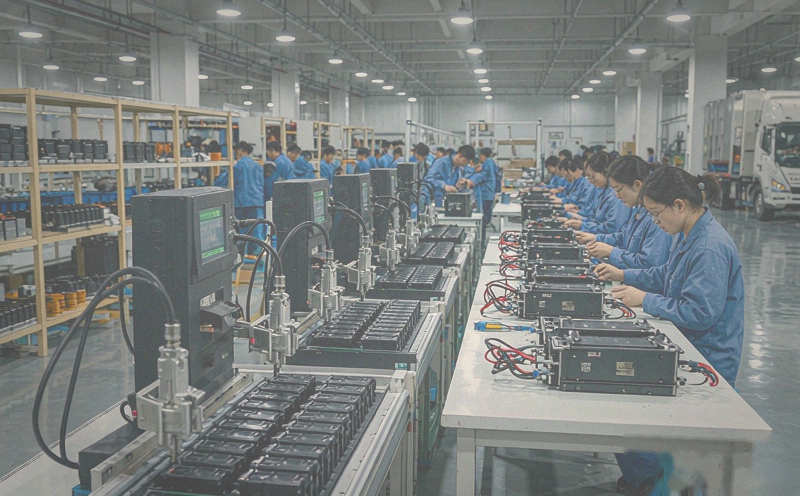
Understanding Li-ion chemistry is one thing; turning it into a pack that survives real-world cycling, temperature swings and vibration is another. As a professional lithium battery manufacturer, UFOPOWER takes the chemistry from the data sheet to the finished product: cell selection and matching, in-house pack assembly, integrated BMS configuration and 100% factory testing before shipment.
OEM / ODM and custom battery solutions — chemistry, voltage, capacity and pack geometry matched to your application
In-house production line and strict quality control across every build
Integrated BMS for safe charging, discharge protection and performance monitoring
Factory-direct service for brands, integrators and distributors
If your product needs a lithium battery designed around real load profiles — from power tools and AGVs to forklifts and energy storage — send us the specification and we will build it to spec.
© 2026 UFOPOWER. All rights reserved. | www.ufobattery.com Email: sales@ufo-battery.com Baterías UFOPOWER | Soluciones de baterías personalizadas


 EN
EN AR
AR DE
DE ES
ES FR
FR JP
JP KO
KO PT
PT RU
RU Inicio >
  30 de septiembre de 2026






 de WhatsApp