

 2026年9月30日
リチウムイオン電池は、私たちの時代における主要な市販の充電式電池であり、スマートフォンやラップトップから電気自動車、グリッド貯蔵システムまで、あらゆるものに電力を供給している。 リチウムイオン電池とは何か、そして実際にどのように動作するのか。 その答えは、二つの電極間を行き来するリチウムイオンの見事なメカニズムと、他の主流の化学反応に匹敵しないエネルギー密度に集約される。プロのリチウム電池メーカーとして、UFOPOWERは日々まさにこれらの原理に基づいてリチウムパックを設計・製造している。
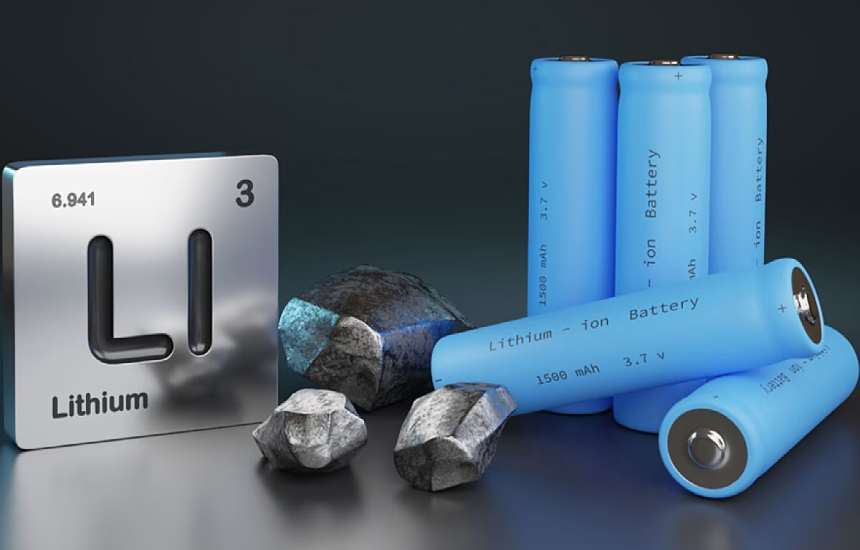
充電式バッテリー自体は新しいアイデアではありません:最初の充電式電池である鉛蓄電池は1859年に発明され、今日でも内燃機関を始動させています。現代のリチウムイオンバッテリーを支える研究は1970年代に発表され、最初の商用リチウムイオン電池は1991年に市場に登場しました。2019年には、ジョン・B・グッドイナフ、M・スタンレー・ウィッティングハム、そしてAkira Yoshinoが、この開発への貢献でノーベル化学賞を受賞しました。
今日、リチウムイオン電池は充電式電池の主流の商業形態であり、ポータブル電子機器や電気自動車に広く使用されている。その理由の一部は単純な物理法則による:リチウムは水素とヘリウムを除くすべての元素の中で最も原子量が小さく、原子半径も小さいため、リチウムイオン電池は非常に高い 単位質量および単位体積あたりの電圧と電荷蓄積.
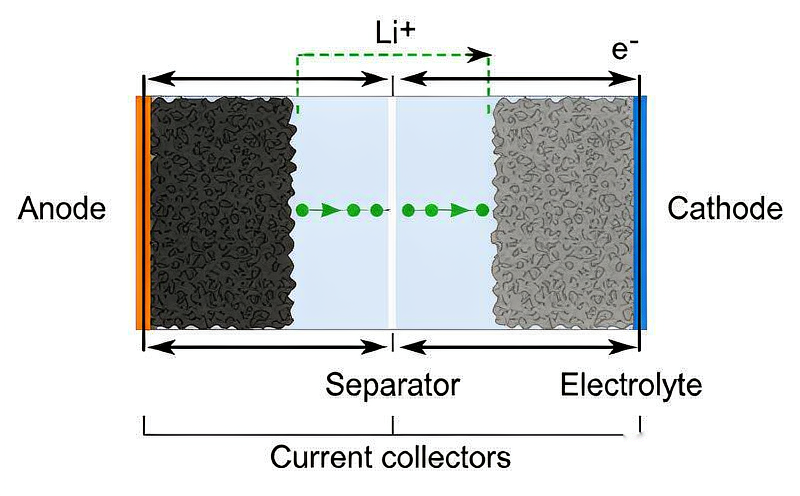
放電サイクル中、アノードのリチウム原子はイオン化され、電子から分離します。リチウムイオンはアノードから出発し、電解質を通過して微細透過性セパレーターを越え、カソードに到達します。そこで電子と再結合し、再び電気的に中性になります。充電はこのプロセスを逆にしただけのことで、イオンをアノードに戻します。
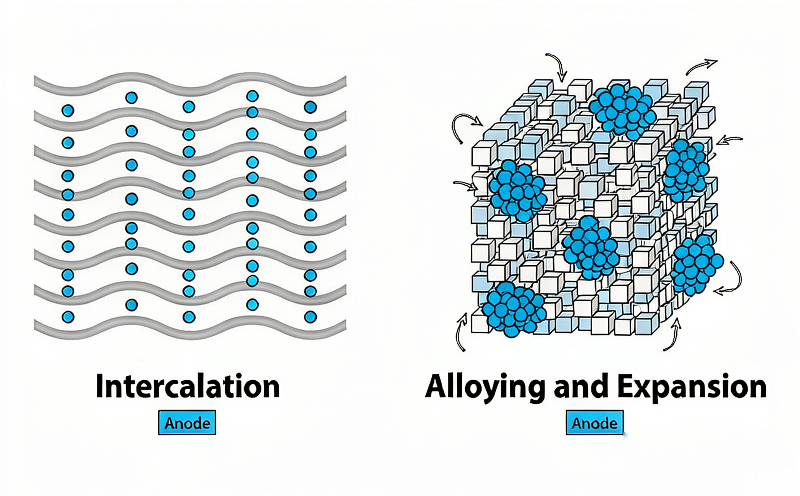
グラファイトアノード内部でリチウムが保持される方法は、 挿入グラフェンの2次元層の間、つまり塊状のグラファイトを構成する層の間にイオンが物理的に挿入される。イオンは層状の炭素格子に比べて小さいため、グラファイトアノードは充放電によって物理的に変形しない。また、炭素-炭素結合はリチウムイオンとアノードの間の弱い相互作用よりもはるかに強いため、挿入反応は非常に可逆的であり、これが長いサイクル寿命を可能にしている。
リチウムイオン電池を古い高品質の充電式技術、ニッケルカドミウム、ニッケル水素、鉛蓄電池と比較すると、リチウムイオンが取って代わった理由がわかります。以下の数字は公開されたバッテリー研究からのものです。
| メトリック | リチウムイオン | 鉛蓄電池(基準) |
|---|---|---|
| エネルギー密度 | 最大330Wh/kg | ~75 Wh/kg |
| Cell voltage | Up to 3.6 V | Lower — Li-ion is 1.5–3× higher |
| じこほうでん | ~1.5–2% per month | より高い |
| メンテナンス | Comparatively low; no scheduled cycling needed | Requires more upkeep |
| Memory effect | None | Present in some older chemistries |
| Toxic metals | No lead or cadmium | Contains lead |
Li-ion batteries can use a number of different materials as electrodes, and the cathode choice defines how the cell performs. The most common combination is lithium cobalt oxide (LCO) as the cathode with graphite as the anode, used in commercial portable devices such as phones and laptops. Other common cathode materials include lithium manganese oxide (used in hybrid-electric and electric automobiles) and lithium iron phosphate. Li-ion cells typically use an ether-based organic electrolyte.
Highest energy density in class. Up to ~330 Wh/kg, versus roughly 75 Wh/kg for lead-acid — about four times the energy for the same mass.
High cell voltage. Up to 3.6 V per cell, 1.5–3× the voltage of alternatives, which suits high-power applications like transportation.
Low maintenance. No scheduled cycling required to maintain battery life.
No memory effect. Repeated partial charge/discharge cycles will not make the battery "remember" a lower capacity.
Low self-discharge. Around 1.5–2% per month.
No toxic lead or cadmium.
Li-ion's reach is enormous — it accounted for over 80% of the more than 190 gigawatt-hours of battery energy storage deployed globally through 2023. But a fully renewable grid demands far more than today's technology can deliver alone, and the gap is instructive for anyone specifying batteries.
Scale. More than 10 terawatt-hours of storage capacity would be needed — multiplying today's deployments by roughly 100, which stresses supply chains for rare materials such as lithium, nickel and cobalt.
Cost. Large-scale, long-duration storage needs costs well below $100/kWh — more than twice as cheap as today's state-of-the-art — plus more than 20 years of reliable service life.
Thermal and electrical management. Scaling conventional systems from kWh to MWh or GWh is a serious engineering challenge.
Duration. Storing 8 hours of national electricity implies terawatt-hours of batteries; seasonal storage implies petawatt-hours.
Battery research is pursuing several routes beyond conventional graphite anodes. Alloying anode materials such as silicon, germanium and antimony react with lithium ions to form alloys, which can store more capacity than graphite's intercalation. The trade-off is volume change: alloying materials swell and shrink more during cycling, which can deform the electrode and cause performance loss or failure — which is why researchers introduce nanostructures to reduce the stress and strain.
| Anode approach | Mechanism | Trade-off |
|---|---|---|
| Graphite (standard) | Intercalation of Li ions between graphene layers | Highly reversible, minimal volume change; lower capacity |
| Silicon / germanium / antimony | Reacts with Li ions to form alloys | Greater capacity, but larger volume change risks electrode damage |
| Lithium metal / lithium-sulfur | Higher theoretical energy density using abundant sulfur | Dendrite growth and limited cycle life remain unsolved |
Lithium-sulfur is attractive because sulfur is abundant and light, so Li-S batteries could be cheaper and lighter than Li-ion with graphite anodes — but achieving high energy density together with long cycle life remains a grand challenge. Lithium-based devices also often fail when metallic dendrites grow on the anode like tree roots cracking a sidewalk, which is why diagnostics, 3D electrode architectures and advanced imaging techniques are all active research areas for predicting and preventing degradation.
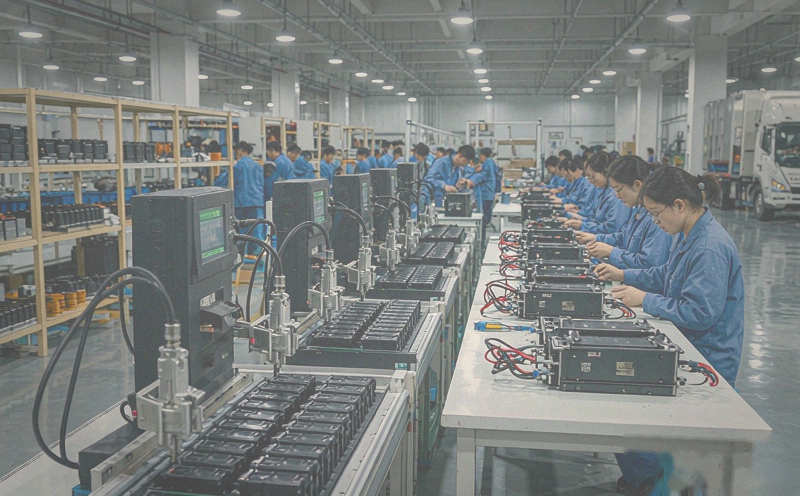
Understanding Li-ion chemistry is one thing; turning it into a pack that survives real-world cycling, temperature swings and vibration is another. As a professional lithium battery manufacturer, UFOPOWER takes the chemistry from the data sheet to the finished product: cell selection and matching, in-house pack assembly, integrated BMS configuration and 100% factory testing before shipment.
OEM / ODM and custom battery solutions — chemistry, voltage, capacity and pack geometry matched to your application
In-house production line and strict quality control across every build
Integrated BMS for safe charging, discharge protection and performance monitoring
Factory-direct service for brands, integrators and distributors
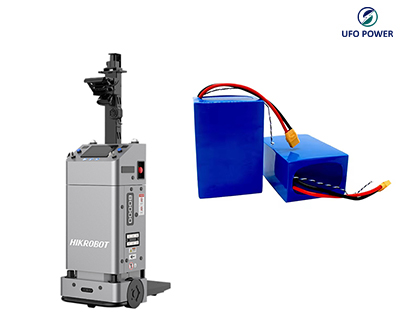
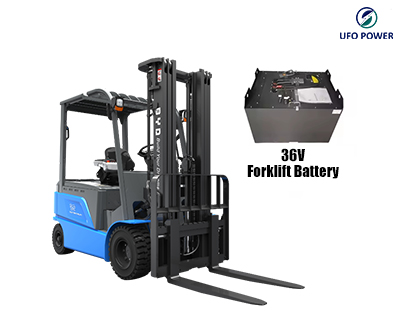
If your product needs a lithium battery designed around real load profiles — from power tools and AGVs to forklifts and energy storage — send us the specification and we will build it to spec.
© 2026 UFOPOWER. All rights reserved. | www.ufobattery.com | メールアドレス: sales@ufo-battery.com | UFOPOWERバッテリー | カスタムバッテリーソリューション
What is a lithium-ion battery and how does it work?
Why do lithium-ion batteries have such high energy density?
What are the main advantages of lithium-ion over lead-acid?
What cathode chemistries are used in lithium-ion batteries?
What are the main limitations of lithium-ion batteries?
Can UFOPOWER build custom lithium-ion battery packs?


 EN
EN AR
AR DE
DE ES
ES FR
FR JP
JP KO
KO PT
PT RU
RU 家(いえ) >



 WhatsApp