
 Sep 30, 2026
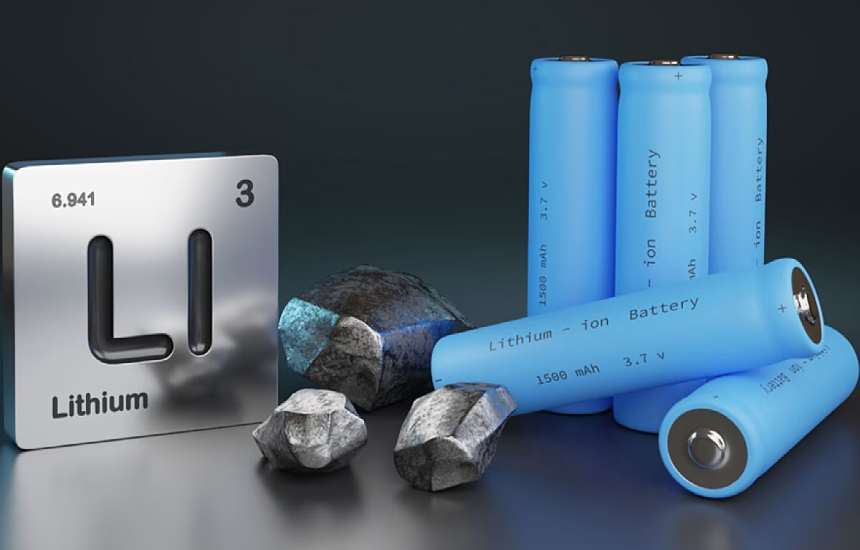
The lithium-ion battery is the dominant commercial rechargeable battery of our time, powering everything from phones and laptops to electric vehicles and grid storage. So what is a lithium-ion battery, and how does it actually work? The answer comes down to one elegant mechanism — lithium ions shuttling back and forth between two electrodes — combined with an energy density that no other mainstream chemistry matches. As a professional lithium battery manufacturer, UFOPOWER designs and builds lithium packs around exactly these principles every day.
The rechargeable battery itself is not a new idea: the first rechargeable chemistry, lead-acid, was invented in 1859 and still starts internal combustion engines today. The research that underpins the modern lithium-ion battery was published in the 1970s, and the first commercial Li-ion cell reached the market in 1991. In 2019, John B. Goodenough, M. Stanley Whittingham and Akira Yoshino received the Nobel Prize in Chemistry for their contributions to developing it.
Today Li-ion is the predominant commercial form of rechargeable battery, widely used in portable electronics and electrified transportation. Part of the reason is simple physics: lithium has the smallest atomic weight and radius of any element except hydrogen and helium, which lets Li-ion cells achieve a very high voltage and charge storage per unit mass and per unit volume.
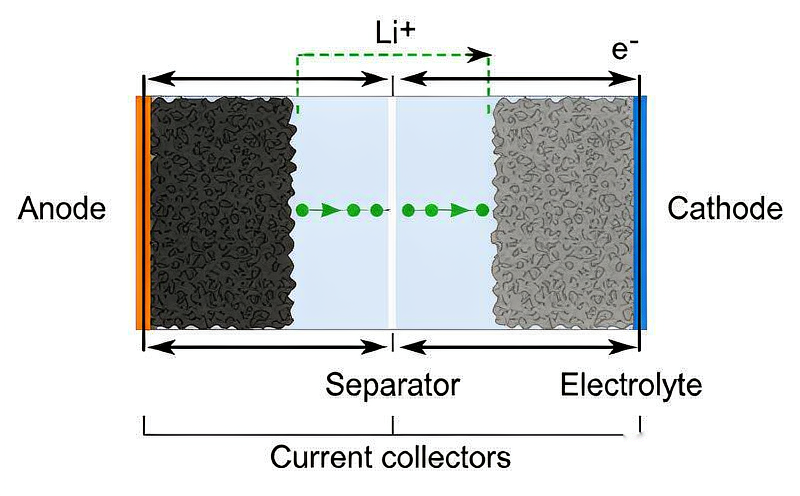
During a discharge cycle, lithium atoms in the anode are ionized and separated from their electrons. The lithium ions travel from the anode, pass through the electrolyte, and cross a micro-permeable separator until they reach the cathode, where they recombine with their electrons and become electrically neutral again. Charging simply runs this process in reverse, pushing the ions back to the anode.
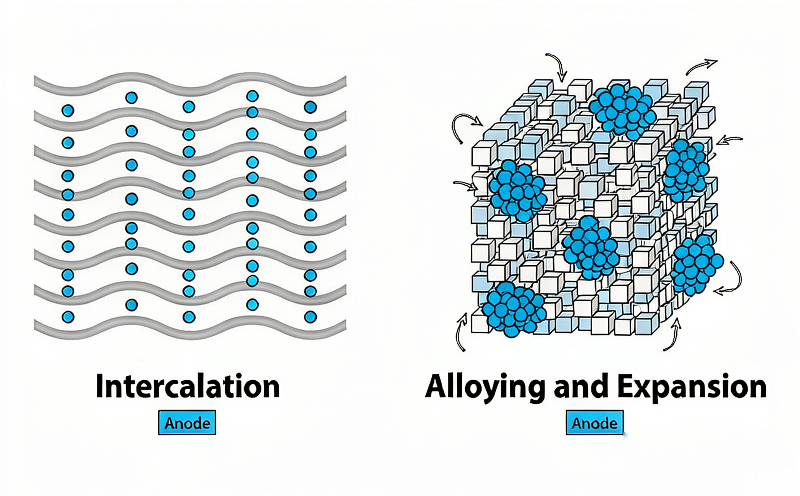
The way lithium is held inside a graphite anode is called intercalation: ions are physically inserted between the 2D layers of graphene that make up bulk graphite. Because the ions are small relative to the layered carbon lattice, graphite anodes are not physically warped by charging or discharging. And because the carbon-carbon bonds are far stronger than the weak interactions between the lithium ions and the anode, the insertion reaction is highly reversible — which is exactly what makes a long cycle life possible.
Comparing lithium-ion against the older high-quality rechargeable technologies — nickel-cadmium, nickel-metal-hydride and lead-acid — shows why Li-ion took over. The numbers below come from published battery research.
| Metric | Lithium-ion | Lead-acid (reference) |
|---|---|---|
| Energy density | Up to ~330 Wh/kg | ~75 Wh/kg |
| Cell voltage | Up to 3.6 V | Lower — Li-ion is 1.5–3× higher |
| Self-discharge | ~1.5–2% per month | Higher |
| Maintenance | Comparatively low; no scheduled cycling needed | Requires more upkeep |
| Memory effect | None | Present in some older chemistries |
| Toxic metals | No lead or cadmium | Contains lead |
Li-ion batteries can use a number of different materials as electrodes, and the cathode choice defines how the cell performs. The most common combination is lithium cobalt oxide (LCO) as the cathode with graphite as the anode, used in commercial portable devices such as phones and laptops. Other common cathode materials include lithium manganese oxide (used in hybrid-electric and electric automobiles) and lithium iron phosphate. Li-ion cells typically use an ether-based organic electrolyte.
Highest energy density in class. Up to ~330 Wh/kg, versus roughly 75 Wh/kg for lead-acid — about four times the energy for the same mass.
High cell voltage. Up to 3.6 V per cell, 1.5–3× the voltage of alternatives, which suits high-power applications like transportation.
Low maintenance. No scheduled cycling required to maintain battery life.
No memory effect. Repeated partial charge/discharge cycles will not make the battery "remember" a lower capacity.
Low self-discharge. Around 1.5–2% per month.
No toxic lead or cadmium.
Li-ion's reach is enormous — it accounted for over 80% of the more than 190 gigawatt-hours of battery energy storage deployed globally through 2023. But a fully renewable grid demands far more than today's technology can deliver alone, and the gap is instructive for anyone specifying batteries.
Scale. More than 10 terawatt-hours of storage capacity would be needed — multiplying today's deployments by roughly 100, which stresses supply chains for rare materials such as lithium, nickel and cobalt.
Cost. Large-scale, long-duration storage needs costs well below $100/kWh — more than twice as cheap as today's state-of-the-art — plus more than 20 years of reliable service life.
Thermal and electrical management. Scaling conventional systems from kWh to MWh or GWh is a serious engineering challenge.
Duration. Storing 8 hours of national electricity implies terawatt-hours of batteries; seasonal storage implies petawatt-hours.
Battery research is pursuing several routes beyond conventional graphite anodes. Alloying anode materials such as silicon, germanium and antimony react with lithium ions to form alloys, which can store more capacity than graphite's intercalation. The trade-off is volume change: alloying materials swell and shrink more during cycling, which can deform the electrode and cause performance loss or failure — which is why researchers introduce nanostructures to reduce the stress and strain.
| Anode approach | Mechanism | Trade-off |
|---|---|---|
| Graphite (standard) | Intercalation of Li ions between graphene layers | Highly reversible, minimal volume change; lower capacity |
| Silicon / germanium / antimony | Reacts with Li ions to form alloys | Greater capacity, but larger volume change risks electrode damage |
| Lithium metal / lithium-sulfur | Higher theoretical energy density using abundant sulfur | Dendrite growth and limited cycle life remain unsolved |
Lithium-sulfur is attractive because sulfur is abundant and light, so Li-S batteries could be cheaper and lighter than Li-ion with graphite anodes — but achieving high energy density together with long cycle life remains a grand challenge. Lithium-based devices also often fail when metallic dendrites grow on the anode like tree roots cracking a sidewalk, which is why diagnostics, 3D electrode architectures and advanced imaging techniques are all active research areas for predicting and preventing degradation.
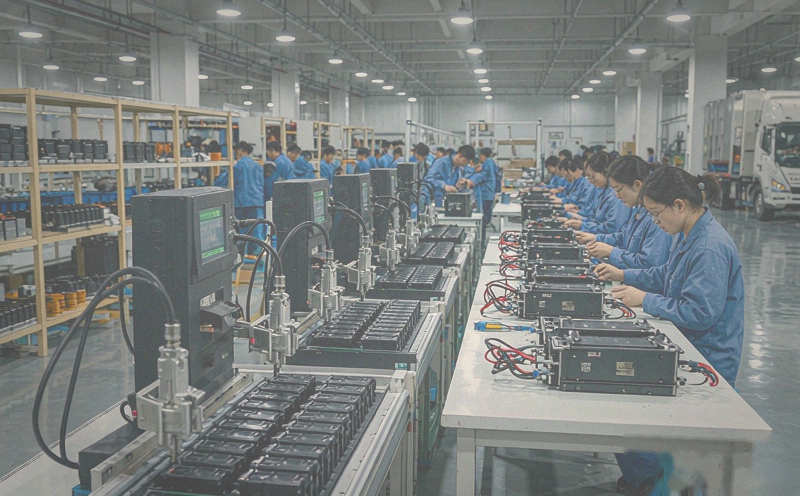
Understanding Li-ion chemistry is one thing; turning it into a pack that survives real-world cycling, temperature swings and vibration is another. As a professional lithium battery manufacturer, UFOPOWER takes the chemistry from the data sheet to the finished product: cell selection and matching, in-house pack assembly, integrated BMS configuration and 100% factory testing before shipment.
OEM / ODM and custom battery solutions — chemistry, voltage, capacity and pack geometry matched to your application
In-house production line and strict quality control across every build
Integrated BMS for safe charging, discharge protection and performance monitoring
Factory-direct service for brands, integrators and distributors
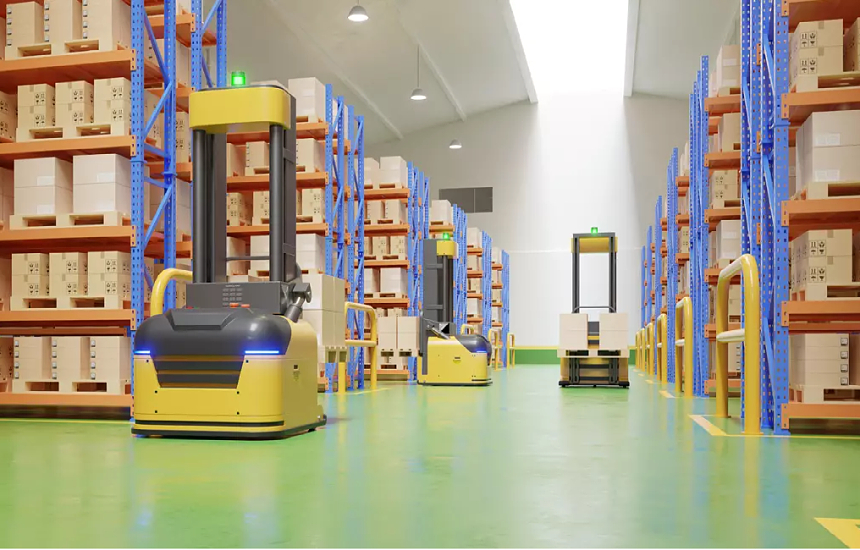
If your product needs a lithium battery designed around real load profiles — from power tools and AGVs to forklifts and energy storage — send us the specification and we will build it to spec.
© 2026 UFOPOWER. All rights reserved. | www.ufobattery.com | Email: sales@ufo-battery.com | UFOPOWER batteries | Custom battery solutions
What is a lithium-ion battery and how does it work?
Why do lithium-ion batteries have such high energy density?
What are the main advantages of lithium-ion over lead-acid?
What cathode chemistries are used in lithium-ion batteries?
What are the main limitations of lithium-ion batteries?
Can UFOPOWER build custom lithium-ion battery packs?


 WhatsApp
 EN
EN AR
AR DE
DE ES
ES FR
FR JP
JP KO
KO PT
PT RU
RU Home >