Las baterías de iones de sodio están emergiendo como una importante tecnología alternativa de baterías para aplicaciones industriales, comerciales, de movilidad y almacenamiento de energía. A diferencia de las baterías de iones de litio, las baterías de iones de sodio utilizan iones de sodio como portadores de carga, ofreciendo una forma potencial de diversificar las cadenas de suministro de baterías al tiempo que proporcionan un alto rendimiento en ciertos entornos operativos.
Para las empresas que buscan un fabricante o proveedor de baterías de iones de sodio, la química de la batería es solo una parte de la decisión. La calidad de la célula, el diseño de la batería, la capacidad de BMS, la seguridad, la personalización, las pruebas, la capacidad de producción y la experiencia de aplicación son igualmente importantes. Como un fabricante profesional de bateríasUFOPOWER desarrolla soluciones de baterías de litio e iones de sodio para aplicaciones industriales y comerciales, con configuraciones de paquetes de baterías personalizadas disponibles para proyectos OEM.

¿Qué es una batería de iones de sodio?
Una batería de iones de sodio es una batería recargable que almacena y libera energía a través del movimiento de iones de sodio entre el cátodo y el ánodo durante la carga y descarga. El principio básico de funcionamiento es similar al de una batería de iones de litio. La principal diferencia es el ión utilizado para transferir carga: los iones de litio en las baterías de iones de litio y los iones de sodio en las baterías de iones de sodio.
Una batería típica de iones de sodio consiste en:
Diferentes químicas de iones de sodio usan diferentes materiales de cátodo y ánodo. El desarrollo comercial actualmente incluye tecnologías basadas en óxidos en capas, análogos azules prusianos o blancos prusianos y compuestos polianiónicos. Debido a que la química de la batería y el diseño de la célula afectan directamente a la densidad energética, la vida útil del ciclo, el rendimiento a bajas temperaturas y el costo, los compradores deben evaluar el sistema de batería completo en lugar de elegir un proveedor basado solo en el término & ldquo; Iones de sodio. & rdquo;
¿Por qué las baterías de iones de sodio están ganando atención?
1. Abundantes recursos de sodio
El sodio está ampliamente disponible en comparación con el litio, lo que hace que la tecnología de iones de sodio sea atractiva para las empresas que buscan diversificar las cadenas de suministro de materias primas de baterías. Las baterías de iones de sodio no requieren litio. Sin embargo, los requisitos exactos de minerales críticos dependen de la química del cátodo utilizada, por lo que la tecnología de iones de sodio no debe describirse automáticamente como completamente libre de minerales críticos. La AIE señala que algunas químicas de iones de sodio comercialemente relevantes todavía pueden usar materiales como el níquel y el manganeso.
2. Rendimiento fuerte de baja temperatura
Una de las ventajas más interesantes de las baterías de iones de sodio es su potencial rendimiento en entornos fríos. Según la AIE, la última generación de baterías de iones de sodio puede retener alrededor del 90% de su capacidad nominal a temperaturas tan bajas como -40°C. deg; C y puede funcionar a temperaturas de hasta alrededor de 70& deg; C. El rendimiento real depende de la química celular, el diseño de la batería, la gestión térmica y las condiciones de funcionamiento. Esto hace que la tecnología de iones de sodio sea particularmente interesante para aplicaciones donde el rendimiento a bajas temperaturas es un requisito importante.
3. Reducción de la dependencia del litio
La tecnología de iones de sodio puede ayudar a diversificar las cadenas de suministro de baterías al reducir la dependencia del litio. Esto no significa que las baterías de iones de sodio reemplazarán inmediatamente las baterías de iones de litio. En cambio, las dos tecnologías pueden servir a diferentes aplicaciones dependiendo de la densidad de energía, el costo, la temperatura, los requisitos del ciclo y el diseño del sistema.
4. Ventajas de costo potenciales
Las baterías de iones de sodio han atraído la atención por sus ventajas de costo potenciales porque el sodio es abundante y la química no requiere litio. Sin embargo, el costo de la batería depende de muchos factores, incluyendo la química del cátodo, los precios de las materias primas, la escala de producción, la eficiencia de fabricación y la madurez de la cadena de suministro. Por lo tanto, un proveedor profesional de baterías debe evaluar el costo total del sistema en lugar de simplemente afirmar que las baterías de iones de sodio siempre son más baratas que las baterías de iones de litio.
Batería de iones de sodio vs LiFePO4: una comparación práctica
Las baterías de iones de sodio y LiFePO4 no son sustitutos directos para todas las aplicaciones. La mejor elección depende de los requisitos operativos específicos. La siguiente tabla compara las dos químicas a través de los factores que más importan para los compradores B2B:
| Factor | Batería de iones de sodio | Batería LiFePO4 |
|---|
| Carrier de carga | Sodium ions | Lithium ions |
| Densidad energética | Generally lower | Generally higher |
| Low-Temperature Performance | Strong potential advantage | Application-dependent |
| Thermal Stability | Chemistry and design dependent | Generally strong |
| Supply Chain | Uses sodium and other chemistry-specific materials | Uses lithium-based materials |
| Technology Maturity | Emerging and scaling | Highly mature |
| Industrial Applications | Selected applications | Very broad |
| Energy Storage | Promising | Widely established |
| OEM Customization | Available depending on manufacturer | Widely available |
The IEA reports that current sodium-ion cells can reach up to around 175 Wh/kg, compared with up to around 205 Wh/kg for the latest LFP cells. This energy-density gap remains an important consideration when space and weight are critical. Therefore, the question should not simply be: “Is sodium-ion better than LiFePO4?” A more useful question is: “Which battery chemistry is better suited to my application?”
What Are Sodium-Ion Batteries Used For?
Sodium-ion technology is particularly interesting for applications where energy density is not the only performance priority. Potential applications include:
Energy Storage
Stationary energy storage is one of the major areas being developed for sodium-ion batteries. Sodium-ion technology can be attractive where weight and volume are less restrictive and supply-chain diversification or temperature performance is important. The IEA expects sodium-ion batteries to play a growing role in battery storage, although lithium-ion technologies remain dominant.
Industrial Equipment
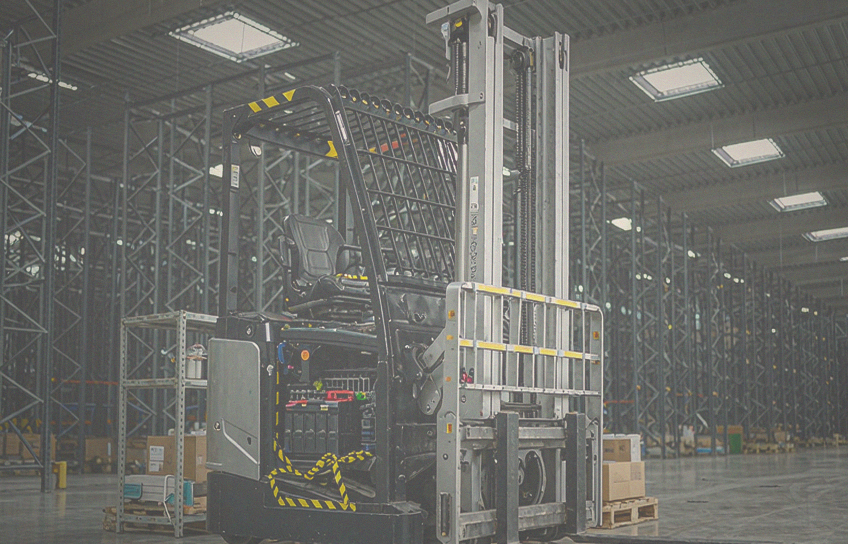
Industrial equipment can benefit from battery technologies that provide reliable power, long operating life and suitable performance under challenging environmental conditions. Potential applications include industrial equipment, material handling equipment, backup power systems, commercial equipment, low-temperature applications and specialty electric vehicles.
Commercial Vehicles and Mobility
Sodium-ion batteries are also being developed for selected mobility applications. The IEA identifies small-range electric vehicles, light commercial vehicles operating in urban environments, two- and three-wheelers and certain industrial equipment among potential applications.
How to Choose a Sodium-Ion Battery Manufacturer
Choosing the right sodium-ion battery supplier requires more than comparing prices. For OEMs, distributors and industrial equipment manufacturers, we recommend evaluating at least the following factors.
1. Cell Quality and Consistency
The battery pack is only as reliable as its cells. Ask potential suppliers about cell manufacturer, cell chemistry, nominal voltage, capacity, energy density, cycle-life testing, cell consistency and batch traceability. A professional supplier should be able to provide clear technical specifications and quality-control information.
2. BMS Capability
The battery management system is critical to battery safety and performance. A suitable BMS may provide overcharge protection, over-discharge protection, overcurrent protection, short-circuit protection, temperature monitoring, cell balancing, state-of-charge monitoring and communication functions. For OEM applications, BMS parameters and communication protocols may also need to be customized to match the equipment controller.
3. Battery Customization
Industrial customers rarely need a completely standard battery. Depending on the application, OEM customers may require customization of voltage, capacity, battery dimensions, connector, terminal configuration, enclosure, BMS, communication protocol, mounting structure and charging requirements. A sodium-ion battery manufacturer with strong engineering capabilities can provide more value than a supplier that only sells standard battery packs.
4. Testing and Quality Control
Before choosing a supplier, ask how the battery is tested. A professional battery manufacturer should have quality-control procedures covering cell testing, capacity testing, charge and discharge testing, BMS testing, temperature testing, safety testing, end-of-line inspection and aging or performance verification. Certification requirements should also be evaluated according to the battery’s intended market and application.
5. Manufacturing and Supply Capability
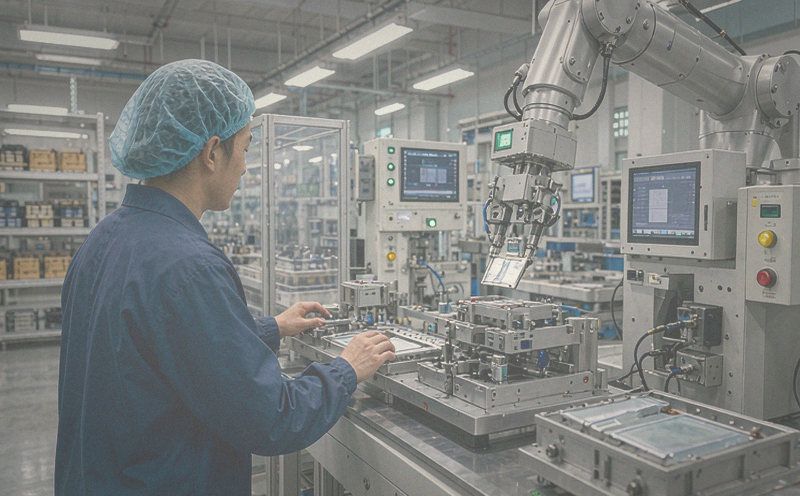
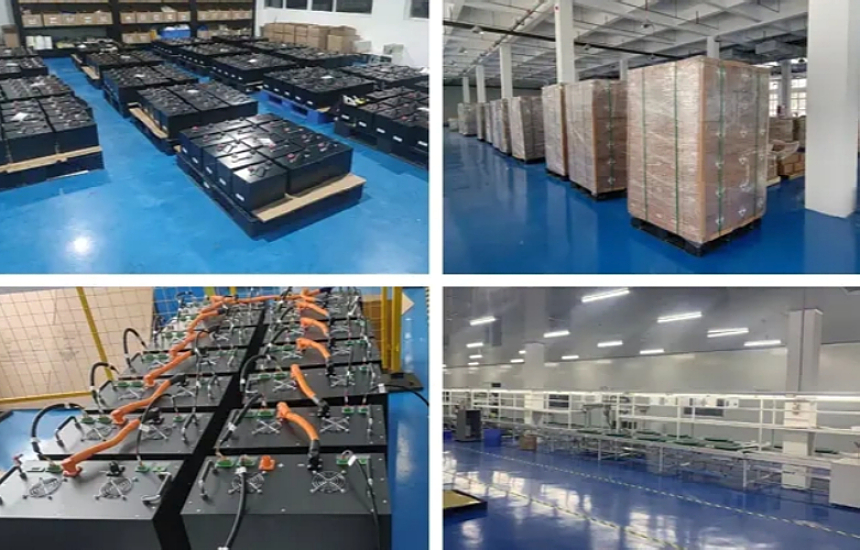
For distributors and OEM customers, production capability is an important consideration. Evaluate production capacity, manufacturing equipment, quality management system, lead time, batch consistency, OEM/ODM capability, export experience and after-sales technical support. A supplier should be capable of supporting both sample development and future volume production.
Why Choose UFOPOWER for Sodium-Ion Battery Solutions?
UFOPOWER is a professional battery manufacturer specializing in lithium battery solutions and developing advanced sodium-ion battery solutions for industrial and commercial applications. Our approach is focused on matching battery technology to the actual requirements of the equipment and application.
For OEM and B2B customers, UFOPOWER can support battery development around requirements such as voltage and capacity, battery dimensions, BMS configuration, electrical connections, communication requirements, charging requirements, application environment and mechanical integration. Rather than treating sodium-ion technology as a universal replacement for lithium-ion batteries, UFOPOWER evaluates the requirements of each application and helps customers select the appropriate battery chemistry and configuration — backed by in-house engineering, factory-direct production and OEM/ODM service.
What Makes a Good Sodium-Ion Battery Supplier?
There is no single battery supplier that is the best choice for every application. A reliable sodium-ion battery supplier should be able to demonstrate:
Consistent cell quality
Professional battery pack design
Reliable BMS integration
Application-specific customization
Quality-control and testing procedures
Relevant certifications
Stable production capability
OEM/ODM experience
Technical support
Clear communication and after-sales service
For OEM buyers, the ability to provide a complete battery solution is often more important than simply offering the lowest unit price.
Sodium-Ion Battery: What Is the Future?
Sodium-ion batteries are moving from research and early commercialization toward larger-scale deployment. The IEA describes 2026 as a potentially pivotal year for the technology’s scaling efforts, while also noting that LFP remains highly competitive because of its higher energy density, mature supply chain and cost advantages in many applications.
Recent industry developments also show that sodium-ion technology is moving into larger commercial applications. For example, CATL announced in June 2026 the commercial launch of its TENER sodium-ion energy storage system, while a May 2026 agreement between CATL and HyperStrong covered 60 GWh of sodium-ion battery supply for energy storage. This suggests that sodium-ion batteries should increasingly be viewed not simply as an experimental technology, but as an emerging battery chemistry with specific commercial advantages.
At the same time, lithium-ion and LiFePO4 batteries will remain important for applications where energy density, established supply chains and proven large-scale manufacturing are priorities. The future battery market is therefore likely to include multiple chemistries serving different applications rather than one chemistry replacing all others.
Conclusion
Sodium-ion batteries are becoming an increasingly important part of the global battery technology landscape. Their potential advantages in low-temperature performance, material availability and supply-chain diversification make them attractive for selected industrial, commercial, mobility and energy storage applications.
However, choosing the right sodium-ion battery is not simply a matter of choosing the newest battery chemistry. Buyers should evaluate cell quality, energy density, operating temperature, BMS design, safety, customization, testing and total cost according to the actual application. For OEMs, distributors and equipment manufacturers looking for a reliable sodium-ion battery manufacturer or supplier, UFOPOWER provides customized battery solutions backed by battery engineering and manufacturing capabilities.


 EN
EN AR
AR DE
DE ES
ES FR
FR JP
JP KO
KO PT
PT RU
RU Inicio >
  Sep 02, 2026







 de WhatsApp