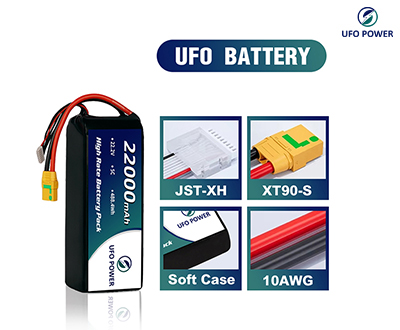

 30. September 2026
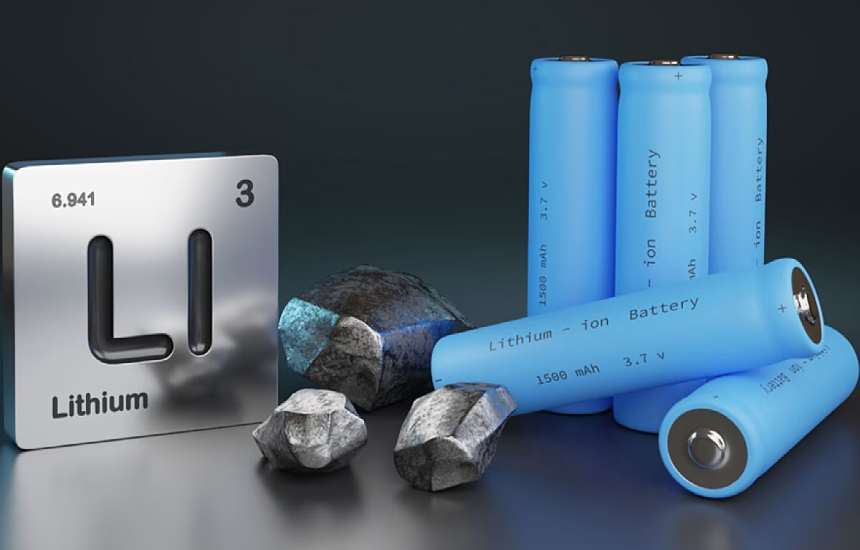
Die Lithium-Ionen-Batterie ist die dominierende kommerzielle Auffüllbatterie unserer Zeit, die alles von Handys und Laptops bis hin zu Elektrofahrzeugen und Netzbetrieben versorgt. Was ist eine Lithium-Ionen-Batterie und wie funktioniert sie eigentlich? Die Antwort liegt in einem eleganten Mechanismus – Lithiumionen, die hin und her zwischen zwei Elektroden wechseln – kombiniert mit einer Energiedichte, die keine andere Mainstream-Chemie erreicht. Als professioneller Lithiumbatteriehersteller entwirft und baut UFOPOWER täglich Lithiumpacks genau nach diesen Prinzipien.
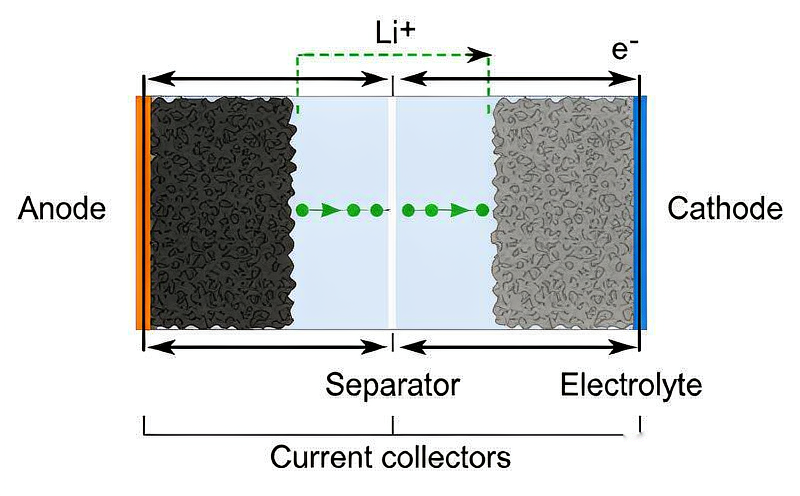
Die nachfüllbare Batterie selbst ist keine neue Idee: Die erste nachfüllbare Chemie, Blei-Säure, wurde 1859 erfunden und startet heute noch Verbrennungsmotoren. Die Forschung, die die moderne Lithium-Ionen-Batterie trägt, wurde in den 1970er Jahren veröffentlicht, und die erste kommerzielle Li-Ionen-Zelle kam 1991 auf den Markt. 2019 erhielten John B. Goodenough, M. Stanley Whittingham und Akira Yoshino den Nobelpreis für Chemie für ihren Beitrag zur Entwicklung dieser Technologie.
Heute ist die Li-Ionen-Batterie die vorherrschende kommerzielle Form von wiederaufladbaren Batterien und wird in tragbaren Elektronikgeräten und elektrischem Verkehr weit verbreitet eingesetzt. Ein Teil des Grundes liegt in einfacher Physik: Lithium hat das kleinste Atomgewicht und den kleinsten Atomradius aller Elemente außer Wasserstoff und Helium, was Li-Ionen-Zellen ermöglicht, eine sehr hohe Spannung und Ladungsspeicherung pro Masseneinheit und pro Volumeneinheit.
Während eines Entladezyklus werden die Lithiumatome in der Anode ionisiert und von ihren Elektronen getrennt. Die Lithiumionen reisen von der Anode, durchqueren das Elektrolyt und passieren einen mikroporösen Separator, bis sie die Kathode erreichen, wo sie sich wieder mit ihren Elektronen verbinden und elektrisch neutral werden. Das Aufladen läuft diesen Prozess einfach umgekehrt ab, indem die Ionen zurück zur Anode gedrückt werden.
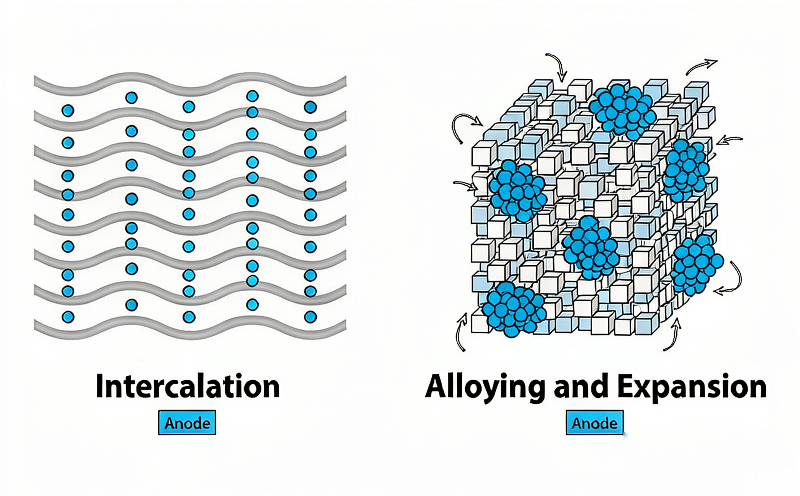
Die Art und Weise, wie Lithium in einer Graphitanode gehalten wird, wird als EinschaltungIonen werden physikalisch zwischen die zweidimensionalen Schichten von Graphen eingefügt, aus denen massiver Graphit besteht. Da die Ionen im Verhältnis zum schichtförmigen Kohlenstoffgitter klein sind, werden Graphitanoden durch Laden oder Entladen nicht physisch verformt. Und weil die Kohlenstoff-Kohlenstoff-Bindungen viel stärker sind als die schwachen Wechselwirkungen zwischen den Lithiumionen und der Anode, ist die Einfüge-Reaktion hochgradig reversibel – genau das macht eine lange Zyklenlebensdauer möglich.
Der Vergleich von Lithium-Ionen-Batterien mit älteren, hochwertigen Ladesystemen – Nickel-Cadmium, Nickel-Metallhydrid und Blei-Säure – zeigt, warum Lithium-Ionen übernommen haben. Die folgenden Zahlen stammen aus veröffentlichten Batterieforschungen.
| Metrik | Lithium-Ionen | Blei-Säure (Referenz) |
|---|---|---|
| Energiedichte | Bis zu ~330 Wh/kg | ~75 Wh/kg |
| Zellenspannung | Bis zu 3,6 V | Niedriger – Li-Ionen ist 1,5–3× höher |
| Selbstentladung | 1,5–2 % pro Monat | Höher |
| Wartung | Relativ niedrig; keine geplante Zyklenbelastung erforderlich | Erfordert mehr Wartung |
| Gedächtniswirkung | Keine | In einigen älteren Chemien vorhanden |
| Toxische Metalle | Kein Blei oder Cadmium | Enthält Blei |
Li-Ionen-Batterien können verschiedene Materialien als Elektroden verwenden, und die Kathodenwahl bestimmt die Leistung der Zelle. Die häufigste Kombination ist Lithiumkobaltoxid (LCO) als Kathode und Graphit als AnodeIn kommerziellen tragbaren Geräten wie Handys und Laptops verwendet. Andere gängige Kathodenmaterialien umfassen Lithium-Manganoxid (in Hybrid- und Elektrofahrzeugen verwendet) und Lithium-Eisenphosphat. Li-Ionen-Zellen verwenden typischerweise eine auf Ether basierende organische Elektrolytlösung.
Höchste Energiedichte in der Klasse. Bis zu ~330 Wh/kg, im Vergleich zu etwa 75 Wh/kg bei Blei-Säure-Batterien – etwa viermal so viel Energie bei gleicher Masse.
High cell voltage. Up to 3.6 V per cell, 1.5–3× the voltage of alternatives, which suits high-power applications like transportation.
Low maintenance. No scheduled cycling required to maintain battery life.
No memory effect. Repeated partial charge/discharge cycles will not make the battery "remember" a lower capacity.
Low self-discharge. Around 1.5–2% per month.
No toxic lead or cadmium.
Li-ion's reach is enormous — it accounted for over 80% of the more than 190 gigawatt-hours of battery energy storage deployed globally through 2023. But a fully renewable grid demands far more than today's technology can deliver alone, and the gap is instructive for anyone specifying batteries.
Scale. More than 10 terawatt-hours of storage capacity would be needed — multiplying today's deployments by roughly 100, which stresses supply chains for rare materials such as lithium, nickel and cobalt.
Cost. Large-scale, long-duration storage needs costs well below $100/kWh — more than twice as cheap as today's state-of-the-art — plus more than 20 years of reliable service life.
Thermal and electrical management. Scaling conventional systems from kWh to MWh or GWh is a serious engineering challenge.
Duration. Storing 8 hours of national electricity implies terawatt-hours of batteries; seasonal storage implies petawatt-hours.
Battery research is pursuing several routes beyond conventional graphite anodes. Alloying anode materials such as silicon, germanium and antimony react with lithium ions to form alloys, which can store more capacity than graphite's intercalation. The trade-off is volume change: alloying materials swell and shrink more during cycling, which can deform the electrode and cause performance loss or failure — which is why researchers introduce nanostructures to reduce the stress and strain.
| Anode approach | Mechanism | Trade-off |
|---|---|---|
| Graphite (standard) | Intercalation of Li ions between graphene layers | Highly reversible, minimal volume change; lower capacity |
| Silicon / germanium / antimony | Reacts with Li ions to form alloys | Greater capacity, but larger volume change risks electrode damage |
| Lithium metal / lithium-sulfur | Higher theoretical energy density using abundant sulfur | Dendrite growth and limited cycle life remain unsolved |
Lithium-sulfur is attractive because sulfur is abundant and light, so Li-S batteries could be cheaper and lighter than Li-ion with graphite anodes — but achieving high energy density together with long cycle life remains a grand challenge. Lithium-based devices also often fail when metallic dendrites grow on the anode like tree roots cracking a sidewalk, which is why diagnostics, 3D electrode architectures and advanced imaging techniques are all active research areas for predicting and preventing degradation.
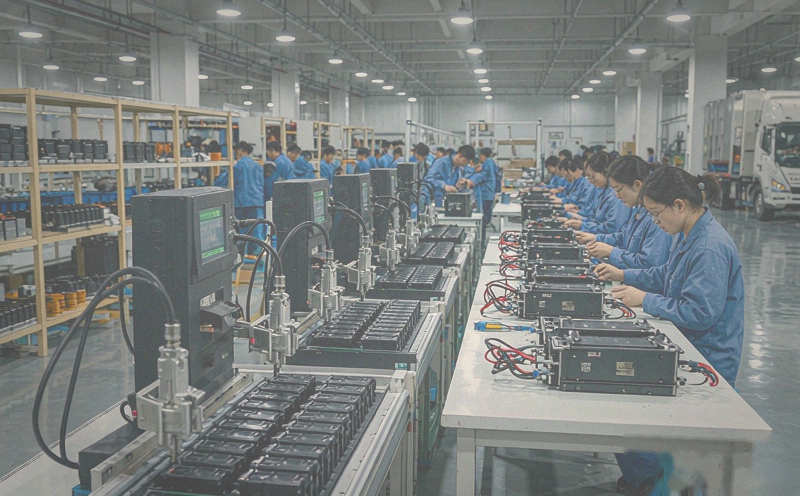
Understanding Li-ion chemistry is one thing; turning it into a pack that survives real-world cycling, temperature swings and vibration is another. As a professional lithium battery manufacturer, UFOPOWER takes the chemistry from the data sheet to the finished product: cell selection and matching, in-house pack assembly, integrated BMS configuration and 100% factory testing before shipment.
OEM / ODM and custom battery solutions — chemistry, voltage, capacity and pack geometry matched to your application
In-house production line and strict quality control across every build
Integrated BMS for safe charging, discharge protection and performance monitoring
Factory-direct service for brands, integrators and distributors
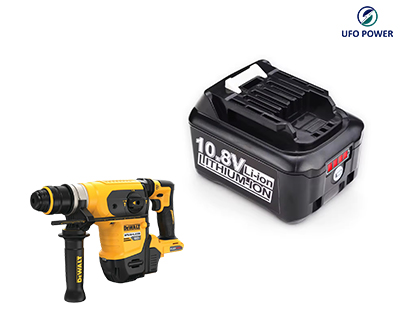
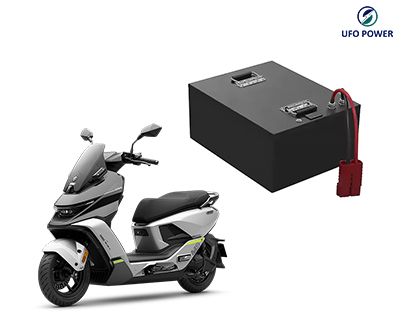
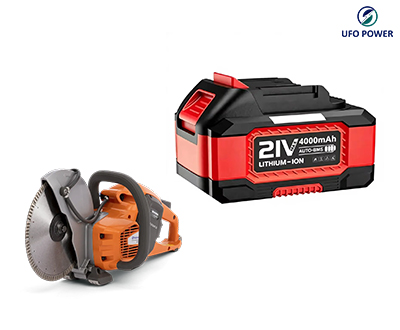
If your product needs a lithium battery designed around real load profiles — from power tools and AGVs to forklifts and energy storage — send us the specification and we will build it to spec.
© 2026 UFOPOWER. All rights reserved. | www.ufobattery.com E-Mail: sales@ufo-battery.com UFOPOWER Batterien | Individuelle Batterielösungen
What is a lithium-ion battery and how does it work?
Why do lithium-ion batteries have such high energy density?
What are the main advantages of lithium-ion over lead-acid?
What cathode chemistries are used in lithium-ion batteries?
What are the main limitations of lithium-ion batteries?
Can UFOPOWER build custom lithium-ion battery packs?



Lithium-Ionen-Batterie erklärt: Wie Li-Ionen-Zellen funktionieren, LCO vs LMO vs LFP Kathoden & 330 Wh/kg Energiedichte
Wie werden Lithium-Ionen-Batterien hergestellt? Ein Schritt-für-Schritt-Fabrikleitfaden für zylindrische, prismatische und Pouch-Zellen


 WhatsApp
 EN
EN AR
AR DE
DE ES
ES FR
FR JP
JP KO
KO PT
PT RU
RU Startseite >