

 Oct 15, 2026
Electric golf carts have moved far beyond the fairway. Today they shuttle guests around resorts, carry staff across industrial parks, move students on campus, and serve as personal transport inside gated communities. Behind every one of those quiet, smooth rides sits the same component: the battery. And right now the electric golf cart battery is a genuinely hot topic — lithium-ion and LiFePO4 packs are replacing lead-acid across whole fleets, and demand keeps climbing year after year.
As a professional lithium battery manufacturer, UFOPOWER builds packs for exactly this kind of low-speed electric mobility. In this guide we break down why electric golf cart batteries are in such hot demand — electric propulsion, rechargeable energy storage, instant torque and regenerative braking — and we also look at the other kind of hot: the temperature rise that every golf cart owner should understand.

The shift is easy to explain: electrification finally reached the low-speed vehicle segment in a serious way. Golf carts are no longer a niche leisure product. Resorts, hotels, airports, campuses, industrial parks and residential communities all run them daily, often for ten hours or more, and every one of those use cases rewards the same four battery-driven functions.
• Silent operation — essential for golf courses, resorts and residential zones where noise is a nuisance.
• Zero emissions — no tailpipe, no exhaust fumes inside clubhouses, warehouses or terminals.
• Low maintenance — electric motors have far fewer moving parts than combustion engines, so there is less wear and fewer service visits.
• Energy efficiency — electric propulsion converts a larger share of stored energy into motion, which stretches every charge further.
Electric propulsion is the defining feature of the modern golf cart. Instead of a noisy gasoline engine, a battery-powered motor drives the wheels directly. The result is a quiet, vibration-free ride with no gear shifting — a completely different experience from a combustion cart, whether you are climbing a gentle slope or cruising a flat fairway path.
Because the drivetrain is simpler, there is also less to go wrong. No oil changes, no spark plugs, no fuel lines. For a fleet manager running twenty carts, that difference in service hours is often as valuable as the fuel savings.
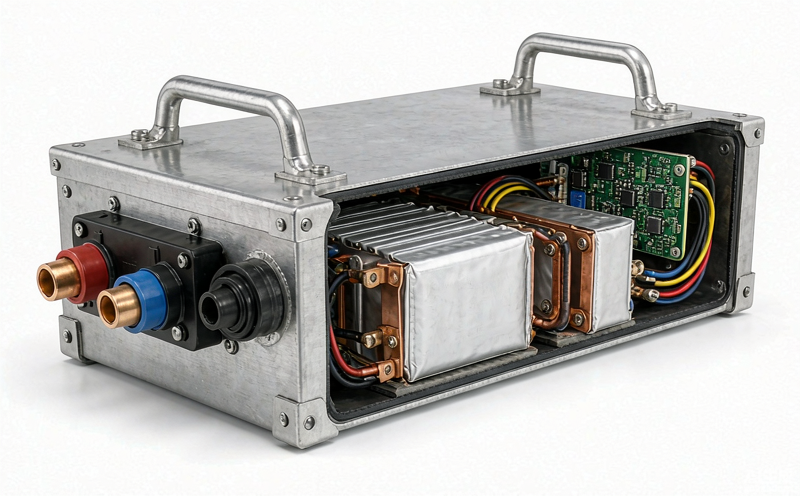
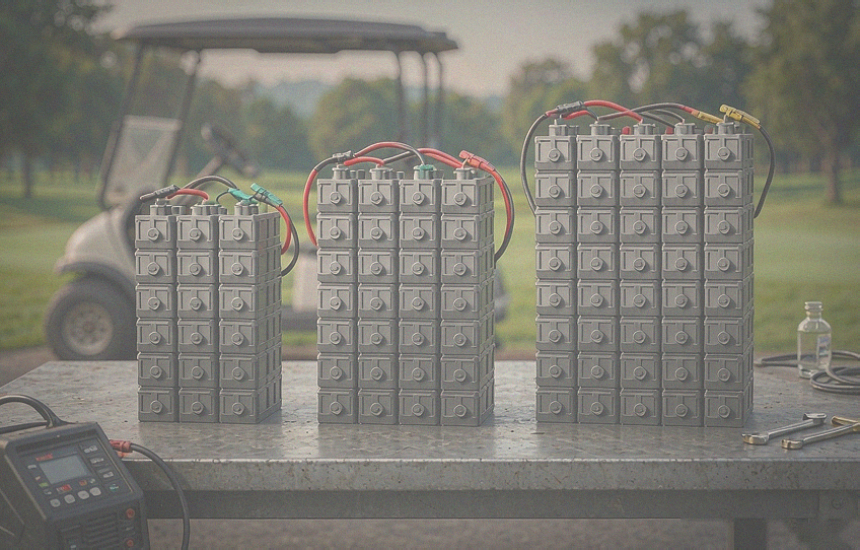
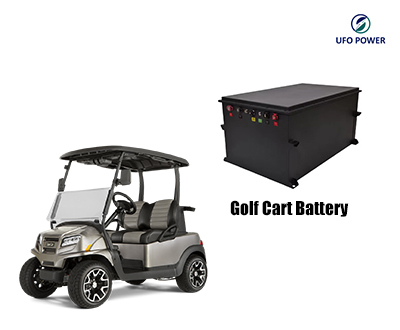
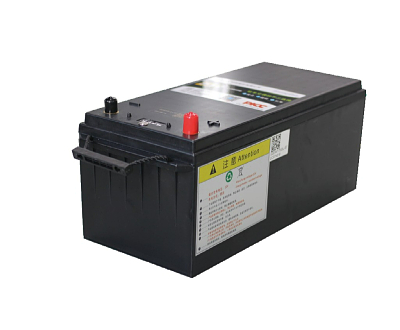
Rechargeable batteries are the energy backbone of the vehicle. Most modern golf carts use lithium-ion or lithium iron phosphate (LiFePO4) packs, because those chemistries deliver higher energy density, a longer cycle life and a stronger safety profile than the flooded lead-acid blocks that dominated the category for decades.
• 高エネルギー密度 — longer driving range between charges, even with frequent stops and starts.
• Lightweight design — less vehicle weight means better efficiency and sharper handling.
• サイクル寿命が長い — with proper management, a lithium pack lasts for thousands of charge cycles.
• 急速充電 — quick turnaround for fleet operations and busy resort days.
| Criterion | LiFePO4 / Lithium Pack | Flooded Lead-Acid |
|---|---|---|
| エネルギー密度 | High — more range per kilogram | Lower — bulky for the same capacity |
| 重さ | Lightweight | Heavy |
| じゅんかんじゅみょう | Thousands of cycles | 寿命が短い |
| 充電 | Fast charging, opportunity charging | Slow, and partial charging shortens life |
| メンテナンス | Sealed pack, no watering | Water topping-up, terminal cleaning |
That is why fleet buyers now treat a lithium golf cart battery as a capital decision rather than a consumable. You pay more up front, but you charge less often, replace less often, and stop paying a technician to top up cells with distilled water.
One of the most noticeable advantages of an electric golf cart is instant torque. Press the accelerator and the motor delivers full power immediately — no revving, no gear change, no delay.
• Quick starts — useful on tight paths, ramps and inclines.
• Smooth acceleration — easier on passengers and on the cargo bed.
• Better traction control — helpful on wet grass, gravel and uneven ground.
There is a battery-side implication here too. Instant torque means high current bursts, which is why a golf cart pack needs cells rated for continuous high-rate discharge and a BMS that can manage those peaks without tripping.
Regenerative braking is increasingly common on advanced electric carts. Instead of turning motion into heat in the brake pads, the vehicle turns it back into electricity and returns it to the battery.
1. The driver lifts off or descends a slope, and the motor switches into generator mode.
2. The rolling wheels drive the motor, which produces electricity.
3. That current flows back into the pack, extending range and cutting waste.
• More range — fewer charging stops on hilly courses and stop-and-go routes.
• Higher efficiency — energy that used to become brake heat is recovered.
• Less brake wear — mechanical components last longer, and maintenance costs fall.
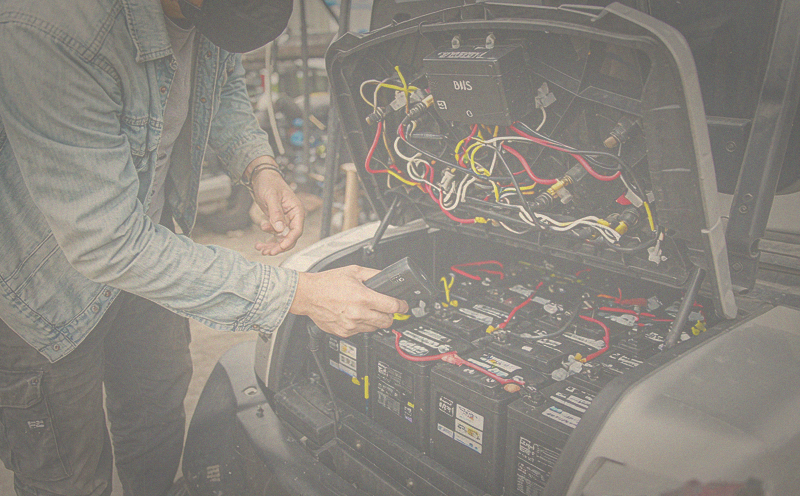
A golf cart battery is not just a box of cells. How it is integrated into the vehicle determines safety, serviceability and how long the pack actually lasts.
• バッテリ管理システム(BMS) — monitors temperature, voltage and current, and protects the pack from overcharge, over-discharge and short circuit.
• Modular pack design — makes the system scalable and allows individual modules to be replaced or upgraded instead of scrapping the whole pack.
• Thermal management — keeps cells inside their safe operating window in hot or cold climates.
Manufacturers increasingly design the cart around the battery rather than the other way round, optimising placement for balance, access and protection. As a battery manufacturer working with OEM and ODM customers, UFOPOWER builds packs to fit the vehicle envelope, the charger and the duty cycle — not the other way around.
Demand is one kind of hot. Heat is another, and it deserves attention, because a pack that runs warm is either working hard or working wrong. A properly specified lithium golf cart battery will get mildly warm during fast charging and heavy acceleration — that is normal. A pack that becomes uncomfortably hot to the touch is telling you something.
| What You Notice | Likely Cause | What To Do |
|---|---|---|
| Hot only while charging | Charger voltage or profile does not match the pack, or charging continues after full charge | Stop the charge, verify charger compatibility with the pack specification, and never leave a mismatched charger connected |
| Hot in summer, worse after long runs | High ambient temperature plus a poorly ventilated battery compartment | Park in shade, keep vents clear, and let the pack cool before recharging |
| One area hotter than the rest | Loose terminal or connection resistance, or an ageing cell inside the pack | Switch off, inspect terminals for corrosion or looseness, and have the pack checked by a technician |
| Hot and losing range quickly | Ageing cells with rising internal resistance, or a BMS that is no longer balancing correctly | Test capacity and internal resistance, and replace the pack if it no longer meets the duty cycle |
The practical rule is simple: warmth is normal, heat is a signal. If the pack is too hot to keep your hand on, stop using it, stop charging it, and find out why. A BMS with proper temperature sensing and charge cut-off is the cheapest insurance you can specify.
• Zero emissions — cleaner air in parks, campuses and resorts, and no fumes indoors.
• Quiet operation — less noise pollution in residential and recreational areas.
• Sustainable charging — packs can be charged from solar or other renewable sources.
• Lower running cost — electricity is cheaper per kilometre than gasoline.
• Fewer breakdowns — fewer mechanical components means fewer failure points.
• Long-term savings — lithium packs last longer and need replacing less often.
• Resorts and hotels — guest transport, housekeeping and luggage runs.
• Industrial parks — staff movement and light cargo.
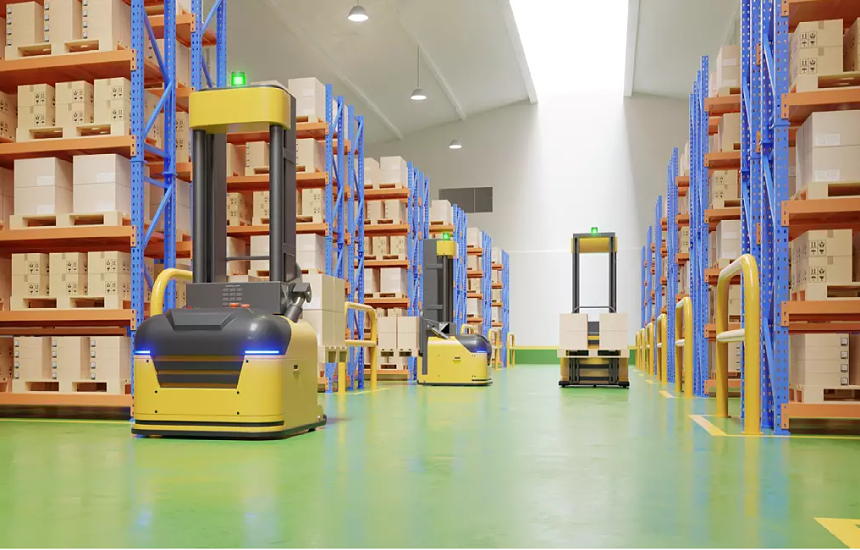
• Airports and campuses — shuttle services and internal logistics.
• Gated communities — personal mobility for residents.
Each of these duty cycles looks different on paper — a resort cart does short trips all day, an industrial cart does heavier loads over shorter distances — and each one deserves a pack specified for its own current profile rather than a generic drop-in block.
• Wider LiFePO4 adoption — better safety and longer cycle life make it the default for fleet operations.
• Solid-state batteries — an emerging option promising higher energy density and faster charging.
• Smart charging systems — remote monitoring and scheduled charging that protect the pack and cut energy bills.
UFOPOWER is a professional lithium battery manufacturer serving golf cart fleets, distributors and vehicle OEMs. That means in-house production lines, 100% factory testing before shipment, and a pack designed around your voltage platform, compartment size and daily duty cycle rather than whatever happens to be in stock.
• Factory-direct supply — no layers of distribution between the production line and your fleet.
• OEM and ODM programs — custom housings, connectors, communication protocols and branding.
• Custom battery solutions — capacity, BMS behaviour and thermal design matched to the application.
• Quality control — cell screening, pack-level testing and traceability records for every batch.
© 2026 UFOPOWER. All rights reserved. | www.ufobattery.com | メールアドレス: sales@ufo-battery.com | UFOPOWERバッテリー | カスタムバッテリーソリューション
Why is the electric golf cart battery called "hot"?
Is a LiFePO4 battery better than lead-acid for a golf cart?
Why does my golf cart battery get hot while charging?
How long does a lithium golf cart battery last?
Can I replace the lead-acid batteries in my golf cart with lithium?
What does the BMS actually do in a golf cart battery?


 EN
 AR
 DE
 ES
 FR
 JP
 KO
 PT
 RU
 家(いえ) >




 WhatsApp