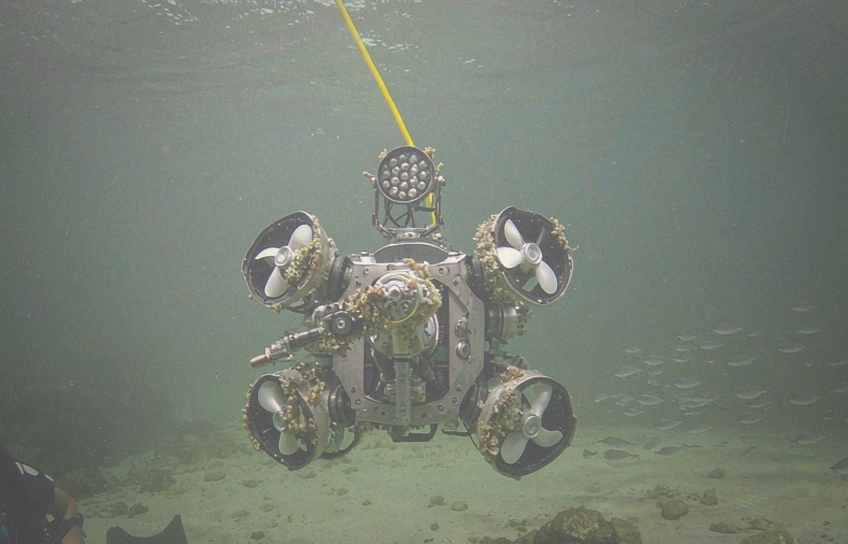
В качестве профессиональный производитель литиевой батареиUFOPOWER работает с разработчиками AUV батареи, Батареи ROVи подводных роботизированных систем питания по всему миру. Аккумуляторная система является одной из первых систем, которые следует учитывать при разработке подводного робота, а не компонента, который должен быть выбран после окончательной доработки корпуса и системы движения. Напряжение батареи влияет на двигательную систему и силовую электронику. Емкость влияет на время миссии, вес и плавность. Формат клетки влияет на использование корпуса под давлением, в то время как BMS, разъем, зарядное устройство и тепловый путь должны работать с транспортным средством; Rsquo; Электрическая и механическая архитектура.
Океанографический институт Вудс-Хоул отмечает, что более сильные корпусы под давлением добавляют вес, что требует большей плавности и может увеличить потребление энергии транспортного средства. Круглые корпусы давления широко используются, потому что они распределяют внешнее давление более равномерно, чем конструкции с острыми углами. Вот почему многим разработчикам AUV, батарейных ROV, подводных двигателей и подводного оборудования нужно больше, чем стандартный аккумулятор. Им нужен партнер по батареям, который может участвовать в выборе элементов, электрической архитектуре, разработке BMS, структурной интеграции, испытаниях и планировании производства.
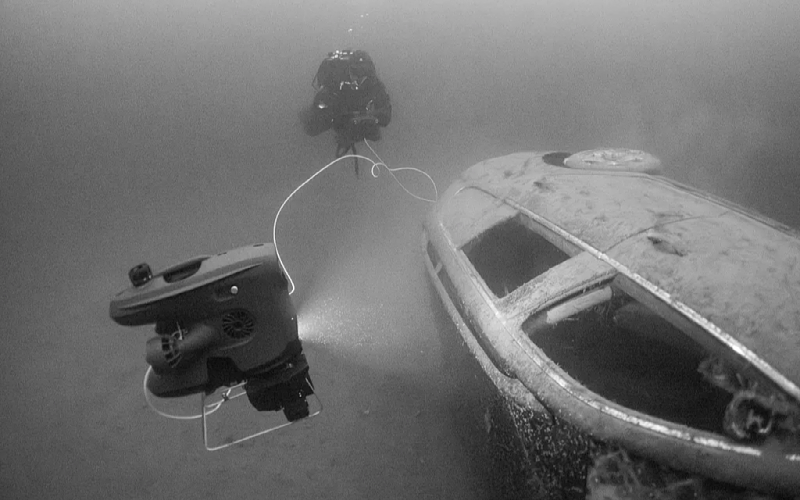
Начните с профиля миссии, а не с модели клетки
Проект батареи не должен начинаться с вопроса, & ldquo; Следует ли использовать 18650 или 21700 клеток? & rdquo; Это должно начаться с подводного робота& Rsquo; с миссией. Инженерная команда должна сначала понять:
Тип транспортного средства и применение
Целевая продолжительность миссии
Круиз и максимальная скорость
Номинальное и максимальное напряжение системы
Средняя рабочая мощность
Непрерывный и пиковый ток
Размеры внутреннего отделения батареи
Рабочие и зарядные температуры
Целевая глубина и конструкция корпуса под давлением
Метод зарядки, подключения или замены батареи
Протокол связи
Требуемый резерв для возвращения на базу или аварийного покрытия
Связь между энергией и эффективностью миссии можно увидеть в установленных исследовательских средствах. Океанографический институт Woods Hole & Rsquo; Автономное подводное транспортное средство ABE несло литий-ионную аккумуляторную систему 5 кВт/ч и потребляло около 210–300 Вт в зависимости от миссии, поддерживая рабочий диапазон 20–40 км и продолжительность миссии 14–20 часов. Автомобиль & Rsquo; с датчики в одиночку также создали непрерывный & ldquo; загрузка отеля& rdquo; Это должно было быть включено в энергетический бюджет.
Поэтому двум подводным роботам, использующим одно и то же номинальное напряжение, могут потребоваться очень разные батареи. В таблице ниже сравнены приоритеты аккумуляторов обычных типов транспортных средств:
| Тип транспортного средства | Типичная миссия | Приоритет батареи |
|---|
| Дальняя картография AUV | Обследование большой площади и автономный сбор данных | Плотность энергии и низкий вес |
| ROV с двигателями, огнями, манипулятором | Ближний промышленный осмотр и вмешательство | Сильная способность к пиковому току и стабильная платформа напряжения |
| Подводный робот-резидент | Долгосрочное развертывание на морском дне | Низкое потребление BMS в режиме ожидания, срок службы, записи неисправности, подводная зарядка |
Цилиндрические клетки или мешочные клетки: какой формат подходит для проекта?
Цилиндрические элементы, такие как 18650 и 21700, стандартизированы, широко доступны и удобны для модульной сборки. Их фиксированные размеры могут упростить закупку, но пакет с высокой емкостью может потребовать много элементов, сваров, токовых путей и механических опор. Клетки мешка позволяют регулировать емкость, толщину, ширину и длину вокруг доступного пространства. Они могут быть расположены в виде узких модулей, сегментированных пакетов или одноклеточных секций большой емкости внутри цилиндрического корпуса давления.
Исследования клеточного формата (Болонский университет) показывают, что цилиндрические, призматические и мешочные форматы создают различные компромиссы в эффективности упаковки, тепловом поведении, механической поддержке, производстве и плотности энергии на уровне системы. Никакой формат автоматически не является лучшим для каждого транспортного средства:
| клеточное решение | Главное преимущество | Suitable Underwater Applications | Главный Tradeoff |
|---|
| 18650/21700 цилиндрический | Стандартные размеры и зрелая модульная сборка | Platforms already designed around cylindrical cell holders | Может потребоваться больше ячеек и взаимосоединений |
| Полутвердый мешок | Высокая плотность энергии и меньший вес для данной цели энергии | Долговечные AUV и чувствительные к весу подводные роботы | Потенциальность и стоимость электроэнергии должны быть оценены для каждого проекта |
| High-rate pouch | Low internal resistance and strong continuous or peak output | Battery-powered ROVs, thrusters, manipulators, and underwater tools | Lower energy density than high-energy cells |
| LiFePO4 pouch | Good thermal stability and long service potential | Commercial ROVs, monitoring systems, and subsea backup power | Higher weight and volume for the same stored energy |
UFOPOWER’s main advantage is not commodity cylindrical-cell supply. It is the ability to develop high-energy and high-power pouch solutions. The company’s semi-solid-state portfolio covers selected energy-density platforms from 300 to 380 Wh/kg, while its broader cell portfolio includes high-discharge-rate, LiHV, low-temperature, custom-shaped, and LiFePO4 options. The final value at pack level will be lower after adding the BMS, connector, wiring, enclosure, and mechanical protection.
LiFePO4 may be considered when thermal stability and service life are more important than minimum weight. Tests presented at the NASA Aerospace Battery Workshop found lower maximum temperatures for the evaluated LFP batteries than for the evaluated NMC batteries under thermal-runaway conditions, while also showing that module layout and heat-transfer paths strongly influence the complete pack response.
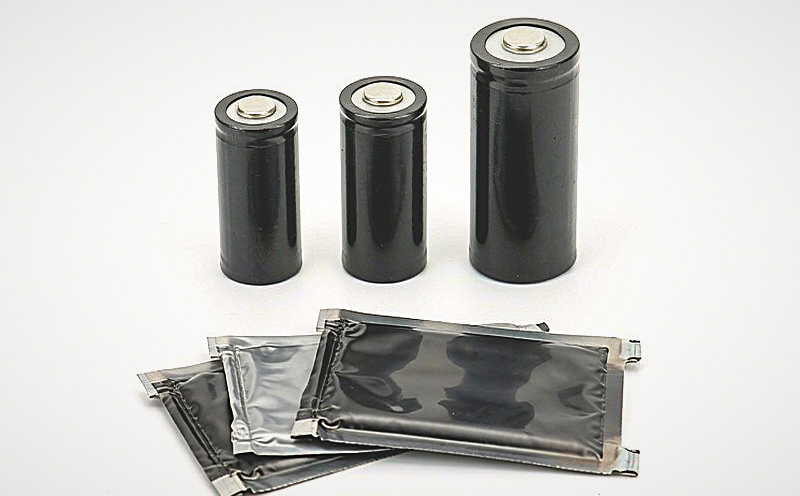
How Series and Parallel Configuration Affects the Robot
Series and parallel configuration connects cell characteristics to vehicle-level voltage, capacity, and power. Cells connected in series increase pack voltage while retaining the capacity of one series string. Cells connected in parallel increase amp-hour capacity and distribute current across multiple cells. Research on lithium-ion module configurations (U.S. Department of Energy) shows that series-parallel architecture affects current distribution, voltage spread, energy throughput, and degradation behavior, especially when cells are not perfectly matched.
For example:
A 6S standard lithium battery has a nominal voltage of approximately 22.2 V.
A 12S standard lithium battery has a nominal voltage of approximately 44.4 V.
Two 30 Ah strings connected in parallel provide a nominal capacity of 60 Ah, provided the cells and current paths are properly matched.
Electrical power follows P = V × I. For the same required power, a higher-voltage system can operate at a lower current. This can reduce resistive losses in cables and connectors, because those losses increase with the square of current (P loss = I²R). Higher voltage is not automatically better — it may require a higher-voltage motor controller, charger, BMS, insulation system, contactor, and connector. More parallel cells can increase capacity and output capability, but they also add weight, volume, interconnections, and cell-consistency requirements. The correct architecture should be determined together with the propulsion system, control electronics, charger, connector, and available housing space.
Capacity Is Not the Same as Mission Endurance
Battery capacity is normally stated in amp-hours, but underwater robot energy should also be evaluated in watt-hours: Energy (Wh) = Nominal Voltage (V) × Capacity (Ah). Mission time depends on usable energy, not Ah alone. The energy model must include propulsion, onboard computers, cameras, lights, sonar, communications, manipulators, pumps, and other auxiliary loads. Vehicle speed, water current, hydrodynamic drag, motor efficiency, temperature, aging, and the required recovery reserve also affect the result.
A practical preliminary estimate is: Required Energy = (Average Power × Mission Time) ÷ (Usable Depth of Discharge × System Efficiency). An engineering reserve should then be added for return, surfacing, unexpected currents, route changes, and battery aging. Long-range AUV research (NOAA Institutional Repository) treats endurance, route planning, navigation, and data transfer as connected system-level constraints rather than independent specifications.
Cold water must also be included in the calculation. Lithium-ion batteries can lose available capacity and power at low temperatures because ion transport slows and internal resistance increases. Laboratory research supported by Purdue University and the U.S. Department of Energy documented substantial capacity reductions as test temperature decreased, showing why room-temperature capacity cannot be used as the only basis for cold-water mission planning.
Design for Continuous Power, Peak Current, and Voltage Sag
An underwater robot rarely operates at one constant current. Cruising may create a moderate load, while thruster startup, rapid maneuvering, station keeping in strong currents, manipulator movement, or simultaneous tool operation can produce short power peaks. The battery specification should distinguish:
A battery may have sufficient nominal capacity but still fail to support the propulsion system if its internal resistance is too high. A large current pulse can pull the terminal voltage down far enough to reduce thruster performance, trigger BMS protection, or restart vehicle electronics. Research on underwater thruster control has specifically identified battery voltage sag as a factor that can limit available thruster output. Power capability must therefore be checked across the complete current path: cell, busbar, weld, fuse, BMS, cable, connector, and motor controller. Charge rate, discharge rate, temperature, and calendar time also affect battery degradation, which is why DNV recommends controlled and transparent cell-testing methods when comparing battery performance (DNV-RP-0577).
UFOPOWER’s high-rate pouch-cell and industrial UAV experience provides a useful engineering base for underwater thrusters and battery-powered ROVs. Both applications involve motor loads, high current, voltage stability, connector heating, and limited weight. The actual discharge rate still needs to be confirmed from the robot’s measured or simulated load profile.
PACK Structure, Waterproofing, and Mechanical Protection
The cell is only one part of an underwater battery system. The pack also needs mechanical support, insulation, wiring control, BMS placement, thermal paths, sealing interfaces, and protection against vibration and impact. Cylindrical pressure housings are common because their geometry distributes external pressure efficiently. At an average seafloor depth of 3,800 meters, hydrostatic pressure is roughly 380 times atmospheric pressure at sea level. Housings for batteries and electronics must therefore be engineered around the target depth rather than treated as ordinary waterproof enclosures.
UFOPOWER has developed rugged smart battery packs for agricultural and industrial UAVs. Existing products combine BMS functions, thermal design, structured enclosures, high-current interfaces, and water-resistant construction for demanding outdoor operations. Several of these practices transfer directly to underwater projects:
Sealing around screws and enclosure joints
Waterproof power and data connectors
Sealing rings around buttons and service interfaces
Sealed cable exits with strain relief
Internal insulation and moisture barriers
Controlled placement of gaskets and sealing plugs
Shock-absorbing supports around cells and circuit boards
Water resistance is not the same as deep-water qualification. Agricultural and cleaning drones primarily face rain, spray, cleaning liquids, vibration, and repeated field handling. An underwater robot must also withstand continuous immersion, hydrostatic pressure, pressure cycling, saltwater corrosion, seal compression, and long-term material aging. Waterproofing and pressure resistance should therefore be validated at the complete battery enclosure or vehicle level. The same rule applies to vibration and impact performance: experience from UAV and high-power battery packs can guide material selection and structural design, but the final underwater configuration requires project-specific testing.
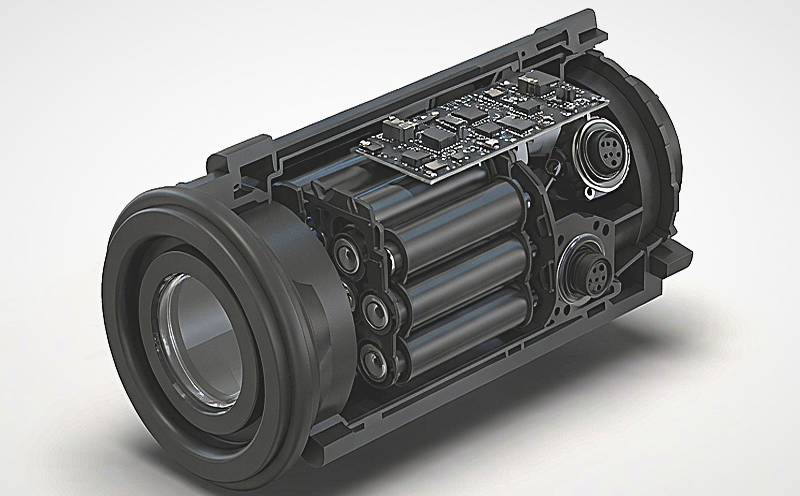
Connector Design Is Part of the Power System
An underwater battery connector must be selected by more than pin count. Engineers need to consider voltage, continuous and peak current, contact resistance, wire gauge, locking method, mating cycles, corrosion resistance, sealing, and communication requirements. Power, charging, and data may use separate interfaces or a combined connector. Some systems are connected only in a dry environment, while subsea docking or service systems may require wet-mate technology. IEEE research on subsea power and data transmission treats wet-mate connection as a dedicated underwater engineering problem, not a standard extension of an exposed electrical plug.
UFOPOWER works with XT90S, AS150, AS150U, EC-series, Molex, and customized smart interfaces in UAV and industrial battery systems. These provide experience in high-current delivery, anti-spark design, locking, signal contacts, and BMS communication. A standard UAV connector should not be presented as subsea-ready unless its sealing and pressure performance have been verified for the intended environment.
BMS and Thermal Management Must Be Designed Separately
A BMS monitors and controls the battery, but it is not the complete thermal-management system. Typical BMS functions include cell-voltage monitoring, current measurement, temperature monitoring, overcharge and over-discharge protection, overcurrent and short-circuit protection, balancing, SOC estimation, fault records, and communication. NASA describes cell monitoring, charge balancing, fault detection, and overvoltage or undervoltage protection as core functions of high-voltage battery management.
Thermal management deals with how heat moves through the pack. It includes sensor placement, cell spacing, thermal pads, heat spreaders, insulation, enclosure materials, and the conduction path from the cells to the pressure housing. NASA battery research emphasizes that pack energy, series-parallel layout, charging and discharging behavior, enclosure design, operating environment, and thermal conductivity all affect the thermal solution. There is no single architecture that fits every battery pack.
Cold seawater does not guarantee that a sealed battery pack will remain cool. Heat still needs to travel from the cell through the support structure and enclosure before it can reach the surrounding water. UFOPOWER develops BMS solutions with CAN and SMBus communication, SOC indication, current detection, abnormal-event logs, balancing, temperature alarms, and charge-discharge protection. These capabilities can be adapted to a project-specific underwater robot BMS rather than simply reusing an existing UAV board unchanged.
From EVT to DVT, PVT, and Mass Production
A custom underwater battery should be developed in stages. During concept development, the team defines chemistry, voltage, capacity, power, housing space, connector architecture, BMS functions, and charging strategy. EVT prototypes verify core electrical functions and initial integration. DVT focuses on thermal behavior, vibration, shock, communication, sealing, pressure, and vehicle-level operation. PVT confirms production tooling, assembly processes, traceability, end-of-line testing, and batch consistency.
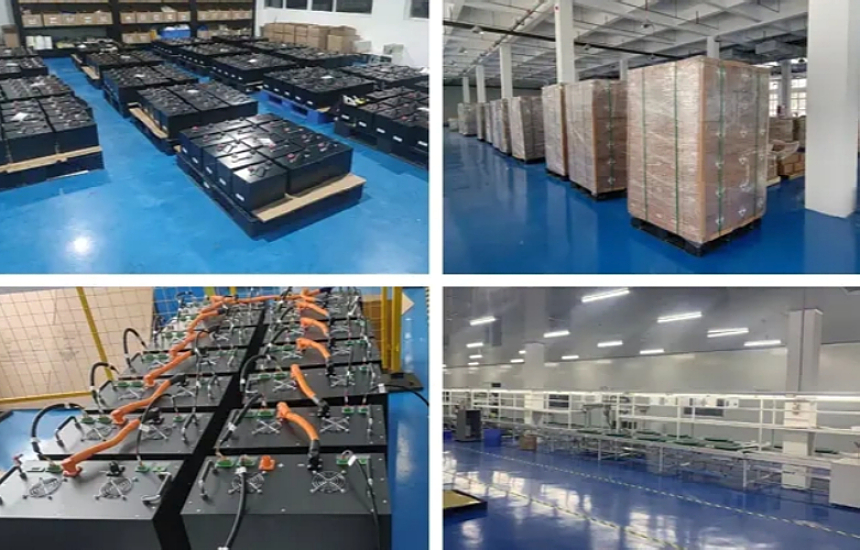
This staged approach matters because cell-level results do not fully predict module or pack behavior. NASA and UL testing has shown that module configuration and heat-dissipation paths can materially change how a complete battery responds compared with an individual cell. As a factory-direct battery manufacturer, UFOPOWER supports cell development, pack engineering, BMS, assembly, testing, and production in-house. Its R&D organization covers high-energy, high-rate, low-temperature, custom-shaped, and intelligent battery technologies, allowing the company to participate earlier than a supplier focused only on standard finished packs. The goal is a long-term engineering relationship: UFOPOWER works with customers from early platform development through validation and volume production, including projects that begin with a small engineering team and later move into commercial manufacturing.
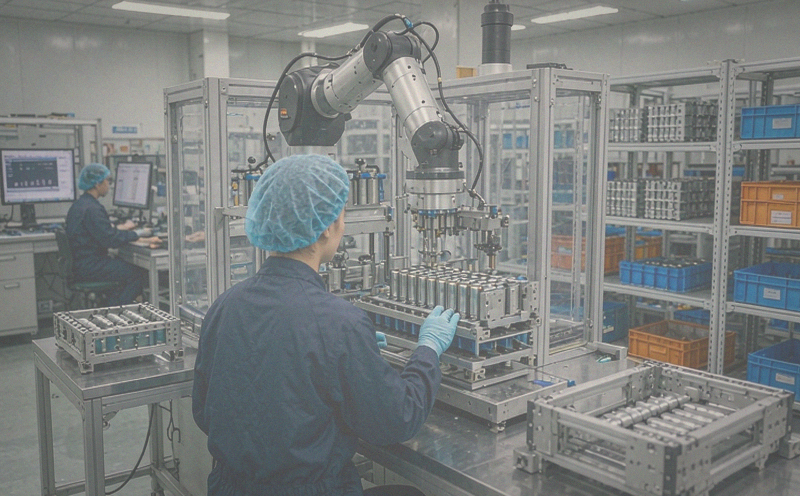
Testing, Documentation, and Compliance Support
UFOPOWER supports common battery safety testing, transportation documentation, and market compliance requirements based on the selected battery configuration and target market. To begin an engineering evaluation, share the target voltage, capacity or energy, average power, continuous and peak current, available dimensions, operating temperature, target depth, charging method, communication requirements, development schedule, and estimated production volume. UFOPOWER can then evaluate the cell chemistry, series-parallel architecture, BMS, connector, thermal path, and mechanical pack structure as one integrated system.


 EN
EN AR
AR DE
DE ES
ES FR
FR JP
JP KO
KO PT
PT RU
RU Главная >
  Sep 02, 2026




 в WhatsApp