
 Oct 23, 2026
Every UAV is powered by a battery that does more than turn propellers. It supplies the motors, the sensors, the flight controller and the communications link, and it does all of that inside a weight budget that the airframe cannot exceed. Flight time, payload capacity and operational safety all trace back to the same decision: which UAV battery type is in the aircraft.
This guide covers the three battery types still relevant to drone design — lithium polymer, lithium-ion and nickel-cadmium — how they differ on energy density, discharge rate and temperature behavior, how a battery management system keeps them safe, and how a pack is actually built. UFOPOWER is a professional lithium battery manufacturer and supplies custom UAV packs with integrated BMS for inspection, mapping, logistics and heavy-lift programs.
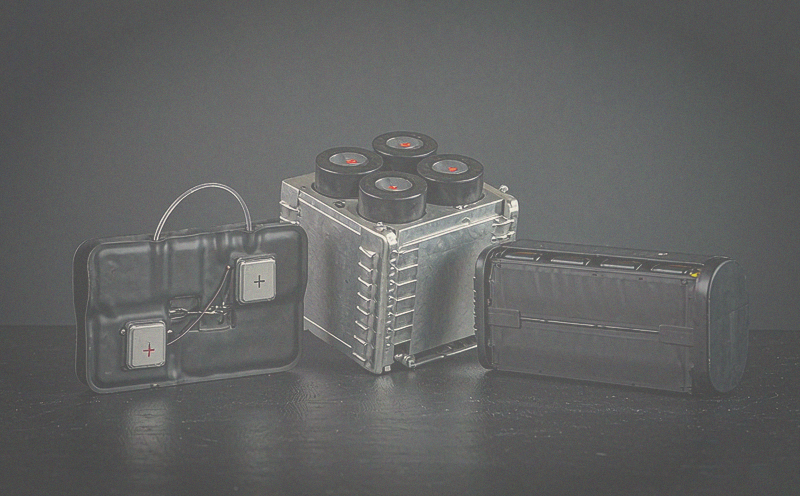
The three chemistries are not interchangeable. Each one occupies a different window of energy density, current capability, cycle life and temperature tolerance, and that window decides what kind of aircraft it suits.
| 인자 | Lithium polymer (LiPo) | Lithium-ion (Li-ion) | Nickel-cadmium (NiCd) |
|---|---|---|---|
| Energy-to-weight ratio | 높은 | High per cell, tends to be heavier as a finished pack | 낮은 |
| 방전 비율 | Highest — bursts for aggressive maneuvering | Moderate — steady power, lower peak | Moderate, with high tolerance for abuse |
| 주기 생활 | Shorter, sensitive to how it is treated | Longer, lower self-discharge | Long cycle life, but memory effect if cycled poorly |
| Form factor | Flexible pouch, can be shaped to the bay | Fixed cylindrical or prismatic cells | Fixed cylindrical cells, bulky |
| Temperature behavior | Needs thermal management in heat and cold | Stable, BMS-dependent | Strong at low temperature |
| Handling risk | Sensitive to overcharge, over-discharge and swelling | Thermal risk if cells are mismanaged | Memory effect, heavy metal content |
| Typical role today | Most consumer, commercial and racing drones | Industrial, long-endurance and heavy-lift UAVs | Legacy and niche applications |
LiPo packs are the default choice for most drones because the pouch format allows a pack to be built into the shape the airframe needs. The chemistry also delivers high discharge rates, which matters when the flight controller demands a burst of thrust during a rapid climb or an aggressive maneuver.
• High energy-to-weight ratio for the pack mass carried
• Flexible shapes and sizes that fit tight battery bays
• High discharge rates for agility and recovery
• Rechargeable and compatible with most drone BMS designs
• Sensitive to overcharge and over-discharge
• Requires careful storage to prevent swelling
• Needs a capable BMS to stay safe over a long service life
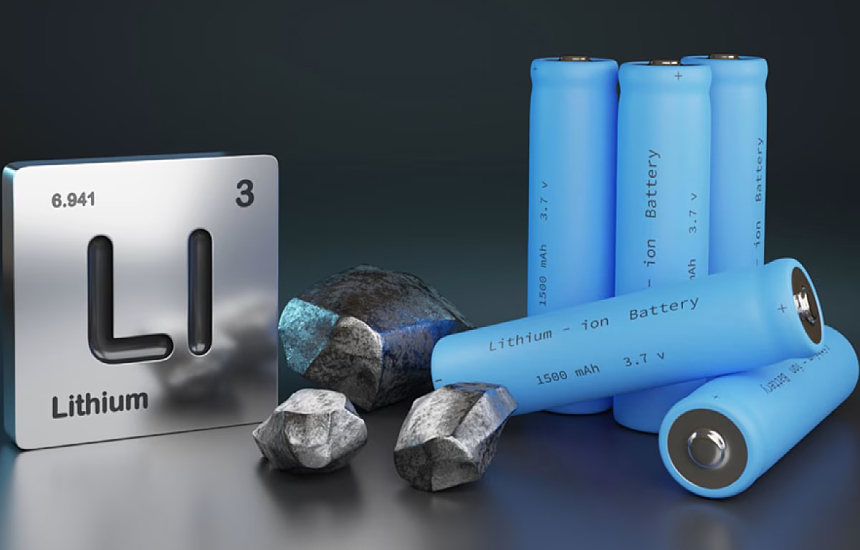
Li-ion cells offer high energy density per cell and a lower self-discharge rate, but a lower peak discharge rate than LiPo. That trade makes them the usual choice for larger UAVs, industrial platforms and missions that need long duration at a relatively steady power level rather than violent bursts of current.
• Higher energy density per cell than earlier chemistries
• Longer service life and lower self-discharge
• Chemically more stable than LiPo under normal use
• Heavier and less flexible in shape
• Lower peak discharge rates, which limits rapid acceleration
• Requires a robust BMS to prevent thermal issues
NiCd is rare in new UAV designs, yet it still appears in specialist and legacy platforms. Its reputation rests on mechanical robustness, long cycle life and reliable behavior at low temperature — qualities that still matter in cold-weather or high-abuse operations.
• Operates across extreme temperatures
• Robust and tolerant of abuse
• Long cycle life
• Lower energy density than lithium chemistries
• Memory effect demands disciplined cycling
• Heavier than both LiPo and Li-ion
Lithium polymer and lithium-ion are no longer the only practical answers. Semi-solid-state cells have moved from laboratory demonstrations into shelf-ready UAV platforms, and UFOPOWER builds them in three energy tiers: 400 Wh/kg, 450 Wh/kg and 500 Wh/kg at platform level, with calculated pack-level densities from roughly 329 Wh/kg up to about 479 Wh/kg depending on configuration.
These packs matter for the same reason LiPo once did: they shift the weight budget. A pack that stores more energy per kilogram either extends the mission or frees mass for payload. The trade is current capability — the highest-energy configurations are limited to lower continuous current than a high-rate LiPo pack, so they suit cruise-dominant fixed-wing and VTOL missions better than aggressive multirotor work. Choosing between them is a power-curve question, not a datasheet question.
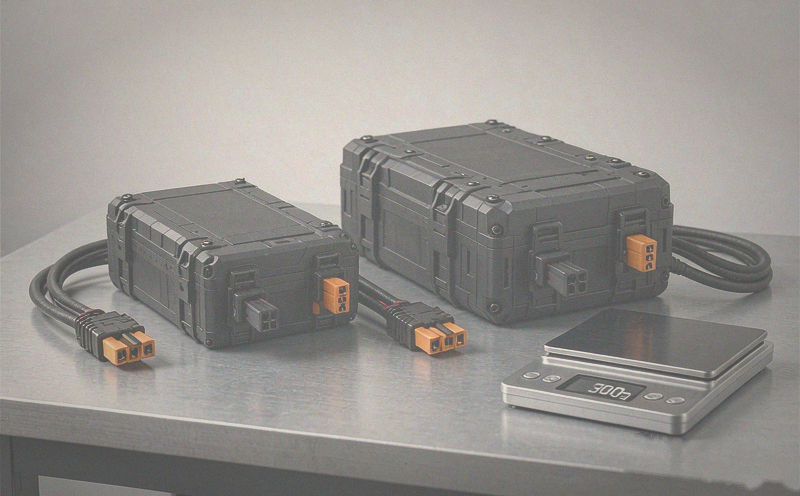
For most contemporary drones, LiPo wins on capacity-to-weight. The pouch format removes mechanical packaging that cylindrical cells require, and the high discharge rate means the pack can be sized for the actual mission rather than oversized for a current margin.
Li-ion takes over where payload and range dominate: long-range platforms carrying sensors, cameras or cargo benefit from the higher cell-level energy and longer service life, and they can absorb the extra mass. NiCd remains a specialist answer for harsh conditions rather than a general one.
Whatever the chemistry, safety depends on the same component. A BMS that continuously checks voltage and temperature at cell level is what turns a chemistry choice into a reliable aircraft.
A battery on its own cannot guarantee safe flight. The protection comes from a battery management system built around five functional blocks:
| BMS block | Function in the pack |
|---|---|
| Microcontroller unit (MCU) | The control brain, running all monitoring and protection logic |
| Battery control chip | Manages voltage and current flow for each cell |
| MOSFET switches | Regulate power distribution and cut off overcurrent events |
| NTC temperature sensors | Track thermal conditions before overheating becomes a failure |
| Cell balancing circuits | Hold every cell at equal voltage during charge and discharge |
With those blocks in place, the BMS can deliver automatic discharge control, real-time monitoring of voltage, current and temperature, and protection against overvoltage, undervoltage, overcurrent and thermal events. The result is longer battery life, steady power delivery and the avoidance of the failure modes that matter most in high-performance UAVs, where current demand changes within milliseconds.
Choose the chemistry against the intended endurance, weight limit and flight profile. Then fix the electrical targets: connector type, system voltage, discharge rate and capacity in mAh or Ah.
Match the BMS to the chemistry. At minimum it has to monitor individual cell voltages, read the temperature sensors, balance cells for long service life and provide overcurrent protection.
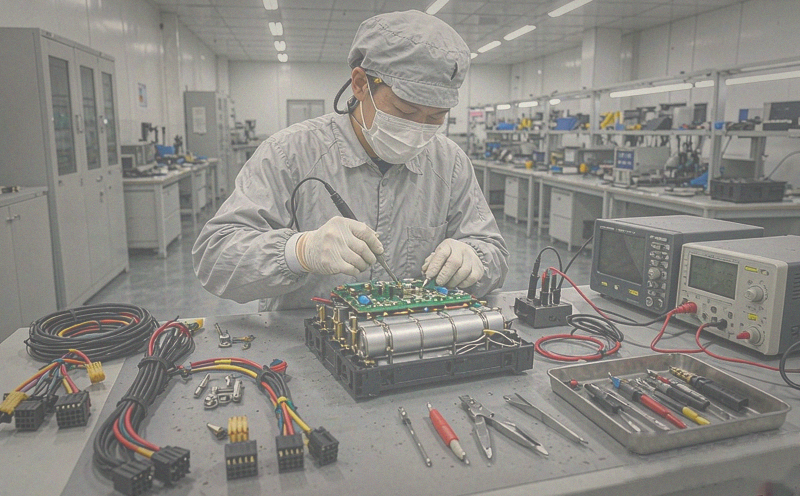
The enclosure has to be rigid enough to protect the cells, light enough not to waste the energy inside them, and resistant to the vibration a multirotor transmits into the airframe. Heat sinks or thermal pads carry heat away from the cells instead of letting it collect in a sealed bay.
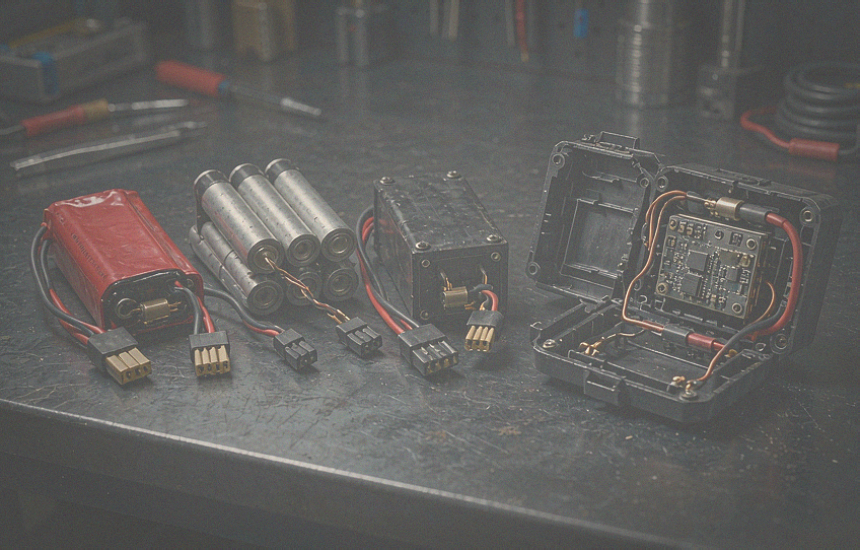
Cells are arranged to hit the voltage and capacity targets. A 3S LiPo pack places three cells in series for 11.1V nominal, while parallel strings raise capacity without raising voltage.
Charge, discharge and stress testing confirms the pack meets its ratings. BMS validation covers cell balancing, fault detection and thermal monitoring, and it is the step that separates a prototype from a shippable pack. UFOPOWER runs in-house production with 100% factory testing before shipment, and OEM and ODM customers get the same validation loop.
• Weight versus capacity — a heavier pack trades agility for flight time
• Voltage and discharge rate — must match the motors and electronic speed controllers
• Form factor — must fit the frame and leave room for the payload
• Safety features — BMS integration, thermal protection and fault handling
• Durability — temperature range, vibration and connector wear
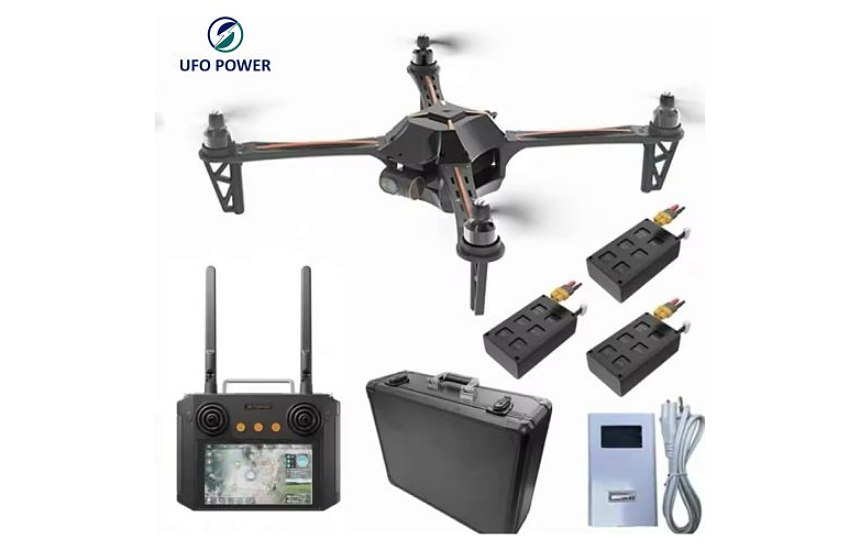
• Charging infrastructure — charge rate, connector standard and turnaround time per sortie
Getting these six right is what separates a pack that performs from a pack that merely fits. A battery is not a consumable bolted onto a finished aircraft; it is part of the power system design.
Even with an advanced BMS, how the pack is treated between flights decides how long it lasts:
• Avoid deep discharge — keep packs above roughly 40% state of charge in storage
• Store cool and dry to slow chemical degradation
• Cycle periodically — top up every two to three months
• Keep terminals clean to hold resistance and voltage stable
• Avoid repeated high-altitude overuse that pushes cells into thermal stress
• Log every pack's charge and discharge history so weak units leave the fleet before they fail in the air
C-rate comes up in every UAV battery conversation and is often misread. For a 10Ah pack, 1C means 10A for one hour, 0.5C means 5A for two hours, and 2C means 20A for half an hour. Capacity ratings are normally quoted at 1C, so a pack compared at a different rate is not being compared fairly.
| Rate | Current from a 10Ah pack | Duration at that current |
|---|---|---|
| 0.5C | 5A는 | 2 hours |
| 1C | 10A | 1 hour |
| 2C | 20A | 30 minutes |
Battery type decides endurance, payload and safety before a single flight is logged. Lightweight agile platforms belong to LiPo, long-duration and heavy-lift industrial aircraft belong to Li-ion, harsh or legacy conditions still have a case for NiCd, and high-energy semi-solid-state packs now sit above all three on energy per kilogram at the cost of current capability.
Whichever chemistry the mission needs, the BMS is what makes it safe and repeatable. As a professional lithium battery manufacturer, UFOPOWER combines cell selection, BMS design, pack assembly and factory testing into one process, and takes OEM and ODM projects from specification to validated hardware.
© 2026 UFOPOWER. All rights reserved. | www.ufobattery.com 이메일: sales@ufo-battery.com UFOPOWER 배터리 | 맞춤형 배터리 솔루션
What kind of batteries are used in UAVs today?
What are the different types of drone batteries?
Which is better, a 1C or a 0.5C battery?
What is the best battery for a UAV?
What are the four main types of drones, and does battery choice differ between them?
How much does the BMS really matter compared with the cell chemistry?


 WhatsApp의
 EN
 AR
 DE
 ES
 FR
 JP
 KO
 PT
 RU
 홈 >