
 Oct 20, 2026
Choosing a UAV battery from a specification sheet looks like a one-line decision: pick the highest Wh/kg figure and expect the longest flight. In practice the number tells you nothing about whether the pack can hold voltage through takeoff, repeated climbs, VTOL transition or a wind-correction burst, and nothing about how many operating cycles it will survive.
This guide compares three semi-solid-state UAV battery platforms — 400, 450 and 500 Wh/kg — using complete pack data: capacity range, voltage options, nominal energy, pack weight, calculated pack energy density, continuous and pulse current limits, and published cycle specifications. The right answer depends on how your aircraft uses power, not only on how much energy it carries.
UFOPOWER is a professional lithium battery manufacturer and builds high-energy UAV packs for inspection, mapping, logistics, VTOL and long-endurance fixed-wing programs. The comparison below is the same one we run with customers before a pack specification is fixed.
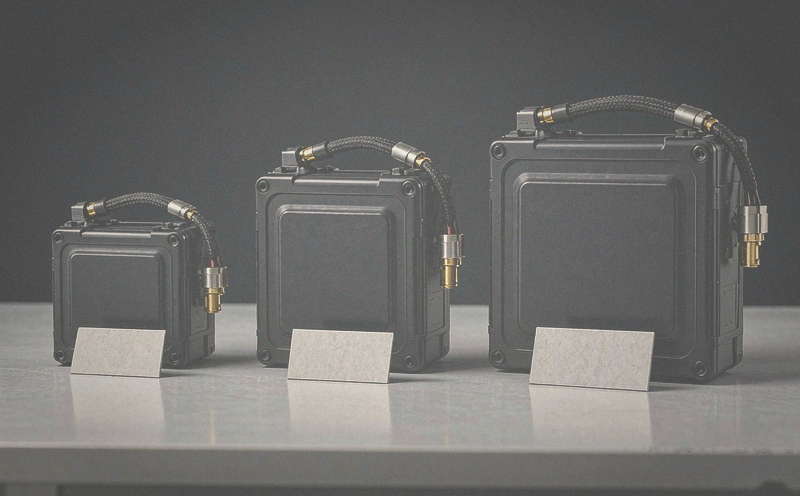
Specific energy, measured in watt-hours per kilogram, describes how much nominal energy is stored for every kilogram of battery mass. It matters because mass saved on the pack can be spent on payload, reserve energy or a lighter airframe. What it does not describe is how quickly that energy can be delivered.
A UAV battery has to supply both energy and power. Energy sets how long the aircraft can stay aloft; power sets whether it can take off, climb, accelerate, hover and recover from gusts. A high-energy pack that sags under the aircraft's highest load can trigger an early low-voltage warning while a large share of nominal capacity is still sitting in the cells.
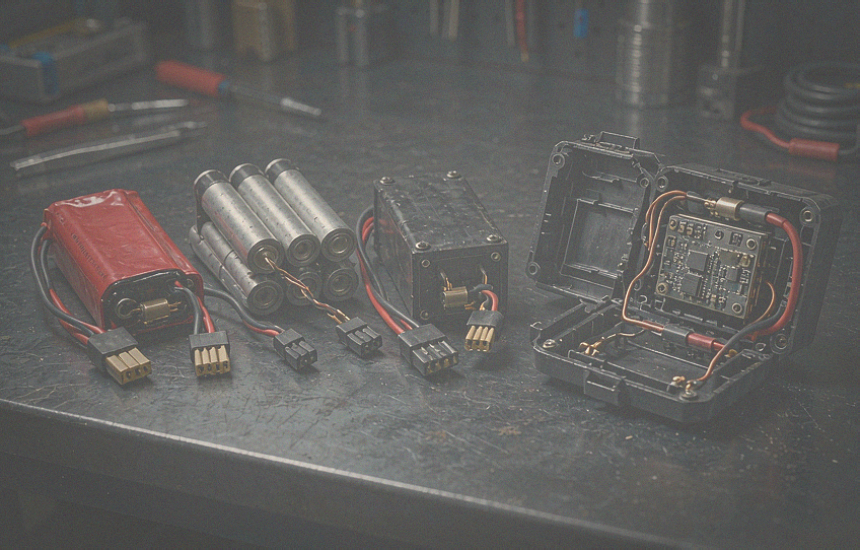
There is a second trap: the label on a battery platform is not the same as the measured specific energy of a finished pack. A complete UAV pack adds tabs, conductors, cables, connectors, insulation, protective materials and sometimes communication hardware. Independent pack modeling work at Argonne National Laboratory treats cells and packs as separate problems for exactly this reason, and it also shows that demanding a higher power-to-energy ratio can impose a mass penalty through electrode and pack design. That is why the comparison in this article uses pack-level energy density, calculated as nominal pack energy divided by total pack weight — not the platform headline number.
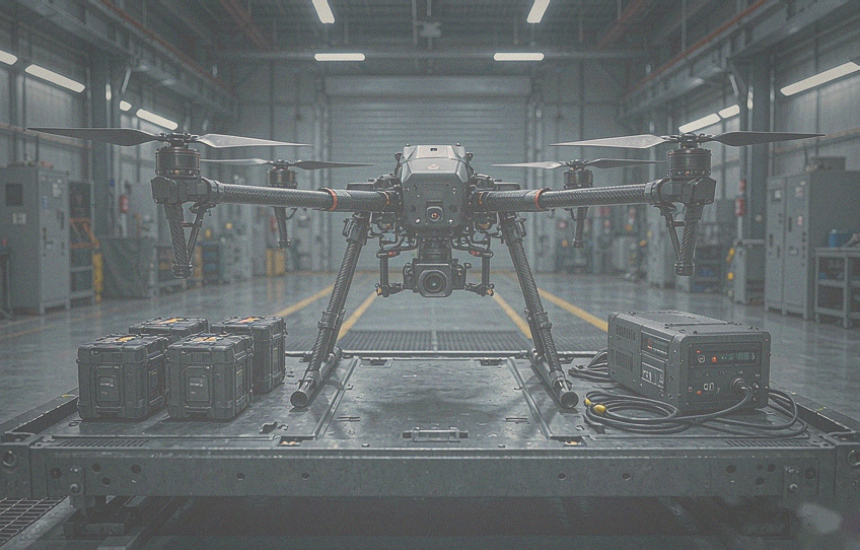
Mass also creates a hard ceiling. A battery keeps its mass after its energy is spent, and rotorcraft power demand rises as all-up weight increases. Rotorcraft endurance research from the University of Bristol reached the same conclusion from the flight-mechanics side: endurance has to be optimized around battery mass, available energy and maximum continuous current together, not around capacity alone.
The three platforms are not simply entry, mid and premium versions of one pack. The 400 Wh/kg series offers the widest model range and the strongest published cycle figure. The 450 Wh/kg series raises pack-level specific energy while keeping several higher-current configurations. The 500 Wh/kg series pushes airborne energy to its highest level within a smaller set of 44Ah packs.
| Specification | 400 Wh/kg series | 450 Wh/kg series | 500 Wh/kg series |
|---|---|---|---|
| Capacity range | 8-107Ah | 8-41Ah | 44Ah |
| Voltage options | 6S, 8S, 12S | 6S, 8S, 12S | 6S, 12S |
| Nominal energy | 177.6-4750.8Wh | 177.6-1820.4Wh | 976.8-1953.6Wh |
| Pack weight | 0.54-13.4kg | 0.48-4.48kg | 2.04-4.30kg |
| Calculated pack energy density | 328.89-371.51Wh/kg | 370.00-436.72Wh/kg | 454.33-478.82Wh/kg |
| Max continuous current | 100A | 100A | 44A |
| Max pulse current | 150A | 150A | 90A |
| Standard model count | 20 models | 15 models | 44Ah packs in 6S and 12S |
| Published cycle figure | More than 300 cycles | Validate against your duty cycle | Validate against your duty cycle |
Two footnotes decide whether these numbers are usable for your aircraft. First, the current values reflect the limits of the standard pack connector and cable configuration, not only the ideal electrical capability of the cells, and pulse ratings apply for no more than 15 seconds. If your takeoff or transition surge is longer than that window, you are designing against the continuous figure.
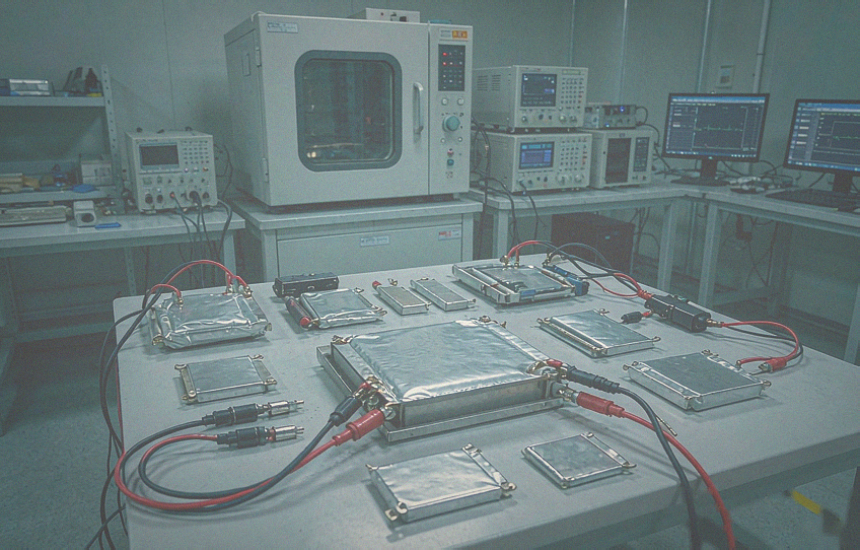
Second, a cycle number without its test conditions is incomplete. Cycle life should be read against depth of discharge, load profile, temperature and the definition of end of life. Work published in Nature Energy involving Stanford University and SLAC National Accelerator Laboratory showed that realistic dynamic discharge profiles produce substantially different aging results from conventional constant-current testing — which is precisely why a watt-hour figure and a cycle figure from different test conditions should not be combined into one expectation.
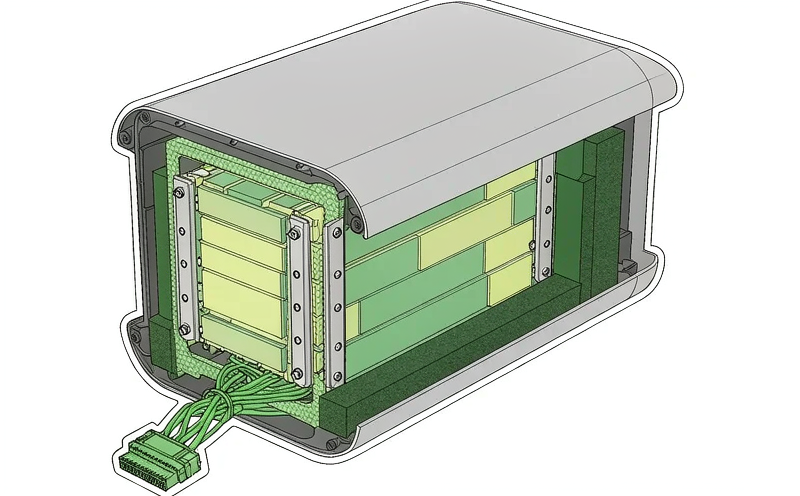
The choice becomes clearer once the mission is translated into electrical terms: average current in hover or cruise, peak current and its duration, required usable energy after reserve, and how often the aircraft flies. Match those three inputs to the platform before comparing Wh/kg.
The 400 Wh/kg series is the most flexible of the three. Its 20 standard models cover 8-107Ah, 6S-12S and 177.6-4750.8Wh, with selected configurations delivering up to 100A continuous and 150A pulse current through the standard connector arrangement. The published figure of more than 300 cycles makes it the logical starting point for fleets that fly repeated missions and need predictable replacement intervals. Inspection multirotors, industrial UAVs, larger logistics aircraft and programs that need several voltage or capacity choices all sit here. For those projects, giving up a modest amount of specific energy in exchange for a better match to power demand and repeated use is usually the right trade.
The 450 Wh/kg series raises calculated pack energy density to as much as 436.72Wh/kg while keeping configurations rated up to 100A continuous and 150A pulse. Its 15 standard models span 8-41Ah in 6S, 8S and 12S formats. This is the platform for aircraft that need lower battery weight without surrendering the power required for takeoff, climbing or VTOL transition. Mapping, fixed-wing inspection, environmental monitoring and medium-range logistics are the obvious candidates. Commercial programs should still define required capacity retention and complete application-specific validation before deployment.
The 500 Wh/kg series carries the highest pack-level specific energy. The 6S 44Ah model provides 976.8Wh at 2.04kg (478.82Wh/kg calculated), while the 12S version provides 1953.6Wh at 4.30kg (454.33Wh/kg). Consider these packs when airborne energy and weight efficiency outrank high continuous power: the standard connector-limited continuous current is 44A, with pulse current capped at 90A for up to 15 seconds. Efficient fixed-wing UAVs, cruise-dominant VTOL platforms and long-distance research programs are the clearest fits.
| Mission profile | Power pattern | Recommended starting point |
|---|---|---|
| Inspection multirotor, daily commercial use | Frequent hover, repeated climbs, high cycle count | 400 Wh/kg |
| Medium-range logistics, mapping | Mixed cruise and climb, moderate peak current | 450 Wh/kg |
| Long-endurance fixed wing, cruise-dominant VTOL | Low average current, short peaks, energy-limited mission | 500 Wh/kg |
| High-payload or high-wind operation | Sustained high current, long surge duration | 400 or 450 Wh/kg, validated on flight logs |
Before choosing between the three platforms, define the mission in electrical and mechanical terms:
• Record average current during hover or cruise
• Measure maximum current during takeoff, climb and VTOL transition, including pulse duration
• Set required usable energy after accounting for reserve state of charge
• Confirm battery compartment dimensions, allowable weight and center-of-gravity limits
• Match connector and cable design to both continuous and peak current
• Define cycle-life, charging, storage and operating-temperature requirements
• Confirm how the pack behaves at the lowest and highest expected ambient temperature
Real flight logs beat motor nameplate ratings, because they show how the complete aircraft draws power in its actual mission rather than on a thrust stand. With those inputs, UFOPOWER can match a standard model or develop a customized voltage, capacity, dimension, cable, connector and charging configuration through our OEM and ODM programs.
It is also worth setting expectations honestly. Figures such as more than 60 minutes of endurance or an 80-100 km VTOL mission range are achievable examples for well-matched airframes, not universal battery guarantees. The pack that meets your full power curve, weight limit and operating plan is the correct one, even if a different platform on the same datasheet has a larger number in the first row.
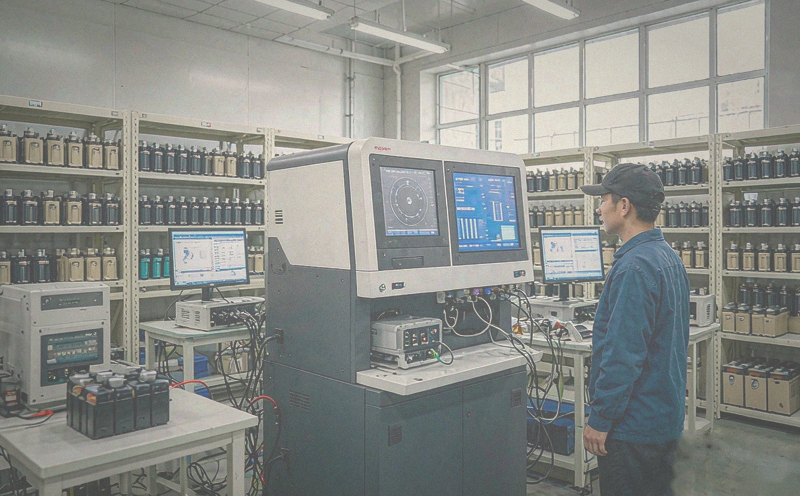
The 500 Wh/kg series stores the most energy per kilogram, which does not make it the automatic choice. The 400 Wh/kg platform offers the widest model range, a published figure of more than 300 cycles and higher-current options for repeated commercial work. The 450 Wh/kg platform is the middle path for aircraft that need higher specific energy without dropping straight into the lower continuous-current window of the 500 Wh/kg packs.
The decision rule is simple to state and hard to shortcut: match the pack to the power curve, not to the headline. Send UFOPOWER your aircraft specification, battery compartment dimensions, current data and flight logs, and we will evaluate which of the 400, 450 or 500 Wh/kg semi-solid-state platforms fits — or configure a pack that does.
© 2026 UFOPOWER. All rights reserved. | www.ufobattery.com | Email: sales@ufo-battery.com | UFOPOWER batteries | Custom battery solutions
What are the main differences between 400, 450 and 500 Wh/kg semi-solid-state UAV batteries?
Which energy density is better for long-endurance drone applications?
How does higher energy density affect battery weight and flight time?
Why is the calculated pack energy density lower than the series name, for example 328.89Wh/kg on a 400 Wh/kg platform?
What should buyers compare when choosing a high-energy-density drone battery?
Can UFOPOWER customize voltage, capacity, dimensions, cables, connectors and charging for these platforms?


 WhatsApp
 EN
 AR
 DE
 ES
 FR
 JP
 KO
 PT
 RU
 Home >