

 Oct 29, 2026
Forklift downtime is a productivity killer, and in most warehouses the bottleneck is not the truck, it is the battery. Every operations manager weighing the lead-acid vs lithium-ion forklift battery decision is really deciding three things at once: how fast the truck still lifts at the end of a long shift, how many labor hours the battery quietly consumes, and what the fleet actually costs over five years.
Traditional lead-acid packs win on sticker price. Modern LiFePO4 forklift batteries win on almost everything else: charging speed, cycle life, maintenance hours, usable floor space and total cost of ownership. As a professional lithium battery manufacturer, UFOPOWER builds factory-direct 24V, 48V and 80V packs for counterbalance trucks, reach trucks, tow tractors and AGVs, so this comparison is written from the floor of a working warehouse rather than from a brochure.
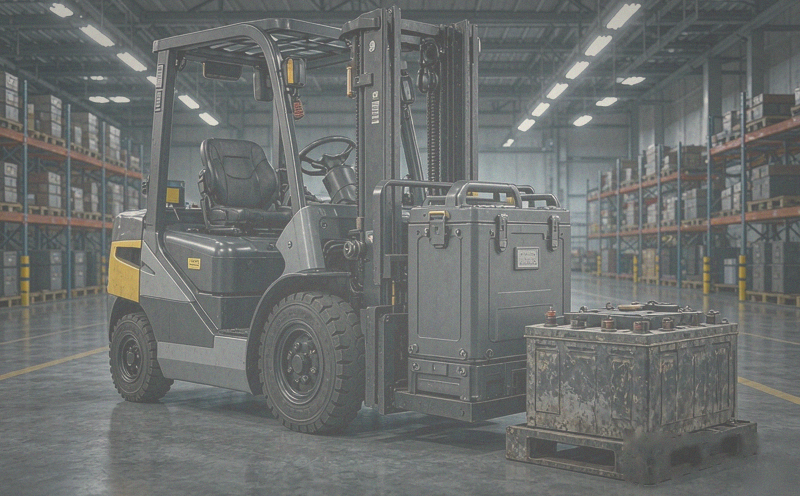
Lead-acid charging is a two-stage ritual. The pack sits on charge for roughly eight hours, then needs another eight hours of cool-down before it can safely go back into service. That is a sixteen-hour unavailability window for every single charge cycle. In a one-shift operation it is workable. In a three-shift operation it forces a hard piece of arithmetic: if one battery is out of service for two-thirds of the day, one forklift needs two or three batteries to stay productive.
Each of those spare batteries carries its own purchase order, its own bay and lifting equipment, its own watering schedule and its own failure risk. Lithium-ion reverses the constraint. A LiFePO4 pack charges in one to four hours depending on charger size and state of charge, needs no cool-down at all, and can be topped up during breaks. One pack can run the truck, take a partial charge at lunch, and finish the third shift without ever leaving the chassis.
| Operating Factor | なまりさん | Lithium-Ion (LiFePO4) |
|---|---|---|
| Charge time | About 8 hours | 1 to 4 hours, typically 1 to 2 hours |
| Cool-down after charge | About 8 hours, mandatory | 不要 |
| Opportunity charging | Not recommended, shortens life | Recommended practice |
| Power delivery | Voltage sags as it discharges, truck slows near end of shift | Near-flat power curve from full to empty |
| じゅんかんじゅみょう | 1,000 to 1,800 cycles | 3,000 to 5,000+ cycles |
| Daily maintenance | Watering, acid cleaning, weekly equalization | Sealed cells, no routine work |
| Safety profile | Acid spills, hydrogen gas during charging | Sealed pack, protection managed by the BMS |
| Dedicated battery room | Usually required for venting | Not required |
| Batteries per truck, multi-shift | 2 to 3 | 1 |
| Upfront cost | Lower per unit | Higher per unit |
| Five-year total cost of ownership | Higher in multi-shift use | Lower in multi-shift use |
The purchase price of a lead-acid pack is only the entry ticket. The operating cost shows up in three places, and none of them appear on the quotation.
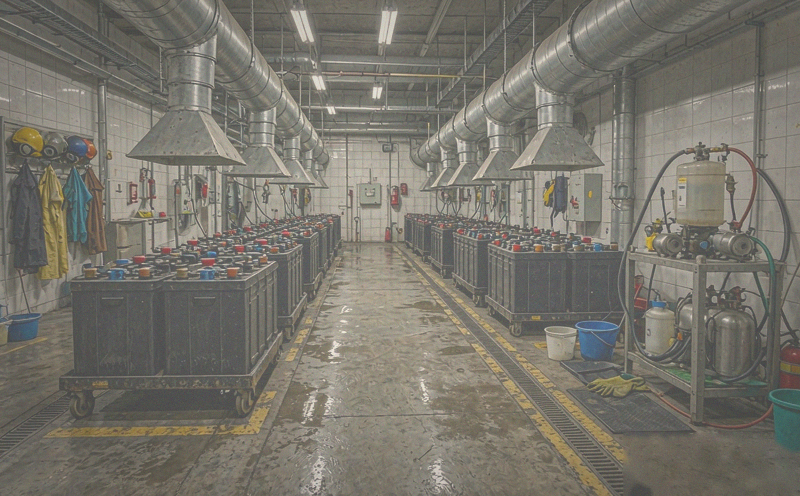
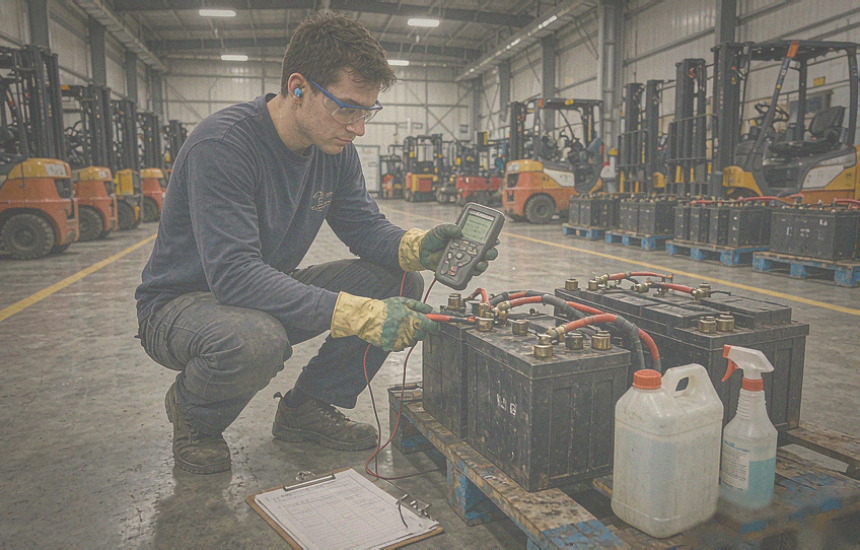
Lead-acid maintenance is not an occasional task, it is a standing labor line. Every cell needs distilled water at the correct level. Acid residue and terminal corrosion need cleaning. Plates need a periodic equalization overcharge to de-sulfate, which consumes time, energy and a trained operator in protective equipment. Multiply that routine by the number of batteries in the fleet and by fifty-two weeks, and the labor account often overtakes the price gap within the first year.
A battery that disappears for sixteen hours cannot serve the next shift, so multi-shift sites buy redundancy instead of solving the problem. Every spare battery is also a spare charger, a spare bay and a spare set of handling tools. Lithium removes the swap event from the workflow entirely, which is why one pack per truck is normal rather than exceptional.
Charging lead-acid produces hydrogen gas, which in most jurisdictions means a dedicated, ventilated battery room with the right electrical classification. That room is warehouse floor space you rent, heat, insure and never store product in. It is also a change-management cost, because watering, PPE and gas monitoring all need documented procedures.
• Zero routine maintenance. Cells are sealed. No watering, no acid handling, no equalization cycle, no PPE routine.
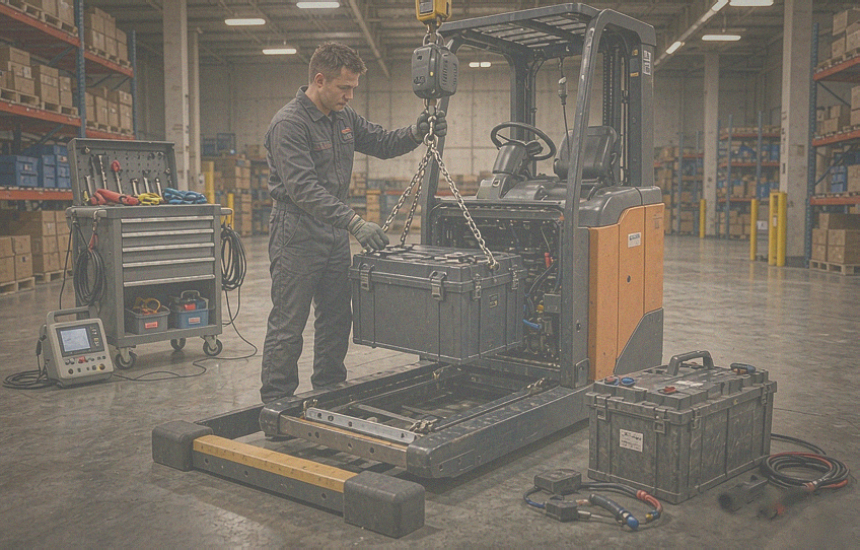
• No battery swapping. The pack stays in the truck and charges in place, which removes a lift, a bay and a risk from every shift change.
• Flat power curve. LiFePO4 holds voltage far more steadily across the discharge range, so lift and travel speed at hour seven match hour one.
• Opportunity charging is encouraged. Short partial charges during breaks are a designed use case, not an abuse case.
• Distributed charging. Instead of one central room, small chargers can sit near workstations or in break areas, cutting deadhead travel time.
The value is simple arithmetic. A 48V 400Ah pack charged at 0.5C for a thirty-minute lunch break takes back roughly 100Ah, about a quarter of nameplate capacity, without harming the cells. Repeat that across two breaks and a shift change and the truck never approaches empty. On lead-acid the same behavior accelerates plate damage, which is why the practice is banned in most lead-acid fleets and why those fleets stay locked into the swap model.
A common mistake is replacing a lead-acid pack with a lithium pack of the same nameplate capacity. The two chemistries are not equivalent at the same Ah number. Lead-acid is normally limited to about 50 percent depth of discharge to protect cycle life, while LiFePO4 can routinely use 80 to 90 percent of its capacity. A truck that ran on a 48V 600Ah lead-acid battery often moves to a smaller lithium pack with equal usable energy and less weight, which also frees payload and reduces wear on the chassis.
| でんあつプラットフォーム | Typical LiFePO4 Configuration | Typical Capacity Band | Typical Equipment |
|---|---|---|---|
| 24V | 8S, 25.6V nominal | 100 to 300Ah | Walkie stackers, pallet trucks, small tow tractors |
| 48V | 15S, 48V nominal | 200 to 600Ah | 1.5 to 3.5 tonne counterbalance and reach trucks |
| 80V | 25S, 80V nominal | 300 to 700Ah | Heavy counterbalance trucks, high-throughput multi-shift sites |
The band above is a starting point, not a specification. Final sizing needs three inputs from your operation: peak current draw during lifting, average energy per truck-hour, and the longest shift the truck must run without a charge. Send those to a battery engineer and the pack can be modelled in kWh rather than guessed in Ah.
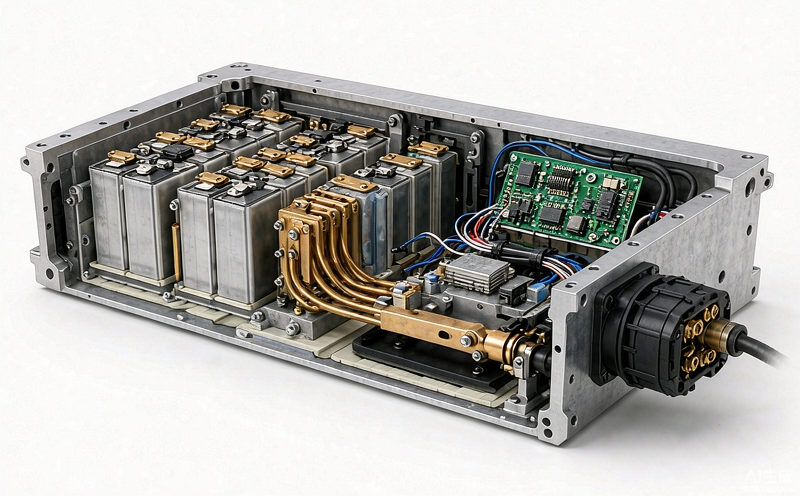
Lead-acid hazards are physical and visible: acid spills during watering, hydrogen venting during charge, and heavy packs moved by hand or hoist. Lithium-ion hazards are electrical and thermal, which means the protection has to be engineered rather than inspected by eye. Ask every supplier four questions.
• Does the BMS monitor cell over-voltage, under-voltage, over-current and temperature on every group, and does it actively balance cells?
• What is the pack enclosure IP rating, and how is it mounted to survive vibration and wash-down in a food or cold-store environment?
• Does the BMS communicate with the truck controller over CAN, so the truck derates gracefully instead of shutting down mid-aisle?
• Are UN38.3 transport test reports and IEC 62619 cell and pack reports available for your compliance file?
Most lead-acid vs lithium comparisons fail because they compare one battery to one battery. Compare fleets instead, using six cost lines and your own numbers.
| Cost Line | How to Calculate | What Changes With Lithium |
|---|---|---|
| Battery purchase | Price per pack multiplied by packs per truck multiplied by fleet size | Higher unit price, one pack per truck instead of two or three |
| Replacement cycle | Total cycles per year divided by rated cycle life | Two to three times longer service before replacement |
| Maintenance labor | Hours per pack per week multiplied by loaded labor rate multiplied by 52 | Routine watering and equalization hours drop to zero |
| Downtime | Idle truck hours multiplied by contribution margin per truck-hour | Swap events removed from the shift plan |
| Space | Battery room area multiplied by rent per square meter per year | No compliant vented room required |
| エネルギー | Energy delivered divided by charger efficiency, at your tariff | Less energy lost to gassing and heat, plus off-peak charging windows |
Run those six lines over five years and the pattern is consistent: the shorter the shift count and the lighter the duty cycle, the weaker the lithium case becomes. The longer the shifts and the higher the labor rate, the faster the payback.
Being honest about the trade-off matters more than winning an argument. Lead-acid remains a rational choice when a truck runs a single short shift, when the upfront capital envelope is fixed, when a compliant charging room already exists, and when the duty cycle is light enough that the 8+8 window never bites. The mistake is buying lead-acid for a multi-shift site and then paying for redundancy, labor and floor space to compensate for a chemistry that cannot keep up.
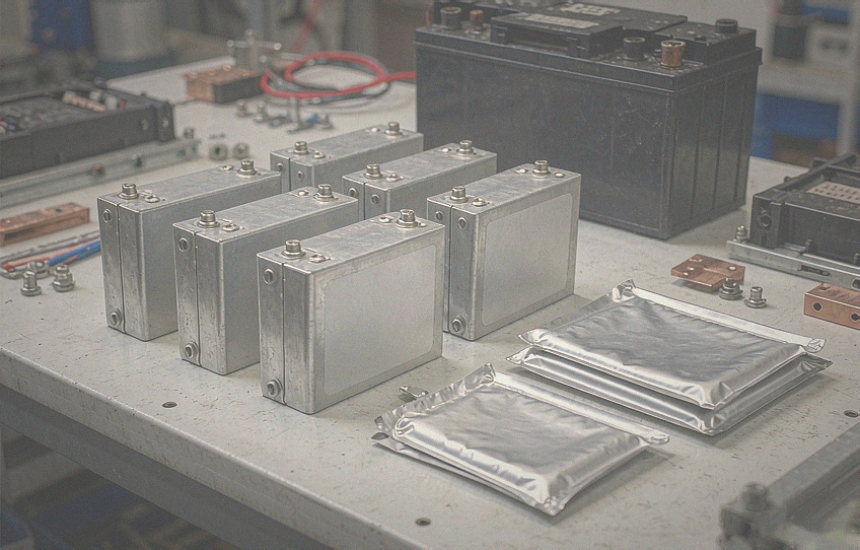
UFOPOWER is a professional lithium battery manufacturer working factory-direct with fleet operators and equipment integrators. Packs are assembled on in-house production lines with graded LiFePO4 cells, spot-welded or laser-welded busbars, and a BMS matched to the application rather than picked from a catalogue. Every unit goes through 100 percent factory testing on capacity, internal resistance, charge and discharge behaviour and enclosure sealing before it ships.
• Custom voltage and capacity. 24V, 48V and 80V platforms, with capacity sized from your duty cycle data instead of a fixed list.
• Mechanical fit. Enclosure dimensions, mounting points, counterweight blocks and connector type built to drop into the existing battery compartment.
• Controller integration. CAN or RS485 communication with configurable protocol so the truck displays state of charge and derates cleanly.
• OEM and ODM support. Sample build, validation, then volume production with consistent cell sourcing and batch traceability.
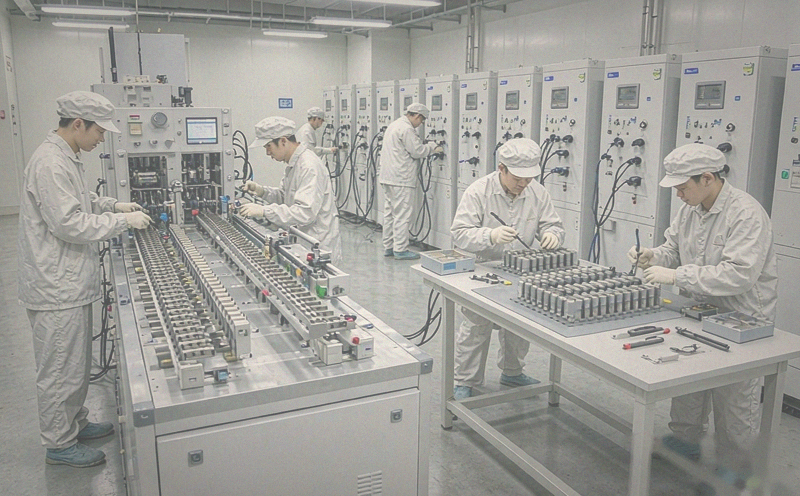
If you are planning a fleet conversion, the fastest way to a firm answer is to send your truck models, shift pattern and peak lift loads. UFOPOWER will come back with a pack proposal in kWh, a charger plan and a five-year cost comparison against your current lead-acid setup.
Is a lithium-ion forklift battery cheaper than lead-acid?
How long does a lithium forklift battery take to charge?
Can I use opportunity charging with a lead-acid battery?
Do lithium forklift batteries need a special charging room?
What information do I need to size a lithium forklift battery correctly?
Can UFOPOWER build a pack that fits my existing forklift?


 EN
 AR
 DE
 ES
 FR
 JP
 KO
 PT
 RU
 家(いえ) >



 WhatsApp