
 Oct 08, 2026
A camper's electrical system can turn dangerous without any warning. One miswired campground pedestal can push the wrong voltage into your rig, and a loose or corroded connection inside a closed battery compartment can heat up fast. Most electrical faults trace back to a handful of skipped checks. As a professional lithium battery manufacturer, UFOPOWER has put together this 11-point RV electrical safety checklist so camper and travel trailer owners can catch problems before they turn into a fire, a shock or a costly repair.
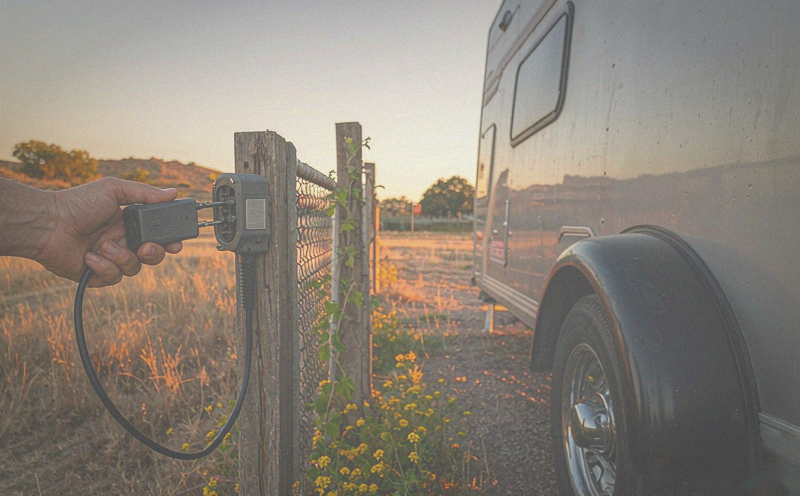
A camper runs more than one power system, and all of it faces constant road vibration — movement that loosens connections a house wire never experiences. Shore power adds risk that many owners overlook: a campground pedestal can deliver low or high voltage without notice, and voltage below about 105V makes appliances overheat and draw excess current. Inside a sealed battery compartment, a direct short can dump hundreds of amps in a second, heating wires red-hot. A short routine before each trip finds almost all of these hazards early.
Damaged shore cords are a leading cause of RV electrical fires. Look for burnt or melted prongs, cracks in the casing and scorch marks, and replace the cord if you find any. The plug should feel snug in the inlet — a loose connection arcs and melts the contacts under load.
A campground pedestal can be miswired, so test it before you connect. A plug-in polarity tester quickly shows an open ground or reversed wiring, and an open neutral fault can put 240V onto your appliances. If the tester flags a fault, move to another pedestal and let a qualified technician handle the repair.
A surge protector guards your rig against voltage spikes, and an EMS (electrical management system) model also blocks wiring faults. Plug the protector into the pedestal first, confirm its status light, then run the cord to the coach. It costs far less than the converter it protects.
Plugging in with the pedestal breaker live can arc and pit the metal contacts, building heat at the plug. Switch the breaker off, seat the cord fully, then turn it on — and reverse the order when you leave: breaker off first, then unplug.
Campers use either a 30-amp or a 50-amp service connection, and a 30-amp cord in a 50-amp pedestal needs the correct adapter. Always use an RV-rated cord — a household extension cord overheats and melts under an RV load.
A GFCI outlet cuts power the instant it senses a ground fault, so test each one monthly with its built-in buttons. If a GFCI keeps tripping, dry the outlet and inspect the connection — moisture and wiring faults cause most trips, and one GFCI can protect several outlets on the same circuit.
A blown fuse cuts power to a 12V circuit such as lights or a water pump. Carry spares in every amperage your fuse panel uses, and always match the original rating. A fuse that blows again points to a deeper fault — reduce the load and inspect the circuit before replacing it a second time.
Overloaded circuits are a leading cause of RV electrical fires. Keep the total load under about 80% of a circuit's rating, stagger high-draw appliances such as a microwave and a heater, and let a well-sized battery bank carry steady loads without strain.
Corroded wiring and loose terminals cause flickering lights and warm outlets, and a burnt smell near an outlet signals damaged wiring behind it. Inspect connections each season for corrosion or heat marks, clean and tighten every reachable terminal, and apply dielectric grease to a clean terminal to block the corrosion road salt brings.
A sealed battery area can trap heat and flammable gas during charging — flooded lead-acid batteries release hydrogen as they charge. Keep vents clear of storage bins and loose gear, and give the converter airflow to shed its heat too.
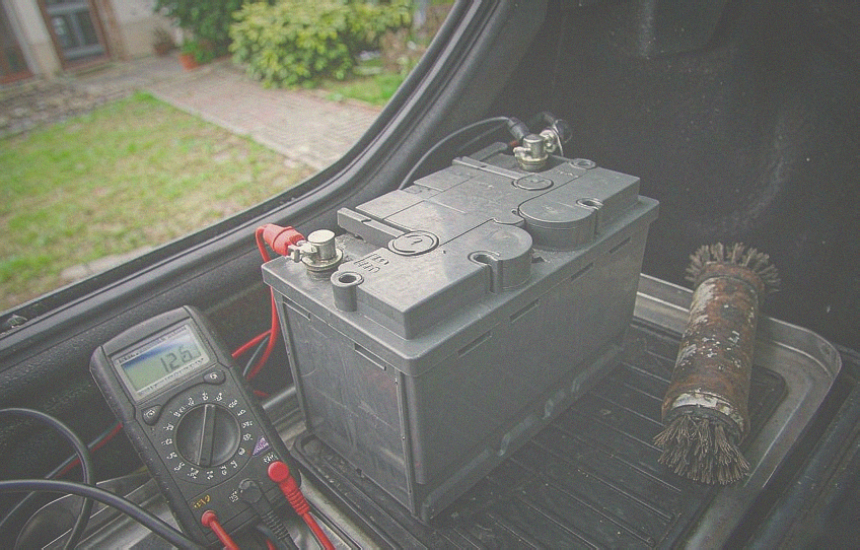
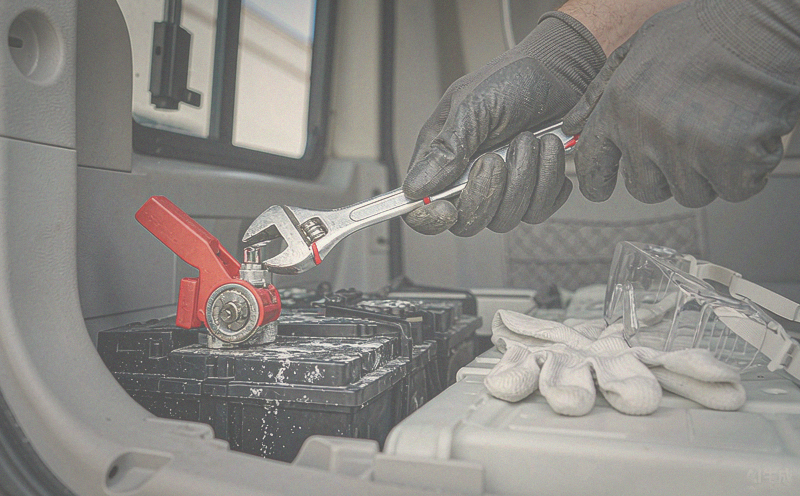
Start with the power fully disconnected and remove any metal jewelry, so a tool or ring cannot bridge the terminals. Look for corrosion or a cracked case — a swollen case signals a failing cell that needs replacing. Clean white buildup on a terminal with a baking-soda paste, then dry it completely.
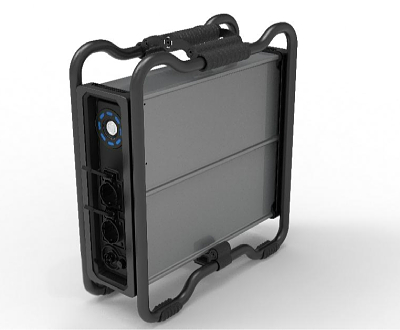
When a battery reaches the end of its life, match the replacement by size and chemistry — and check that your converter suits the new chemistry, because a lithium battery needs a charge profile a lead-acid setting cannot give.
| Battery type | Charging need | Best for |
|---|---|---|
| Flooded lead-acid | vented, regular checks | budget builds |
| AGM | sealed, steady charge | low maintenance |
| Lithium (LiFePO4) | special charge profile | long off-grid trips |
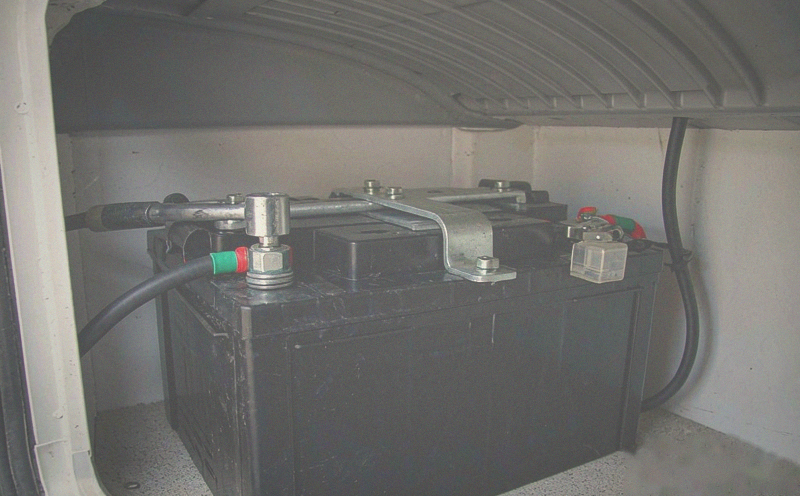
A secure install keeps the battery from shifting on rough roads — one loose battery can crack its case and chafe the cable insulation.
| Step | What to do | Why it matters |
|---|---|---|
| Mounting | Clamp the hold-down bracket | stops road movement |
| Cables | Route them away from sharp edges | protects the insulation |
| Fusing | Fit a fuse near the positive post | guards against a short |
| Terminals | Torque to spec, then grease | keeps a solid contact |
Use a torque wrench so each terminal nut reaches the maker's spec — an overtight post cracks, while a loose one arcs and heats.
• Plugging into a pedestal without testing it first
• Running two high-draw appliances on one circuit
• Storing gear against the battery vents
• Ignoring a fuse that blows a second time
• Working on the battery with the power still live
UFOPOWER is a professional lithium battery manufacturer producing LiFePO4 RV battery packs from 12V to 48V. Every pack combines LiFePO4 cells with a smart BMS that protects against overcharge, over-discharge, over-temperature and short circuits, and each unit is assembled on our in-house production lines and tested before it ships.
• Custom 12V, 24V and 48V LiFePO4 packs with sealed, maintenance-free housings
• Smart BMS safety and optional low-temperature charging protection
• OEM/ODM and factory-direct service, from prototype to volume production
• Terminal and mounting designs built for vibration and road conditions
• 100% factory testing and strict quality control on every pack
How often should I inspect my RV electrical system?
Do I need a surge protector for my camper?
What amperage does my travel trailer use?
Can I replace an RV battery with a different chemistry?
Why does my RV breaker keep tripping?
How do I clean corroded battery terminals?


 WhatsApp
 EN
EN AR
AR DE
DE ES
ES FR
FR JP
JP KO
KO PT
PT RU
RU Home >