
 Nov 10, 2026
Ask a boondocker how much battery they have left and the honest answer is usually a voltage number read off a solar controller at seven in the morning. That number is not state of charge. It is the voltage the controller happened to be holding at that instant, which depends on whether the sun was up, whether the fridge compressor was running and how long the bank had been resting. Two people can read the same battery and get answers twenty percentage points apart.
A shunt-based battery monitor replaces that guess with a measurement. It sits on the negative cable, counts every amp-hour in and out, and turns that count into a state of charge. The difference is not cosmetic: it is the difference between replacing a lead-acid bank in a year and getting five seasons out of it. This article covers what the shunt actually measures, how the monitor calculates SOC, where the readings go wrong, and what changes when the bank is LiFePO4 instead of lead-acid.
Voltage only maps to state of charge when the battery has been resting, with no load and no charging, for a couple of hours. That condition does not exist in a live camper. A water pump that draws 7 A for thirty seconds pulls a healthy 12 V bank down by several tenths of a volt, and a compressor fridge cycling on does the same thing continuously. Reading a gauge during that moment tells you about the load, not the battery.
The classic mistake is reading the solar controller's display in the morning. That display shows the voltage the controller is sending to the battery, not the voltage the battery is at. As soon as the array wakes up, the controller is in absorption or float and the number on screen belongs to the charger's algorithm. It looks reassuring and it means nothing.
| Lead-acid resting voltage (25 degrees C) | Approximate state of charge | Notes |
|---|---|---|
| 12.73 V | 100 percent | Only after a full charge and several hours rest |
| 12.50 V | About 80 percent | A comfortable overnight target |
| 12.20 V | About 50 percent | The practical floor for a lead-acid cycle |
| 12.00 V | About 25 percent | Already doing damage on a deep-cycle bank |
| 11.80 V | Effectively empty | Sulfation starts the moment it sits here |
Two things make the table fragile in practice. First, the whole useful range between full and empty spans about 0.9 V, so a 0.2 V error — which a loaded bank produces in seconds — is more than 20 percent of SOC. Second, the table assumes a rested battery at 25 degrees Celsius, and a cold bank reads low even when it is full.
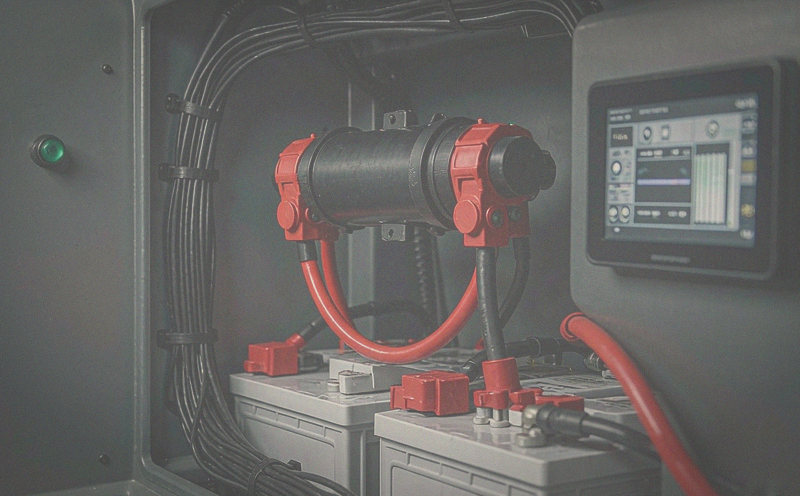
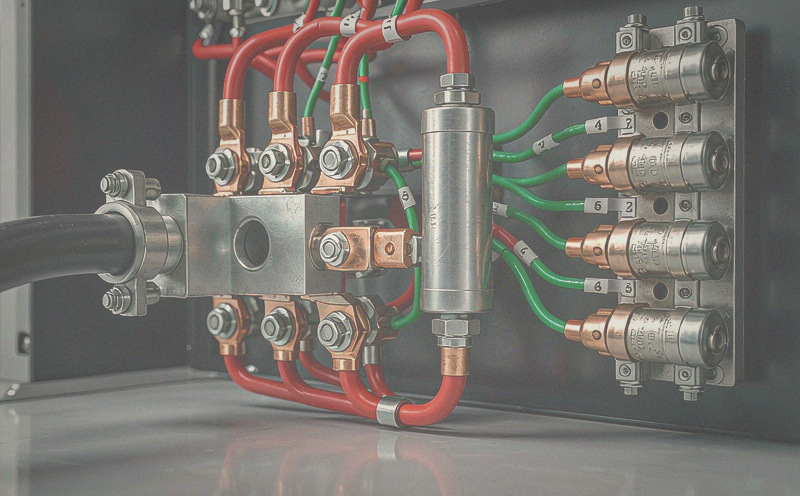
A shunt is a calibrated, very low resistance element installed as the last connection before the battery's negative terminal. Every electron that leaves the battery to run a load passes through it, and every electron pushed back in by solar, shore power or an alternator passes through it in the other direction. The monitor measures the tiny voltage across that resistance, converts it to current, multiplies by time and keeps a running amp-hour count.
That last point is the whole design, and it is where most installations go wrong. If any charge source is bolted directly to the battery negative instead of the system side of the shunt, the monitor never sees that current. The result is a slow lie: SOC falls faster than reality, the monitor reports the bank empty while the solar is quietly filling it, and the owner starts chasing a phantom problem.
• Battery negative terminal connects to one side of the shunt, and nothing else connects there.
• Every load negative, every charger negative and every inverter negative lands on the other side of the shunt.
• Chassis ground, if used, must also be taken from the system side, not from the battery post.
• Sense leads go to the battery side of the shunt, separated from power cables, and fused.
• The shunt has to be rated above the highest current the system can carry — an inverter at 5 kVA on a 12 V bank means a 500 A class shunt, not a 100 A one.
Coulomb counting alone drifts, because every measurement has an error and errors accumulate. A monitor solves that by re-anchoring to a known point: when the battery reaches its full-charge criteria, the counter resets to 100 percent. Those criteria have to be configured, not guessed — a charged voltage slightly below the absorption setpoint, a tail current small enough to prove the bank is actually full, and a minimum time at that voltage.
| Setting | Lead-acid reference | LiFePO4 reference | What happens if it is wrong |
|---|---|---|---|
| Battery capacity | Rated 20-hour Ah, derated for age | Nominal Ah of the pack | SOC is scaled wrong from day one |
| Charged voltage | About 13.2 V | About 13.9 to 14.2 V | Never syncs, or syncs too early and reads high |
| Tail current | About 2 percent of capacity | About 2 to 4 percent | Endless absorption, or a false 100 percent |
| Charge efficiency | About 85 to 90 percent | About 97 to 99 percent | Systematic drift of several percent per cycle |
| Peukert exponent | About 1.2 to 1.4 | About 1.05 | Heavy loads appear to consume too little |
The tail current criterion is the one people skip. A bank is not full when the voltage reaches 14.2 V; it is full when the current it accepts has collapsed at that voltage. On a 220 Ah lead-acid bank that means waiting until charge current falls to roughly 4 to 6 A. Configure the monitor to that number and the 100 percent reading becomes trustworthy. Leave it at the default and the bank will report full while it is still 15 percent short — which is exactly the deficit that kills a lead-acid set over a season.
Lead-acid capacity is quoted at the 20-hour rate, which for a 220 Ah bank means an 11 A discharge. Pull 50 A and the same battery delivers noticeably fewer amp-hours before it hits the floor, because the internal chemistry cannot keep up at that rate. Peukert's equation formalises this, and a monitor that knows the exponent accounts for it when it converts current into consumed capacity.
LiFePO4 barely has this problem, which is why its exponent sits near 1.05: a 400 Ah pack delivers close to 400 Ah whether the load is 20 A or 150 A. That is one of the practical reasons lithium banks feel bigger than their nameplate suggests, and one of the reasons a monitor's Peukert setting matters far less once the chemistry changes.
Once a monitor is installed, the first week is an education. Parasitic loads that nobody counted suddenly have a number: the propane and CO detector that runs 24 hours a day, the inverter's own idle draw, the control board on the fridge, the standby current of a satellite terminal. Add them up and a camper can lose 30 Ah a day without anyone turning anything on.
| Load | Current at 12 V | Hours per day | Amp-hours per day |
|---|---|---|---|
| Propane and CO detector | 0.08 A | 24 | 1.9 Ah |
| Inverter idle draw | 1.2 A | 24 | 28.8 Ah |
| Compressor fridge | 5.0 A while running | 8 running hours | 40.0 Ah |
| Laptop through the inverter | 5.0 A | 3 | 15.0 Ah |
| LED lighting | 1.5 A | 4 | 6.0 Ah |
| Water pump | 7.0 A | 0.2 | 1.4 Ah |
| Total | 93 Ah |
On a 220 Ah lead-acid bank, 93 Ah a day is already 42 percent of capacity, which is at the edge of the 50 percent depth-of-discharge limit before anyone has used a single extra light. That is the real reason so many full-time setups kill a lead-acid bank inside a year: not abuse, just arithmetic nobody ran. The monitor makes the arithmetic visible, and the fix is usually free — switch the inverter off when it is not needed and 29 Ah a day disappears.
Lithium makes monitoring both easier and more important. Easier, because the voltage plateau is so flat that a voltmeter is useless and nobody is tempted to guess: LiFePO4 sits near 13.2 to 13.3 V across most of its range, then rises steeply only in the last few percent. More important, because a lithium bank can be safely cycled to a much greater depth, so the operator is making decisions closer to the limits.
| Behaviour | 铅산 | LiFePO4는 |
|---|---|---|
| Voltage as an SOC gauge | Usable if rested, about 0.9 V span | Effectively useless across 20 to 90 percent |
| Usable depth of discharge | 50 percent for decent life | 80 to 90 percent routinely |
| What SOC is based on | Coulomb counting plus voltage sync | Coulomb counting, synced at full charge |
| Where the number comes from | One external monitor | BMS and external monitor may both report SOC |
| Typical failure | Chronic undercharging and sulfation | Two SOC readings disagreeing, so neither is trusted |
That last row is the standard lithium complaint. The BMS estimates SOC from its own cell data and its own counter; the external monitor estimates it from the shunt. They will not agree to the decimal, and that is normal. Pick one as the operating number — usually the shunt, because it sees every amp that moves — and treat the BMS figure as a second opinion, particularly near the top and bottom of the range where the BMS protects the cells. Never "fix" a discrepancy by resetting both and assuming the average.
The factory indicator that shares a panel with the tank levels typically shows battery state in four steps: full, three quarters, half, empty. It reads voltage at one instant, so the moment the water pump runs the display can drop a whole step and then recover. Owners learn to interpret it, which is to say they learn to ignore it.
A monitor with a shunt shows something different in kind: consumed amp-hours since the last full charge, current in and out, and time-to-go at the present load. Those three numbers answer the only questions that matter before dark — how much is left, what is eating it, and how long it will last.
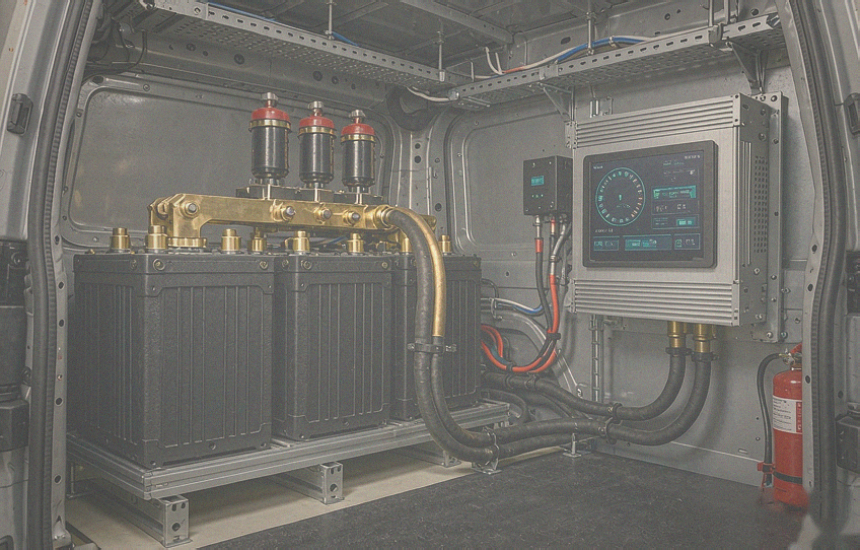
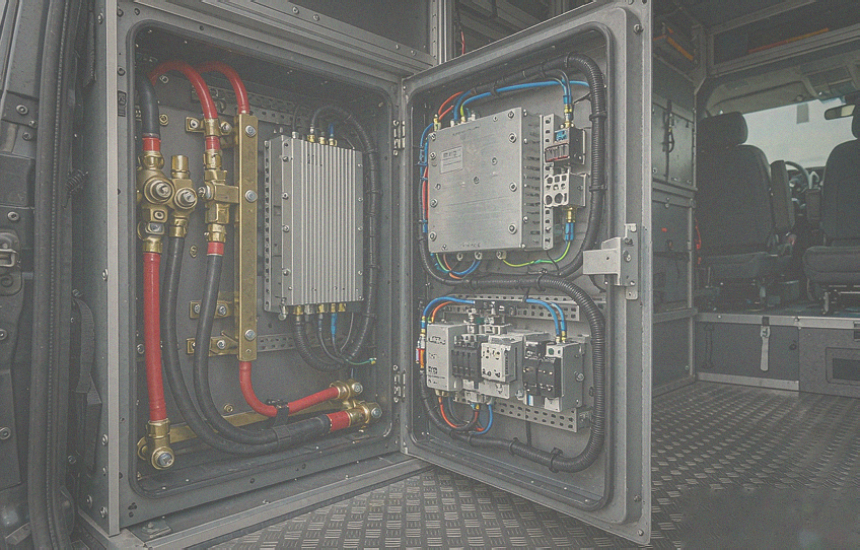
One shunt measures one bank. On a build with a 24 V or 48 V house bank plus a 12 V auxiliary pack, each bank that matters needs its own measurement, and a monitored distribution busbar that reports per-circuit current turns the monitor from a fuel gauge into a diagnostic tool. Knowing that the fridge circuit is drawing 40 percent more than it did last month is the kind of signal that catches a failing compressor before a trip.
On higher-voltage banks the shunt works exactly the same way; the only difference is that the current is lower for the same power, so the shunt rating follows the inverter current rather than the battery capacity. A 48 V 30 kWh bank feeding a 5 kW inverter carries about 98 A, so a 300 A shunt has plenty of margin and will resolve small loads better than a 1000 A unit pushed to the edge of its range.
A monitor that only displays numbers still requires someone to look at it. Set the low-SOC alarm at a level that leaves room to act — 40 percent on lead-acid, 20 percent on LiFePO4 — and a high-voltage alarm just under the BMS cutoff. Those two settings alone prevent most of the expensive mistakes.
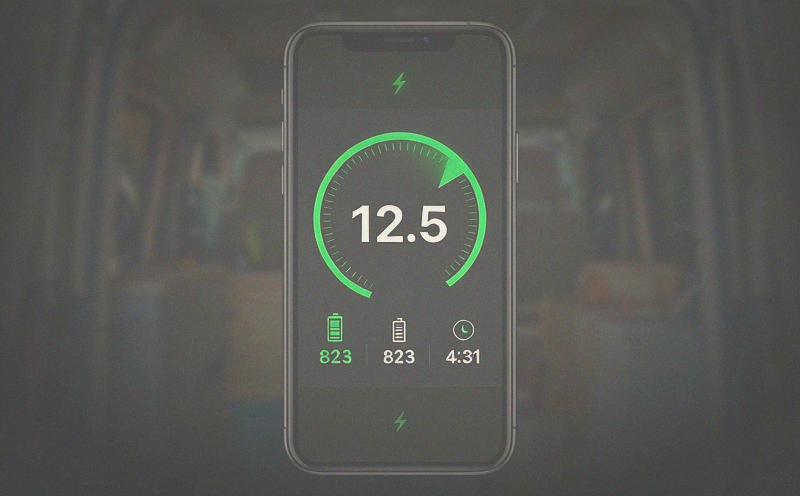
Remote access adds a second layer. When the system reports state of charge, solar yield and charger status to a phone, a camper can decide from the trail whether to run the generator for an hour or whether the array already covered the day. For a vehicle that spends weeks off grid, that visibility is worth more than another 100 Ah of capacity, because it converts guesswork into a decision.
• Mount the shunt in a dry, ventilated place close to the battery negative, on a surface that can carry its weight and the cable load.
• Move every negative cable — loads, chargers, inverter, chassis bond — to the system side of the shunt, then verify by turning on one load at a time and watching the current appear.
• Fuse the sense leads and keep them away from power cables to avoid noise on the current reading.
• Set capacity, charged voltage, tail current and charge efficiency from the battery datasheet, not from the monitor's defaults.
• Run a full charge and confirm the monitor synchronises to 100 percent at the right tail current.
• Record one week of daily amp-hours before changing anything else, so every later decision has a baseline.
A monitor tells the truth about what the battery is doing, but it cannot fix a bank that is the wrong chemistry or the wrong size. UFOPOWER is a professional lithium battery manufacturer producing 12 V, 24 V and 48 V LiFePO4 packs for RV, marine and off-grid use, with in-house BMS design, temperature-sensed charge protection and CAN or RS485 communication that lets the battery report its own limits to the rest of the system.
For a build that already has a shunt, the useful conversation is about configuration: capacity, continuous and peak current, charge voltage window, low-temperature cutoff and what the BMS exposes over its data interface. Those five numbers decide whether the monitor, the charger and the battery agree with each other. OEM and ODM customization covers the enclosure, terminal layout and protocol details that a conversion always needs.

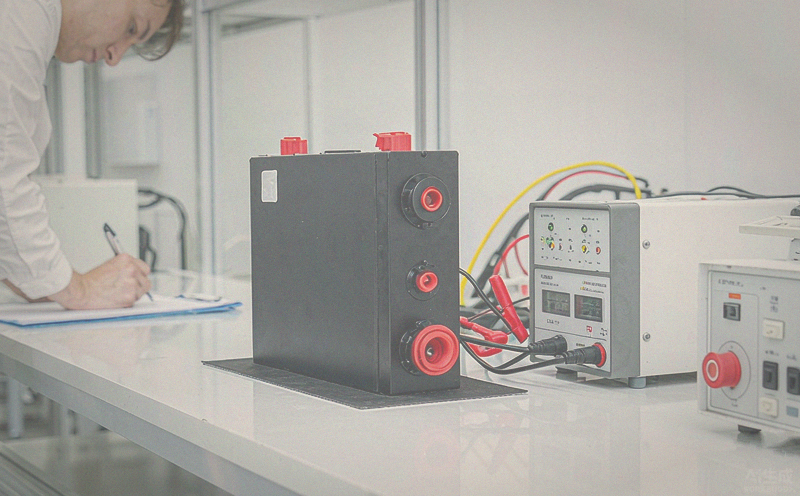
If you are specifying a new bank, send UFOPOWER the load schedule and the monitor you intend to use, and the pack can be configured so that the state of charge the monitor reports matches the state of charge the BMS protects at both ends of the range.
Do I need an external battery monitor if my lithium BMS already reports state of charge?
Where exactly does the shunt go?
Why does my monitor show 100 percent when the battery is not actually full?
Can a shunt monitor be used on a 24 V or 48 V bank?
Why does the factory panel gauge drop when the water pump runs?
Does a battery monitor actually extend battery life?


 WhatsApp의
 EN
 AR
 DE
 ES
 FR
 JP
 KO
 PT
 RU
 홈 >