

 Oct 07, 2026
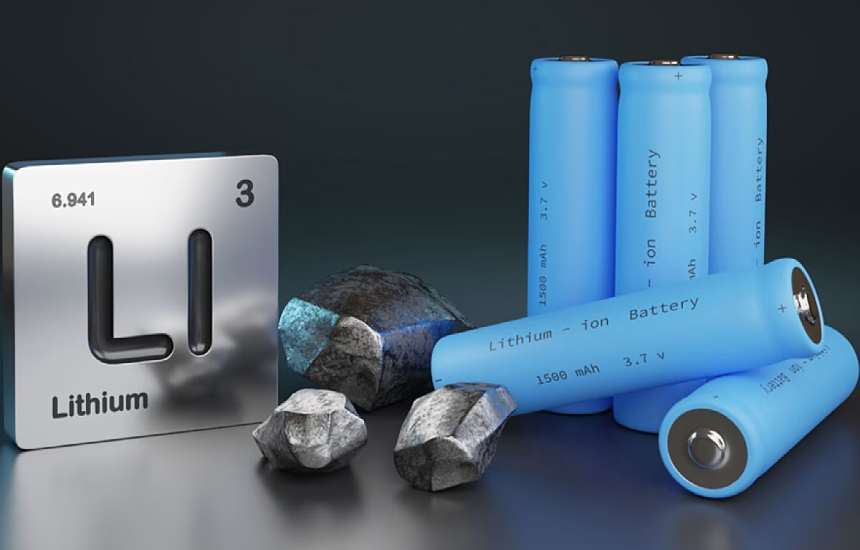
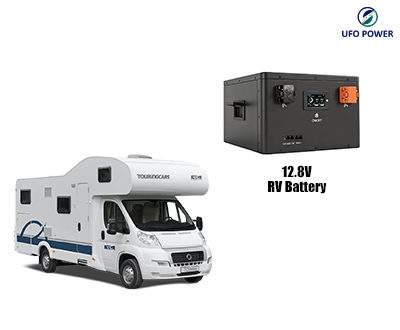
An 自動車用リチウム電池 — usually a 12V LiFePO4 pack — has become the default upgrade for campers who are tired of heavy lead-acid batteries that need watering and only let you use half of their rated capacity. As a professional lithium battery manufacturer, UFOPOWER explains how to size an RV lithium battery, which voltage and capacity to choose, and how to charge and protect it in every season.
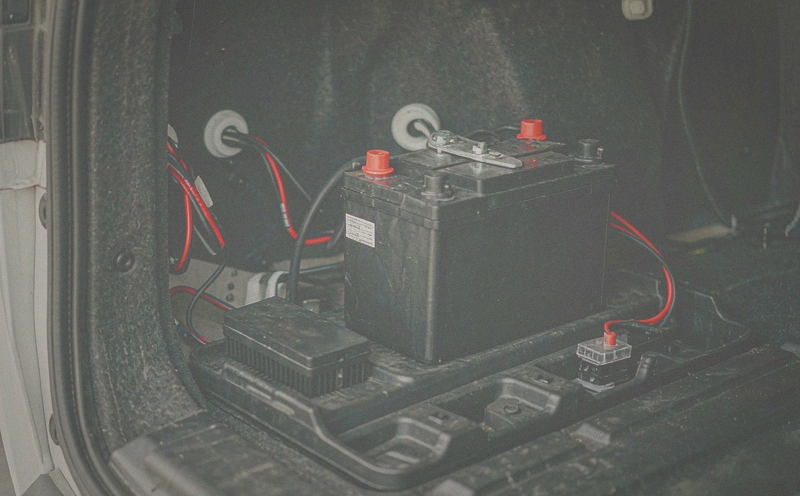
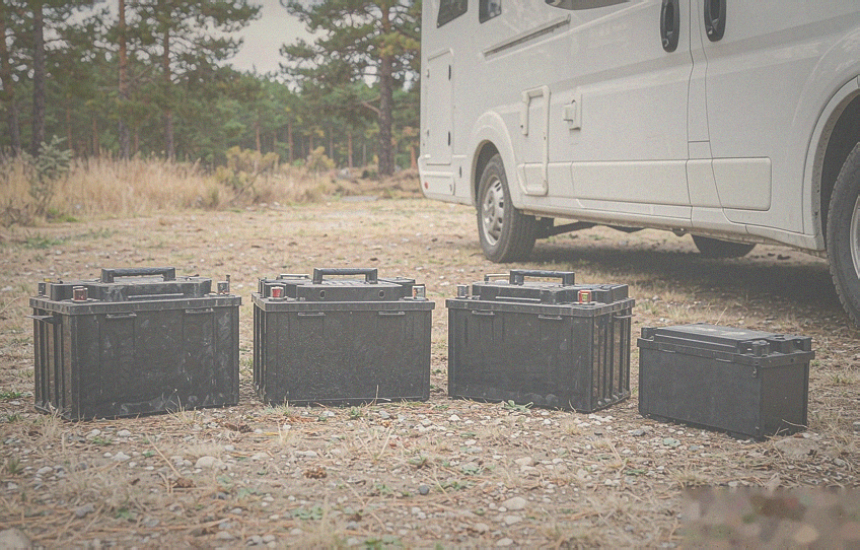
The jump to lithium is not only about saving weight. It changes how much of your battery you can actually use. A lead-acid battery should stay above roughly 50% depth of discharge to survive, while a LiFePO4 battery can safely use about 80% of its capacity. That means a smaller, lighter lithium pack can deliver the same usable energy as a much larger lead-acid bank.
| What changes | LiFePO4 lithium | AGM / lead-acid |
|---|---|---|
| Usable capacity (depth of discharge) | about 80% | about 50% |
| じゅんかんじゅみょう | 4,000+ cycles | a few hundred cycles |
| Weight for the same capacity | much lighter | heavy |
| メンテナンス | maintenance-free | regular watering (flooded) |
| Charging in freezing weather | needs low-temperature protection | possible but slow |
Start with your daily consumption. Many RV owners running lights, a fridge, fans and a TV overnight are comfortable with a 12V 200Ah lithium battery, which leaves some room to spare. Based on typical daily use of about 2 to 3 kWh (2,000 to 3,000 Wh), and an 80% usable depth of discharge, a two-day off-grid trip usually calls for roughly 200 to 300Ah of total capacity.
If you run an inverter for coffee makers, hair dryers or induction cooking, add headroom. If you recharge daily from solar or the alternator, you can size closer to your true daily consumption. Because lithium lets you use far more of the rated capacity, you do not need to double your amp-hours the way you would with lead-acid.
For most RVs and travel trailers, 12V is the most common and compatible choice, because the RV house system, lights and DC appliances already run on 12V. Larger rigs and big inverter loads often step up to 24V or 48V to keep currents manageable, which is done by wiring identical batteries in series to raise voltage and in parallel to raise capacity. Always match voltage, capacity and charge state between batteries you connect together, and use equal-length cabling.
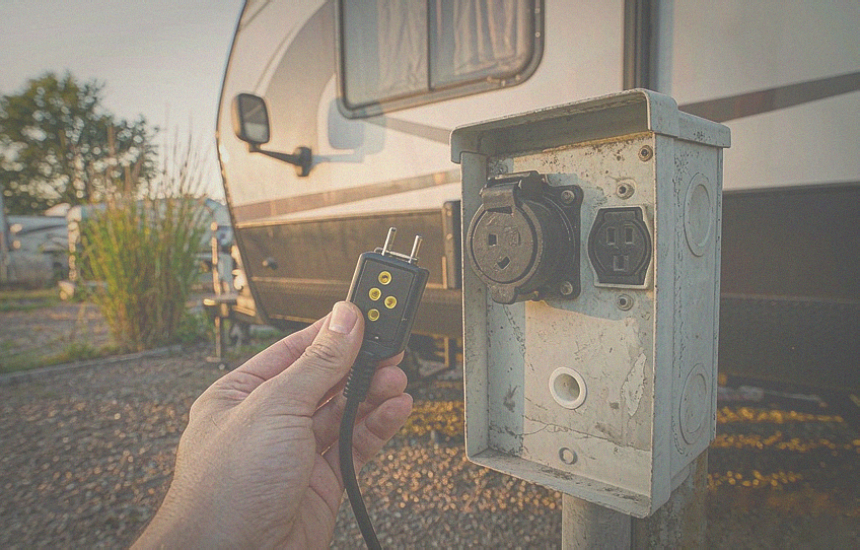
In most cases you can keep your existing RV charger or converter, as long as it supports the LiFePO4 charging voltage — around 14.4V for a 12V pack. Check the settings before you connect a new battery, and switch the profile to lithium if your charger offers one. Solar arrays with an MPPT charge controller, and alternator charging through a DC-to-DC charger, both work well and let you recharge while you drive or while you are parked off-grid.
An RV lithium battery keeps delivering good discharge performance down to about -4°F (-20°C), so winter camping and cold mornings are not a problem on the discharge side. Charging is the part to watch: charging a LiFePO4 battery below freezing (0°C) can permanently damage it. That is why a lithium battery for cold climates should include built-in low-temperature protection, which pauses charging until the pack warms up — or a self-heating pack that warms itself before accepting charge.
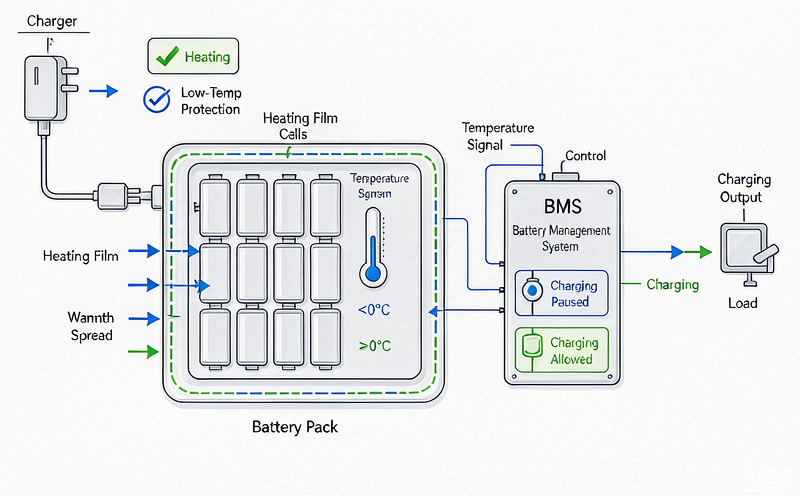
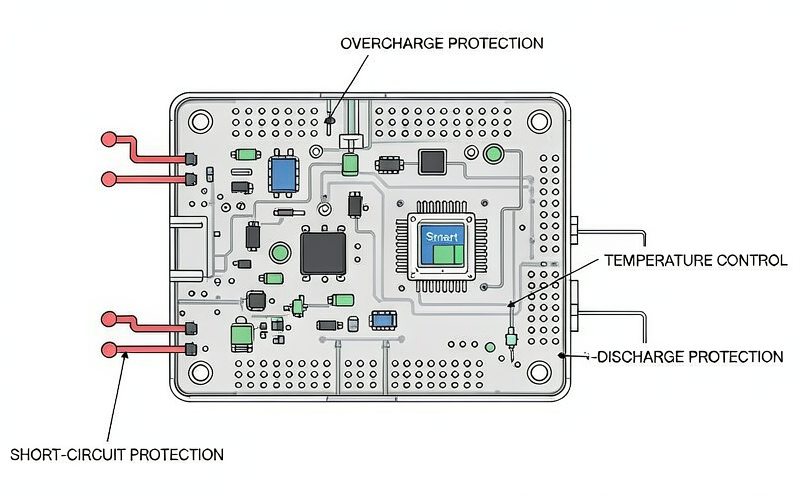
Every RV lithium battery worth buying is really two products in one: the LiFePO4 cells and the battery management system (BMS) that guards them. A smart BMS protects against overcharge, over-discharge, over-temperature and short circuits, balances the cells as they age, and on higher-end packs can report voltage, temperature and status to an app. It is the reason a modern lithium battery can be left on charge unattended and still stay safe season after season.
UFOPOWER is a professional lithium battery manufacturer producing LiFePO4 RV battery packs from 12V to 48V. Packs are assembled in-house on controlled production lines and tested before shipment, and our engineering team can tailor voltage, capacity, dimensions, BMS behaviour and heating options to your camper, van conversion or rental fleet.
• Custom 12V, 24V and 48V LiFePO4 packs, sized to your daily amp-hour needs
• Built-in low-temperature protection or self-heating for cold-climate charging
• Smart BMS with overcharge, over-discharge, over-temperature and short-circuit protection
• OEM/ODM and factory-direct service, from prototype to volume production
• 100% factory testing and strict quality control on every pack
What size LiFePO4 battery do I need for my RV?
What capacity is best for a two-day off-grid RV trip?
Can I use my existing RV charger with a lithium battery?
Will an RV lithium battery work in cold weather?
Can I connect multiple LiFePO4 batteries in my RV?
How long do RV lithium batteries last?


 EN
EN AR
AR DE
DE ES
ES FR
FR JP
JP KO
KO PT
PT RU
RU 家(いえ) >




 WhatsApp