Buying an electric motorcycle battery by amp-hours alone is the most reliable way to end up disappointed. Two packs can both say 72V 20Ah on the label, and one will pull a loaded bike up a hill while the other sags, heats up and trips its protection board. The label describes stored energy; it says almost nothing about how fast that energy can leave the pack.
Choosing well means matching three things to the way the bike is actually ridden: capacity for range, chemistry for climate and duty, and continuous discharge rating for the motor's appetite. This guide works through those three in the order that matters, with the arithmetic behind each recommendation. UFOPOWER manufactures lithium packs for electric motorcycles and light commercial three-wheelers, so the advice is written from the pack side of the deal rather than the showroom side.
Why the Small Pack Fails on a Big Motor
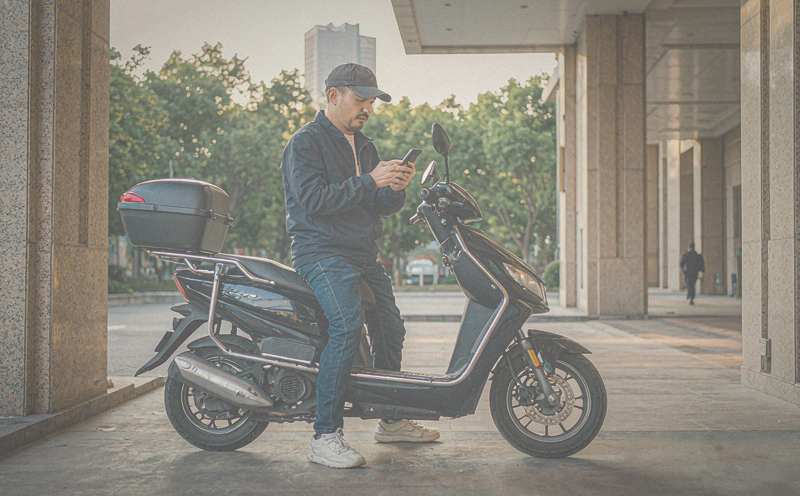
A 72V electric motorcycle with a 1,000 to 1,200 W motor draws roughly 14 to 17 A at full load. That sounds modest until you account for acceleration and hills, where the controller asks for two to three times the continuous figure, so the pack has to deliver something closer to 35 to 45 A for a few seconds at a time.
Now put a 20Ah pack in that bike. At a 1C continuous rating it can supply 20 A, which is barely above the motor's steady demand and well below every acceleration event. The result is predictable: the pack is worked at the edge of its capability on every ride, it heats up, its protection cuts in on the steep part of the route, and its cycle life is spent faster than the datasheet promised. The same bike with a 38Ah pack rated for 2C has 76 A available continuously and does not notice the same route.
This is why the recommendation for a 72V machine is not simply "bigger is better" — it is that the pack must be sized against the current the controller will ask for, not just the distance the rider wants. Capacity buys kilometres; C-rate buys the ability to use them.
Five Rider Profiles, Five Different Packs
| Profile | What actually matters | Sensible specification |
|---|
| City commute, 10 to 25 km a day | Lowest cost per kilometre, no fast charging | 72V 24 to 30Ah LiFePO4, 1C continuous is enough |
| Delivery or courier work | Uptime, cycle life, fast charging or swapping | 72V 38 to 50Ah LiFePO4, 2C continuous, CAN telemetry |
| Hilly or mountain routes | Sustained current and heat rejection | High C-rate LiFePO4 with a metal base plate, not a thin case |
| Cold climate, winter riding | Charge safety below freezing, capacity retention | LiFePO4 with low-temperature charge cutoff or heater; sodium as a pilot |
| Long distance, above 80 km/h | Energy per kilogram, sustained power | NMC pack with a properly engineered thermal path |
| Tight budget, short trips only | Purchase price, tolerance of short range | Lead-acid, graphene-enhanced if available, accepting three-year replacement |
What Capacity Actually Buys You
Capacity is where most of the sales conversation happens, and also where most of the disappointment starts, because published range figures usually assume a lighter vehicle at lower speed than the buyer's actual use. Multiply voltage by amp-hours to get watt-hours, then divide by the consumption the bike really achieves.
| 72V pack | Énergie | Optimistic published range | At 40 Wh/km |
|---|
| 20Ah | 1.44 kWh | 60 to 80 km | 36 km |
| 24Ah | 1.73 kWh | 70 to 90 km | 43 km |
| 38Ah | 2.74 kWh | 110 to 140 km | 68 km |
| 50Ah | 3.60 kWh | 140 to 180 km | 90 km |
| 100Ah | 7.20 kWh | 280 to 360 km | 180 km |
| 150Ah | 10.8 kWh | 300 to 500 km | 270 km |
The gap between the two range columns is not a trick; it is the difference between a 55 kg moped ridden at 30 km/h and a loaded delivery motorcycle at 55 km/h. Published figures are usually honest for the vehicle they were measured on. The buyer's job is to check which vehicle that was.
Also note what capacity does not fix. A 72V 150Ah pack adds roughly 40 kg and a large volume of enclosure, which changes the bike's handling and may not physically fit the bay at all. Beyond a certain point, fast charging or a swappable second pack buys more usable range per kilogram than a bigger fixed battery.
Chemistry by Climate and Terrain
Climate decides more of the chemistry choice than marketing does. In a cold city, the pack spends four months a year at temperatures where charging must be limited and capacity is reduced; a LiFePO4 pack without a low-temperature charge cutoff will either refuse to charge or, worse, accept charge it should not. Sodium-ion cells keep more of their capacity in the cold and are worth a pilot for winter-heavy fleets, but the supply chain and after-sales depth are still behind LFP. A heated LFP pack is the pragmatic middle ground today.
Terrain decides the C-rate and the thermal path. A flat city route lets a 1C pack live comfortably; a mountain route with a loaded bike means sustained current and sustained heat, and a pack that has no metal heat-spreading plate will punish the middle cells of the stack first. Heat is the quiet killer in this class of vehicle, because the enclosure is small and the airflow around it is poor by design.

Lead-Acid or Lithium: The Money Question
Lead-acid is still the cheapest way onto a bike and still the right answer for short, light, low-speed use where price dominates. The argument against it is not the purchase price; it is the replacement schedule and the weight.
| Facteur | Plomb-acide | LiFePO4 |
|---|
| Upfront cost | Lowest | Two to four times higher for the same energy |
| Vie du cycle | Commonly 300 to 400 deep cycles | Commonly 2,000 to 3,000 cycles in commercial packs |
| Realistic service | About three years of daily use | Six to ten years, depending on duty and climate |
| Weight and volume | Heavy and bulky; three times the volume for the same range | 40 to 60 percent lighter, far smaller enclosure |
| Entretien | Watering, terminal cleaning, corrosion | Inspection only |
| Cold weather | Large capacity loss in winter | Capacity loss is smaller, but charging below 0 degrees is not allowed |
| Acceleration feel | Weaker, voltage sags under load | Flat power to the last 20 percent |
The arithmetic that decides it is how many lead-acid packs you would buy over the life of the bike. A rider doing 6,000 km a year with a three-year lead-acid pack replaces it twice in six years and still carries the weight of the first one. A LiFePO4 pack bought once covers the same period with margin, holds its capacity better at the end, and keeps 40 to 60 percent of the mass off the frame the entire time. The break-even arrives earlier than most buyers expect once the second lead-acid pack is counted, and it arrives faster still for a delivery rider who charges twice a day.
Red Flags at the Point of Sale
• A voltage label with no series count or cell chemistry anywhere in the documentation.
• No continuous and peak discharge figures, or a peak quoted without a duration in seconds.
• "Graphene" or "micro-nano" wording doing the work that a specification should do. Graphene is an additive, not a battery category.
• Cells with no manufacturer or model, or a pack that cannot be traced to a cell batch.
• A BMS with no stated protection thresholds and no telemetry option.
• Warranty terms that exclude "capacity loss" without defining a threshold.
• A price far below the market for the same chemistry and capacity, which usually means a lower-grade cell or a smaller real capacity.
Seven Questions Worth Asking a Supplier
• What cell chemistry and format are inside, and who makes the cell?
• What are the continuous and peak discharge ratings, with peak duration?
• What are the charge voltage, maximum charge current and low-temperature cutoff?
• What cycle life is warranted, at what depth of discharge, and what capacity threshold defines a claim?
• Which tests were run on this design, and can the reports be shared?
• What is the IP rating, and what does it cover in practice?
• What is the replacement lead time, and is the cell still available in three years?
The last question is the one buyers forget. A pack is only as good as the supply behind it, and a model that disappears from the market in eighteen months leaves the owner with a battery nobody can service.
Matching the Pack to the Bike
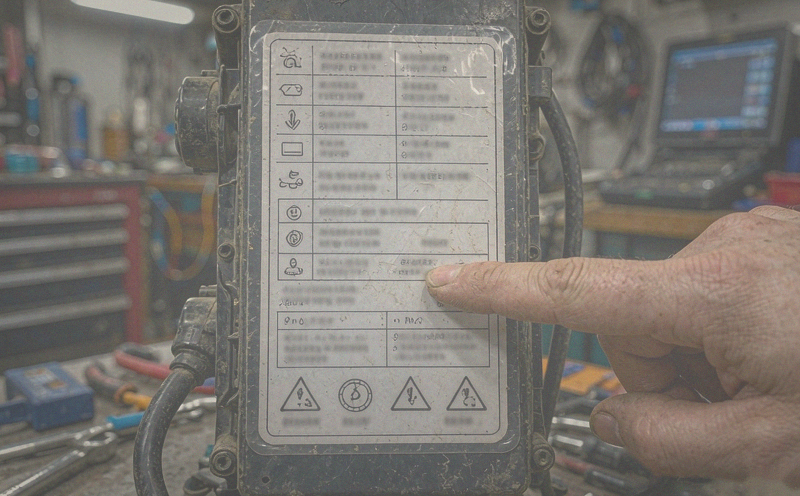
Once the duty, climate and current are known, the pack itself should be built around them rather than chosen from a list. That means the right series count for the controller's voltage window, a busbar and connector rated for the peak current, a thermal path that suits the mounting position, and a BMS configured for the actual cell group and protocol.
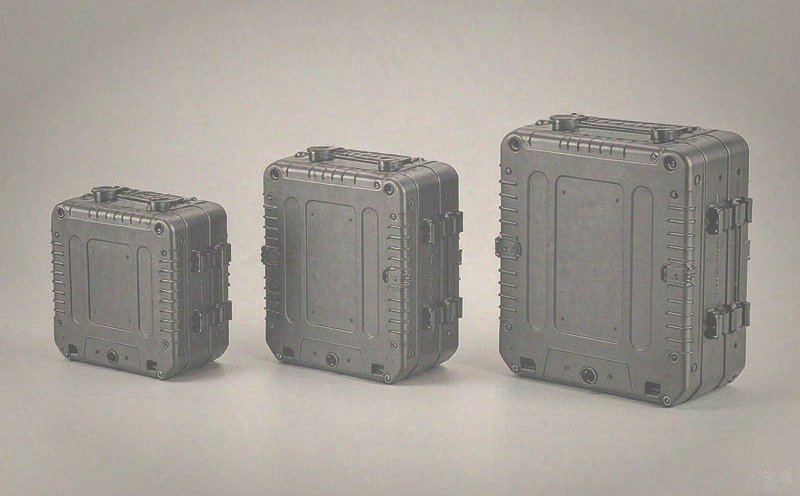
As a professional lithium battery manufacturer, UFOPOWER builds 48V, 60V and 72V packs for electric motorcycles with cell sorting before assembly, automated welding, and 100 percent end-of-line testing of capacity, internal resistance, insulation and communication. Packs can be supplied with CAN or RS485 telemetry, IP-rated enclosures for the mounting position, and UN38.3 and IEC 62133 documentation for shipping and compliance; OEM and ODM programmes cover capacity, enclosure geometry, connector type and BMS configuration so the pack fits the bike rather than the other way round.
The right battery is rarely the cheapest one on the shelf or the biggest one that fits. It is the one whose capacity covers the route with a margin, whose chemistry suits the climate, and whose continuous rating leaves the controller some headroom. Get those three right and the rest of the specification is detail.


 EN
 AR
 DE
 ES
 FR
 JP
 KO
 PT
 RU
 Accueil >
 Nov 02, 2026







 sur WhatsApp