
 Oct 14, 2026
Every golf cart owner eventually faces the same question: which battery do I put in it? The answer is not a single product — it is a match between voltage, capacity, chemistry and the way the cart is actually used. A 12V pack for a light recreational cart has almost nothing in common with a 72V pack running a commercial fleet, even though both are called a golf cart battery.
This guide compares the main golf cart battery options side by side: lithium versus lead-acid, the 12V, 48V and 72V platforms, real-world lifespan, warranty coverage and how each chemistry behaves in heat and cold. UFOPOWER is a professional lithium battery manufacturer, and these are the questions our OEM and fleet customers ask before they specify a pack.
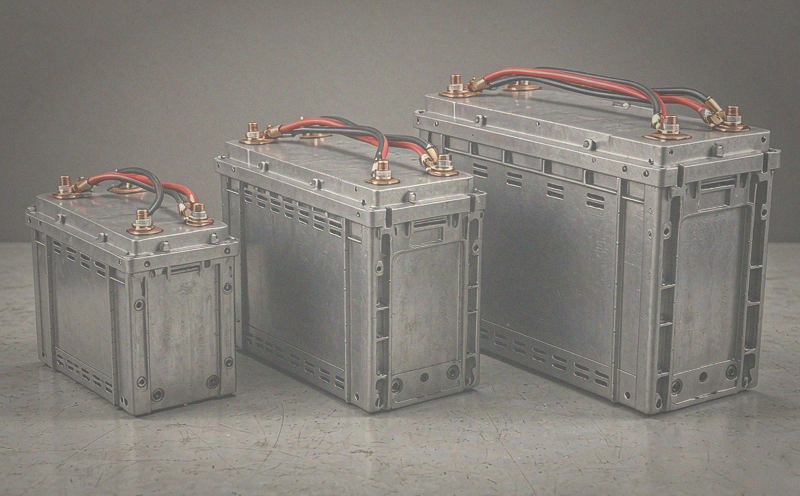
The battery decides how far the cart goes, how quickly it accelerates, how often it needs charging, and how much of your week disappears into maintenance. Pick the wrong chemistry for the duty cycle and you either overspend on capacity you never use, or spend the next three years nursing a pack that was never sized for the job.
Get it right and the cart simply works: predictable range, consistent power on inclines, and a service schedule that stays boring.
The comparison comes down to four factors: energy density, charging speed, lifespan and cost-effectiveness. Lithium delivers longer range, faster acceleration and shorter charging times. Lead-acid costs less up front, weighs considerably more, and asks more of the owner in maintenance.
| Faktor | Lithium (LiFePO4) | Blei-Säure |
|---|---|---|
| Upfront cost | Höher | Niedriger |
| Weight and space | Compact and light — more capacity per kilogram | Heavy and bulky for the same capacity |
| Aufladen | Fast, opportunity charging possible | Slow, longer turnaround |
| Wartung | Zero routine maintenance | Water topping-up, terminal cleaning, charge checks |
| Typical service life | Up to 10 to 12 years | About 3 to 5 years with regular care |
| Best fit | Daily fleets, long range, low labour budgets | Light use, tight upfront budget |
The honest summary: lead-acid is cheaper to buy, lithium is cheaper to own. If a cart runs every day and someone is paid to look after it, the maintenance saving alone usually pays back the price difference within the pack's first life.
Golf cart battery voltage normally ranges from 12V to 72V. Higher voltage supports higher cart speed and stronger climbing ability. Capacity is measured in amp-hours (Ah) and tells you how much energy the pack stores — in practice, how long the cart runs on one charge.
| Spannung | Capacity Range | Best Use Case |
|---|---|---|
| 12V | 50Ah – 100Ah | Lightweight recreational carts |
| 48V | 32Ah – 128Ah | Advanced models for golf courses |
| 72V | 100Ah – 300Ah | High-performance business fleets |
Lithium usually gives you more usable capacity for the same weight, which is why a 48V lithium pack can often replace a heavier lead-acid bank without changing the cart's balance. If the cart only does light or moderate work and the budget is tight, lead-acid remains a rational, cost-saving choice.
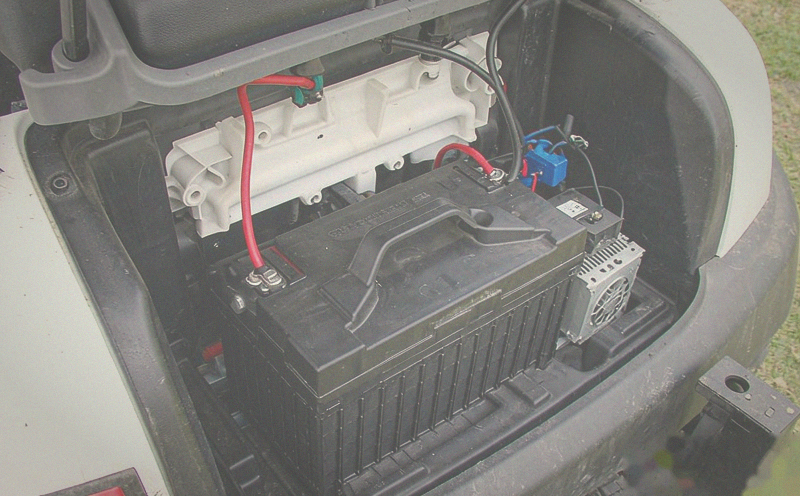
Battery options have to match what the cart platform expects. Lithium packs are commonly supplied as plug-and-play systems built for mainstream golf cart layouts, which shortens installation and reduces wiring work. Lead-acid banks fit too, but on older models you may need extra fitting work around cell placement and terminal types.
• Check the cart's nominal voltage before anything else — 36V, 48V and 72V platforms are not interchangeable.
• Measure the battery compartment and confirm terminal type and orientation.
• Confirm charger compatibility, or plan for a charger matched to the new chemistry.
• Ask for the discharge current rating, not just the Ah figure — torque demand matters more than capacity on hilly courses.
Service life varies enormously by chemistry. A well-maintained lead-acid golf cart battery typically lasts about 3 to 5 years, and that assumes regular watering and terminal care. A lithium pack can run up to 10, even 12 years with no routine upkeep at all.
Warranty coverage on both chemistries generally spans 3 to 12 years depending on the product tier. Lithium packs are often sold with full-coverage terms and stronger system reliability commitments, because the BMS can record what actually happened to the pack. When comparing quotes, read what voids the warranty — charger mismatch and water ingress are the two classic exclusions.
Weather separates the chemistries more than brochure specs suggest. Lead-acid keeps working below freezing, but capacity tapers as temperatures drop, and prolonged heat is harder on it — plates corrode faster and the pack loses power.
Lithium handles high ambient temperature well and keeps delivering strong power when the heat stays on. For sub-zero operation, specify a pack whose BMS includes low-temperature charge protection, so the system blocks charging until the cells are warm enough. That single detail is the difference between a pack that survives winter and one that comes back damaged.
Rather than one universal winner, the right pick depends on the job. These four configurations cover most of the market:
• 12V 50Ah – 100Ah lithium — lightweight recreational carts, short runs, easy retrofit.
• 48V 32Ah – 128Ah lithium — the workhorse choice for golf course fleets and advanced cart models.
• 72V 100Ah – 300Ah lithium — high-performance business fleets that need speed, torque and long daily range.
• Lead-acid bank — budget-sensitive carts with light, occasional use and an owner willing to water and clean the cells.
Notice that the decision is not "lithium or lead-acid" in the abstract. It is a voltage, a capacity, a duty cycle and a maintenance budget — which is exactly why a custom pack specification usually beats a generic drop-in.

UFOPOWER is a professional lithium battery manufacturer supplying golf cart packs to fleets, distributors and cart OEMs. Production runs on in-house lines under ISO9001 and IATF16949 quality management, with strict quality control and 100% factory testing before shipment. CE and RoHS documentation is prepared per project.
• Factory-direct supply — packs ship from the production line, not from a trading layer.
• OEM and ODM programs — housing, terminal layout, connectors, communication protocol and branding.
• Custom battery solutions — voltage, capacity, BMS settings and thermal design matched to your cart and duty cycle.
• Fleet support — consistent batch quality and documentation so multi-cart sites stay serviceable.
© 2026 UFOPOWER. All rights reserved. | www.ufobattery.com E-Mail: sales@ufo-battery.com UFOPOWER Batterien | Individuelle Batterielösungen
How often should golf cart batteries be replaced?
Are lithium batteries better than lead-acid for golf carts?
How do I maintain golf cart batteries?
What voltage and capacity does my golf cart need?
Will a lithium pack fit my existing golf cart?
How long is the warranty on golf cart batteries?



Why Electric Golf Cart Batteries Are Hot: 48V LiFePO4 Power, Instant Torque and Regenerative Braking
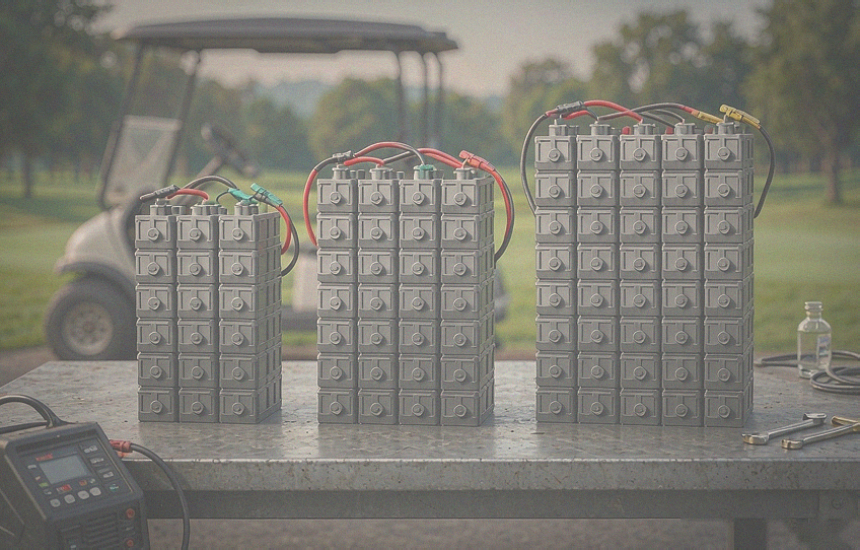
Reliable Golf Cart Battery Options: Top Picks for 12V, 48V and 72V Carts


 WhatsApp
 EN
 AR
 DE
 ES
 FR
 JP
 KO
 PT
 RU
 Startseite >