
 Oct 21, 2026
Industrial drone programs rarely fail because of the airframe. They fail at the battery: a pack that cannot hold voltage under load, a capacity number that does not survive an acceptance test, or a BMS that protects the cells on paper but not in the field. A high energy density UAV battery addresses all three at once, because energy per kilogram sets how much work each sortie can do and how much the whole fleet costs to run.
This guide covers the engineering and procurement side of that decision: how to size C-rate against real flight current, which acceptance tests expose overstated capacity, which BMS thresholds matter, what certifications and temperature limits to demand, and how cycle life turns into total cost of ownership. UFOPOWER is a professional lithium battery manufacturer building high energy density packs for agricultural, inspection, logistics and mapping platforms.
• Energy density raises endurance and payload within the same weight budget
• C-rate, not capacity alone, decides whether a pack survives takeoff and hover
• Acceptance testing catches overstated capacity before it reaches a fleet
• Cycle life and swelling behavior, not purchase price, drive TCO
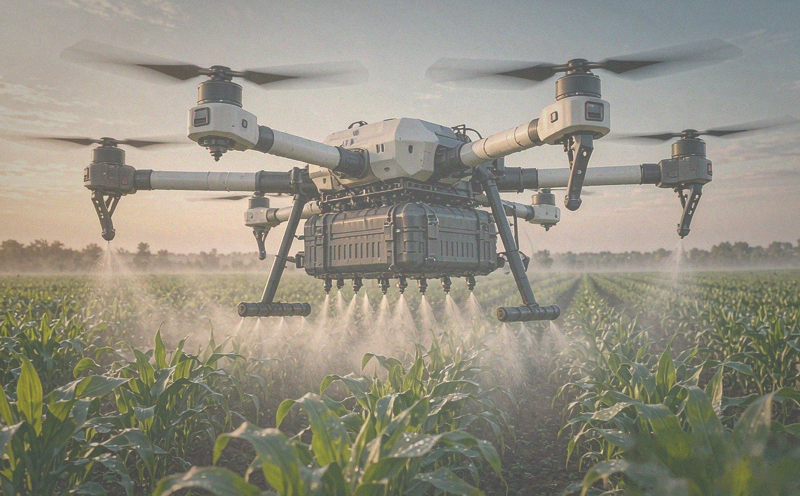
Battery performance constrains flight time, payload capacity and mission capability in a single knot. A pack with more watt-hours per kilogram either keeps the aircraft in the air longer or frees mass for a heavier sensor, a spray tank or a cargo box. In logistics and agriculture, where revenue is counted in completed tasks per day, that difference is not a specification detail — it is the operating model.
Consistent output matters just as much as headline energy. A pack that delivers steady voltage through a full mission lets the flight controller hold altitude and speed without derating, and lets the operator plan on a predictable reserve. That consistency is what separates an industrial battery from a hobby pack with an ambitious label.
C-rate describes how fast a battery can release energy relative to its capacity. The continuous C-rating determines how stable the power output stays during normal flight, and it is the number that should disqualify a pack before price is even discussed.
For high-payload work such as agricultural spraying drones, a discharge rate of 30C or higher is the practical requirement. The sizing rule is simple and worth applying literally:
Maximum discharge current = capacity × C-rating, and that result must exceed 1.2 times the drone's maximum operating current.
The 1.2 factor is the margin that covers voltage sag, aging and hot-day operation. A pack sized exactly at the aircraft's peak current has no room left, and the first symptom is a low-voltage warning during a climb that the pilot cannot explain.
High energy density, expressed in Wh/kg, is the second filter: it sets how much energy is available at a given mass. A pack has to pass both filters. Plenty of designs pass one and fail the other.
Procurement is where overstated specifications get caught. Three tests are enough to separate a qualified supplier from a reseller with a datasheet.
| Test | Method | What failure looks like |
|---|---|---|
| Load discharge test | Fit the payload or equivalent load and fly a realistic profile while logging state of charge | Sudden power drops, for example charge jumping from 30% to 10% in seconds — a sign of poor cell consistency and a direct flight-safety risk |
| No-load endurance test | Fly the aircraft empty, deduct a 20% safety margin from the supplier's stated endurance, and compare against measured time | A gap beyond 30% points to capacity misrepresentation or significant cell degradation |
| Visual and date inspection | Press the casing gently, inspect electrode contacts and read the production date on arrival | Slight swelling or deformation is grounds for rejection; oxidation, blackening or corrosion on contacts suggests long-term over-discharge or electrolyte leakage |
The date check is the one most fleets skip. A pack performs best within roughly one year of its production date, and a pack older than two years may have lost 10% or more of its capacity even if it has never been flown. Buying a warehouse-aged battery at a discount is buying a smaller battery.
Reliability is a documentation question as much as an engineering one. UN38.3 covers international transport safety, and CE covers European market access and safety conformity. Both should be available before a pack is shipped, not promised after the order.
The environmental envelope matters just as much in the field. Industrial drones are expected to hold discharge performance at low temperature, down to around -30°C in cold-climate operations, while an over-temperature protection function has to cut power when ambient conditions climb above 60°C. For platforms working outdoors year-round, an enclosure rated IP64 or higher is what allows operation in light rain instead of an immediate abort.
A battery management system is only as good as its cut-off values. These are the thresholds worth confirming in writing, because a BMS that acts late is functionally the same as no protection at all.
| Schutz | Trigger point | BMS action |
|---|---|---|
| Overcharge | Cell voltage reaches 4.25V ± 0.05V | Rapid charge circuit cut-off to prevent overheating |
| Over-discharge | Cell voltage falls to 2.8V ± 0.05V | Immediate discharge cut-off to prevent permanent capacity loss |
| Over-temperature | Ambient above 60°C | Automatic power cut-off |
| Low-temperature management | Cold environment, for example -20°C | Preheating function starts automatically before charge or discharge |
| Short circuit | Fault detected | Circuit cut within 100 microseconds |
| Cell balancing | Voltage spread between cells | Continuous balancing so every cell charges and discharges at the same level |
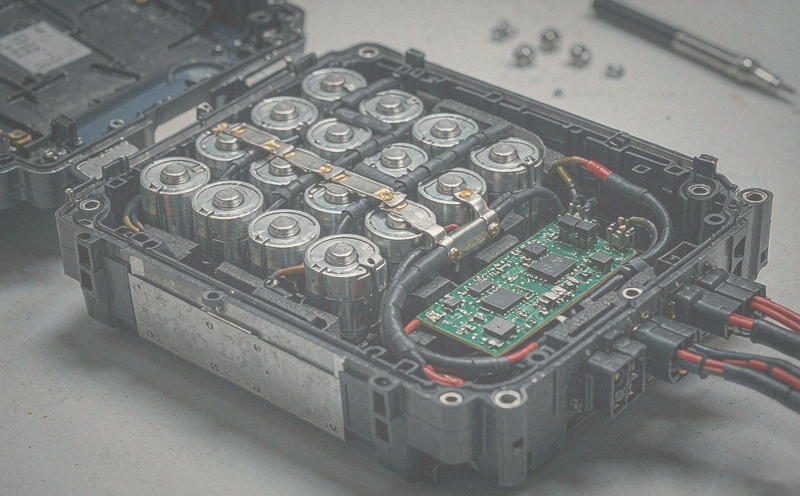
Energy density gains do not come from packing cells tighter; they come from the electrode materials. A nano silicon-carbon negative electrode is the current step change: compared with conventional graphite-anode designs, it allows capacity to rise by roughly 30% at the same volume and weight.
Silicon stores far more lithium per unit mass than graphite, and the nano-scale carbon structure is what keeps that advantage from turning into mechanical failure during cycling. The practical result for an aircraft is a pack that carries more energy in the same bay, or the same energy in a lighter pack, while operating stably across a wide temperature range from about -20°C to 60°C.
Original-equipment batteries carry a safety premium and a price to match. Generic third-party packs are often 30% to 50% cheaper, and that discount is exactly what makes them expensive: inconsistent cell quality, missing protection layers and unpredictable swelling shorten service life and raise the risk of losing an aircraft, a payload or a mission window.
The comparison that decides total cost of ownership is not price per pack. It is cost per completed flight hour, which depends on cycle life, swelling behavior and the number of protection layers standing between a cell fault and an accident.
| TCO factor | Certified industrial pack | Generic third-party pack |
|---|---|---|
| Purchase price | Höher | 30% to 50% lower |
| Zyklusleben | 500 to 800 cycles before capacity falls to 80% | Inconsistent, frequently below specification |
| Swelling rate | Below 1% | Higher and unpredictable |
| Protection layers | Six protection circuits plus BMS monitoring | Basic or undocumented |
| Risk exposure | Predictable replacement intervals, fewer grounded aircraft | Higher failure rate, unplanned downtime, possible asset loss |
Cycle life is partly a manufacturing property and partly an operating discipline. Three practices carry most of the gain:
Periodic calibration. After every 20 charges, run one complete charge-discharge cycle on a dedicated battery tester: discharge to 3.0V per cell, then charge fully. This restores cell consistency, brings the voltage spread between cells back within 0.05V, and typically adds 10% to 15% to service life.
Charge discipline. Stop at about 90% rather than 100% on routine cycles to reduce lithium plating, and keep charging ambient between 10°C and 35°C.
Storage discipline. For long-term storage, hold state of charge at 40% to 60% — roughly 3.8V to 3.9V per cell — in a dehumidifying box with humidity below 60%. Storing at full charge accelerates aging faster than most operators expect.
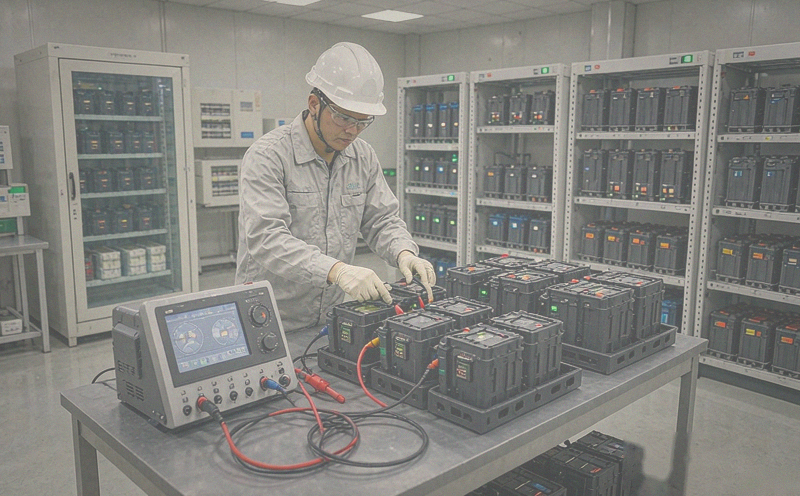
A high energy density UAV battery earns its price in three places: more completed tasks per charge, payload capacity that does not have to be traded away, and a replacement interval that can be planned instead of discovered. Getting there requires more than a good Wh/kg figure — it requires a C-rate that matches the aircraft's peak current, acceptance tests that verify capacity, certifications and temperature limits that match the operating environment, and a BMS that acts at the right thresholds.
UFOPOWER builds high energy density packs around nano silicon-carbon electrodes, with integrated BMS protection, factory testing and OEM and ODM configuration for voltage, capacity, dimensions and connectors. Send us your aircraft's current profile and duty cycle, and we will size the pack to the mission rather than to a headline number.
What counts as a high energy density UAV battery for industrial drones?
What C-rate does an industrial drone need?
How do I check whether a supplier's capacity claim is real?
Which BMS protection thresholds should be specified?
How much does maintenance extend UAV battery life?
How do high energy density batteries reduce total cost of ownership?


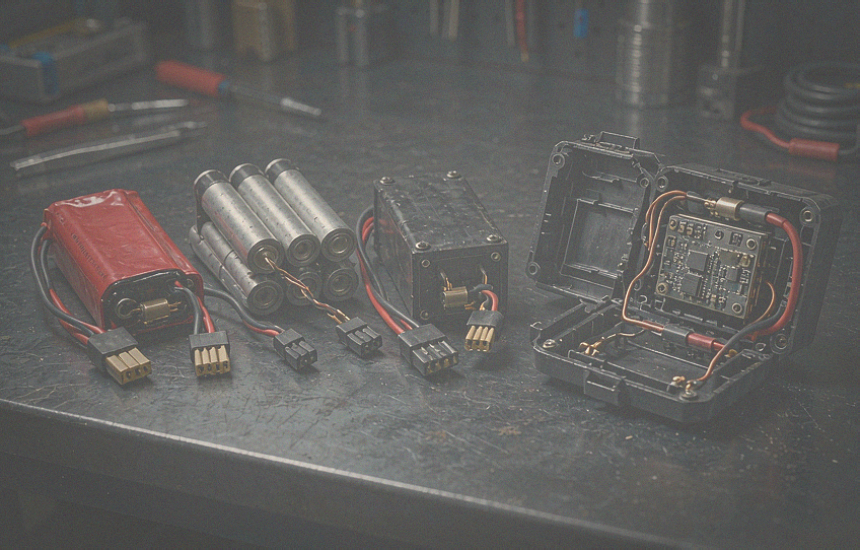
UAV Battery Types Explained: LiPo, Li-ion, NiCd and How to Choose
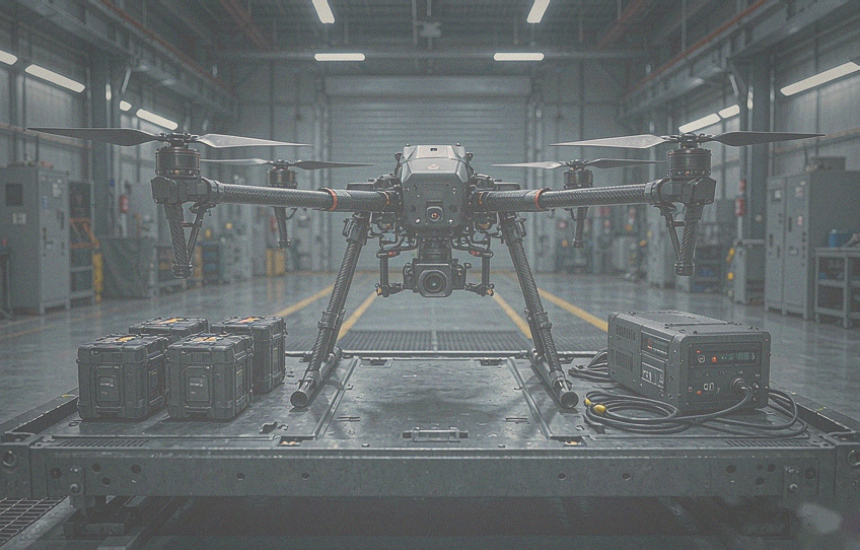
UAV Battery Life Explained: Flight Time, Cycle Count and How to Extend Both


 WhatsApp
 EN
 AR
 DE
 ES
 FR
 JP
 KO
 PT
 RU
 Startseite >