
 Oct 19, 2026
A 380 Wh/kg semi-solid-state battery sounds like a headline number until you try to design an aircraft around it. Then it becomes a very practical question: how much of that energy can actually be turned into useful flight time, and how much mass does the airframe have to carry to get it.
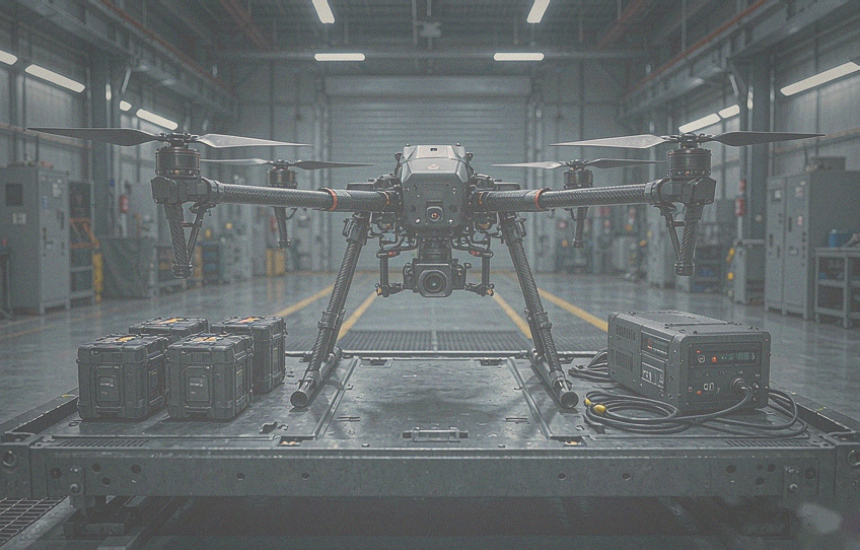
This article works through that question using a real development program: a small untethered test platform built by a European deep-tech team working on an autonomous aero-kite drone for wind-assisted ship propulsion. During an approximately six-hour field testing program in an alpine valley, the aircraft flew in both manual and fully autonomous modes on a 380 Wh/kg semi-solid-state pack. The team reported afterwards that flight time had stopped being the limiting factor for the day.
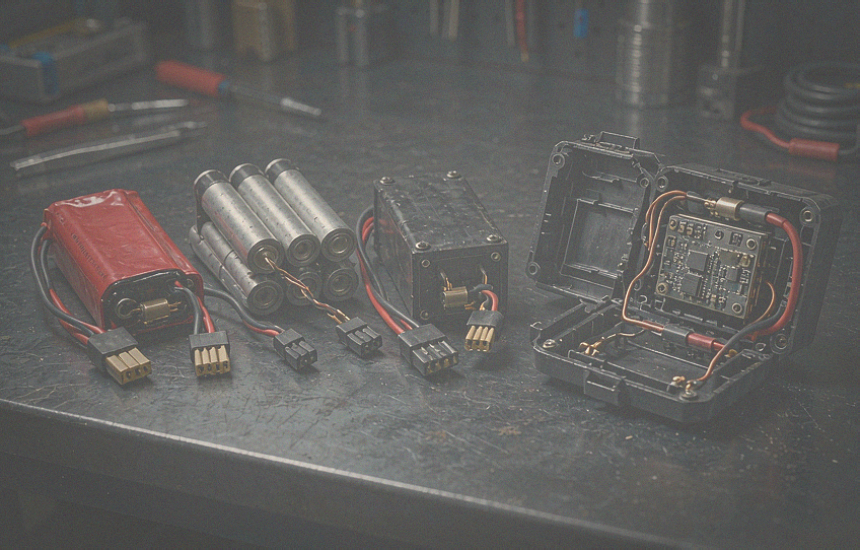
UFOPOWER is a professional lithium battery manufacturer, and high-energy UAV packs are one of the platforms we build for customers who are still developing their airframe rather than buying a finished one. Below is what the technology changes, what the field test does and does not prove, and the engineering questions worth answering before a pack specification is frozen.
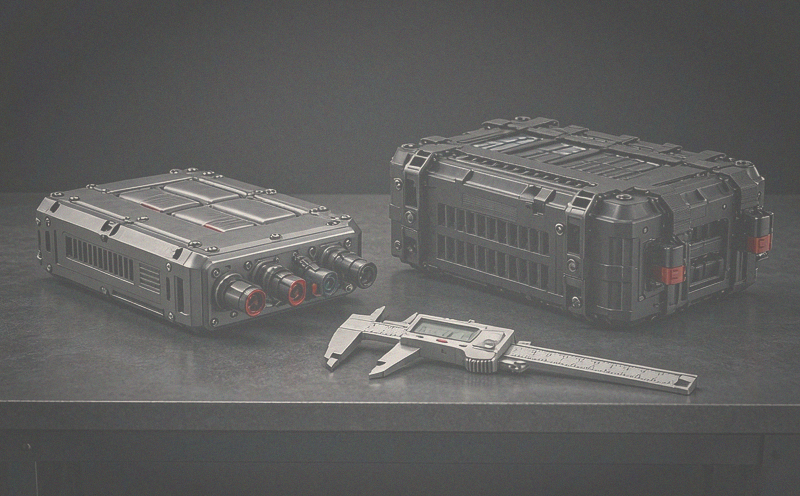
Specific energy is measured in watt-hours per kilogram. It answers a simple question: for every kilogram of battery mass the aircraft has to lift, how much nominal energy is on board. A higher number can do one of two things. It can deliver more energy at the same battery mass, or it can deliver the same energy at a lower battery mass.
That second option is the one engineers usually underestimate. Battery mass is not a passive passenger in a UAV design. Every kilogram added to the pack raises the power needed for takeoff, climb, maneuvering and sustained cruise, which in turn draws energy out of the pack faster. Published research on electric aircraft endurance makes the same point from the other direction: specific energy and ambient conditions together constrain how long an electric aircraft can stay airborne, while airspeed, altitude and climb profile shape how the state of charge moves during the mission.
So the useful comparison is never "which pack has the most watt-hours". It is "which pack configuration gives this airframe the best balance of energy, mass, continuous and peak power, installation volume and landing reserve". A 380 Wh/kg platform simply moves that balance point; it does not remove the decision.
| Platform attribute | 380 Wh/kg semi-solid-state UAV pack |
|---|---|
| Specific energy | 380 Wh/kg at platform level |
| Cell chemistry route | High-nickel cathode with silicon-carbon anode |
| Configurable parameters | Capacity, voltage, dimensions and connector options |
| Typical design intent | Carry more energy without letting battery mass and volume dominate the airframe |
| Airframe constraints it must respect | Battery-bay geometry, center of gravity, cable routing, peak power, total takeoff mass |
For a development platform, the most valuable output of extra energy margin is not a longer brochure number. It is optionality: longer sorties, more test repetitions in a single day, or a more conservative landing reserve kept in the pack. Which of those three matters most depends entirely on the final pack and aircraft configuration.
The test aircraft was a small untethered platform used to check whether the physical aircraft behaves the way the simulation models predict. That is a familiar stage in UAV development: before any maritime trial, the team needs measured flight data to compare against the model and refine the control laws.
Two control modes were exercised on the same day. Manual flights let an experienced pilot fly the aircraft directly. Fully autonomous flights exercised the control system that will carry the concept forward. Running both modes gave the team two distinct operating conditions to evaluate against the aircraft model, rather than a single demonstration flight.
The operating team's summary of the day was blunt: the pilot ran out of stamina before the pack ran out of energy. Flight time had stopped being the constraint on how much testing could be done.
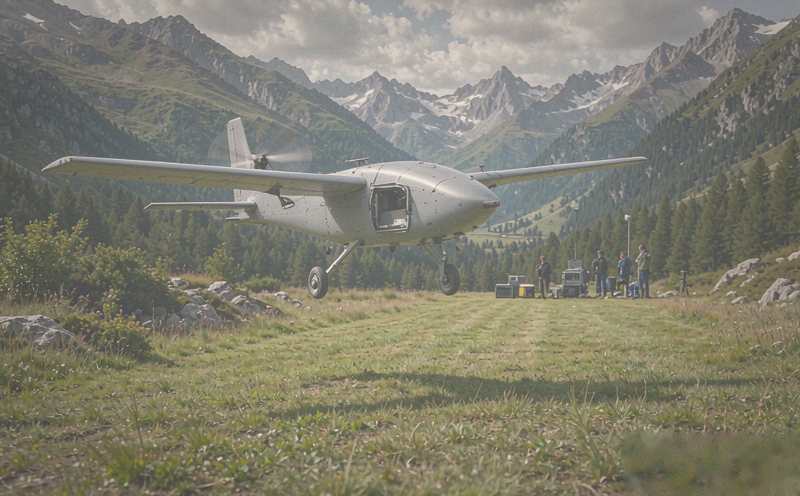
| Program element | What the public record shows |
|---|---|
| Test environment | Field testing in an alpine valley |
| Aircraft | Small untethered development platform, not the final shipboard system |
| Flight modes | Manual control and fully autonomous flight |
| Power source | 380 Wh/kg semi-solid-state battery pack |
| Session length | Approximately six hours of test program, made up of multiple sorties and activities |
| Reported outcome | Flight time no longer the limiting factor for the day's testing |
| Not established by public information | One continuous six-hour flight, or a single pack powering the entire session |
Those last two rows matter, and they are the part most articles about this kind of test skip. A six-hour test program is a measure of engineering productivity, not an endurance specification. Turning it into "six hours of flight time" would require sortie-level logs, pack configuration data, state-of-charge records and confirmation from the engineering team. Until that exists, the defensible statement is the honest one: the team completed an extended day of manual and autonomous testing, and flight time was no longer what limited the work.
A 380 Wh/kg pack does not automatically make an aircraft fly longer. Endurance is set by the whole system: propeller efficiency, motor selection and matching, airframe drag, takeoff weight, payload, wind, temperature, flight path, reserve requirements and control behavior. A high-energy pack changes the energy budget; it does not rewrite the rest of it.
The practical difference shows up in how a pack is specified. A headline-spec approach starts with the highest capacity number that fits the bay and works backwards. A mission-profile approach starts with the flight the aircraft actually has to fly, then allocates mass and power across the whole airframe.
| Design factor | Conventional high-rate LiPo pack | 380 Wh/kg semi-solid-state pack |
|---|---|---|
| Primary design emphasis | Discharge capability and mature supply chain | Energy per kilogram |
| Mass for a given energy target | Higher, chemistry dependent | Lower, which frees takeoff mass for payload or fuel margin |
| Best fit | High-rate multirotors, short aggressive missions, proven platforms | Long-endurance fixed wing, research aircraft, weight-sensitive designs |
| Main engineering trade-off | Energy density ceiling | Requires validation of thermal behavior, current capability and cycle behavior in the real mission |
| Specification mistake to avoid | Adding capacity that the airframe cannot lift efficiently | Treating Wh/kg as a flight-time guarantee |
For a long-endurance fixed-wing UAV, specific energy usually deserves the first priority. A heavy-lift multirotor may need a different balance between energy and peak power, because the takeoff and hover phases dominate. An autonomous research aircraft often places additional value on stable output, repeatable behavior and clear state-of-charge margins, since the flight data is the product of the day.
As a professional lithium battery manufacturer, UFOPOWER treats an experimental UAV as a system-integration project rather than a request for the off-the-shelf pack with the biggest number on the label. The pack is built around the mission profile, not selected from a single headline specification.
A typical engagement on a 380 Wh/kg platform runs through the following stages:
• Cell selection matched to the voltage, current and energy targets of the mission
• Pack configuration for capacity, voltage, dimensions and connector options
• Mechanical evaluation against battery-bay geometry, center of gravity and cable routing
• Prototype build with in-house production and 100% factory testing before shipment
• Engineering review after first flights, using real data to confirm voltage, thermal, current and usable-energy targets
That last step is where most of the value sits. First-flight data usually reveals which assumption was optimistic: a peak current that arrives faster than modeled, a temperature rise in a sealed bay, or a usable-energy figure that was calculated at a discharge rate the mission never actually uses. OEM and ODM customers get the same review loop, with pack layout, cabling and discharge capability adjusted together rather than one specification optimized in isolation.
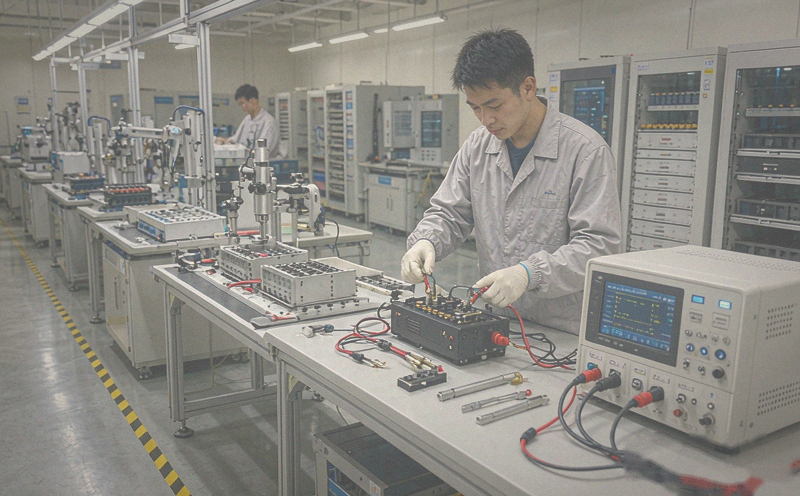
If a battery program is going to be judged on evidence rather than impressions, the evidence has to be recorded at sortie level. The metrics below are the ones that turn a pack specification into a defensible result:
• Pack model and configuration, plus measured pack mass
• Number of flights and the duration of every sortie
• Starting and ending state of charge for each flight
• Minimum voltage reached, plus average and peak current
• Pack and battery-bay temperature during the sortie
• Wind and ambient conditions during the test window
• Recharge time between sorties and remaining landing reserve
• A baseline run with an alternative pack configuration on the same aircraft and mission profile
That last item is what separates a battery claim from a battery contribution. If the same aircraft, mission profile and weather conditions are flown with two different pack configurations, the difference in results can be attributed to battery mass and energy rather than to a change in flight control or aerodynamics. Any pack supplier who wants to be judged fairly should welcome that comparison.
The test platform in this program was a small untethered aircraft, not a shipboard system. The concept behind it is a rigid biplane structure with electric motors, sensors, autonomous control and a high-strength synthetic tether, designed to take off from a vessel, climb into stronger wind, generate traction through the tether and return autonomously. Development roadmaps of that kind move through autonomous takeoff, tethered operation at altitude, recovery and vessel landing.
As a program moves from an untethered prototype to a tethered maritime platform, the battery requirements shift rather than simply scale. Takeoff power, emergency recovery, redundancy, salt exposure, temperature range, charging strategy, duty cycle and the relationship between onboard storage and any in-flight energy recovery all have to be re-examined. A pack optimized for maximum energy per kilogram on a fair-weather test day is not automatically the pack that survives a marine duty cycle.
The same logic applies at industry level. Maritime decarbonization discussions now treat kites, rigid wings, rotors and soft sails as credible contributors, and the emphasis has moved toward standardized assessment and transparent performance reporting. That is precisely why measured flight data and clearly stated test conditions are worth more than an ambitious endurance headline.
A 380 Wh/kg semi-solid-state battery earns its place in a UAV development program by giving engineers margin: more test time per day, more repetitions of the maneuvers that need validating, and a landing reserve that does not force early termination of a sortie. In this field program it supported manual and fully autonomous testing across an approximately six-hour session, and the customer reported that flight time was no longer the limiting factor.
The important outcome is not an unverified endurance record. It is the engineering opportunity created when the power system stops being the bottleneck. As development programs move toward tethered and onboard maritime trials, UFOPOWER supports the next stage with configurable high-energy cells, factory-direct pack production and application-focused engineering reviews built on real flight data.
© 2026 UFOPOWER. All rights reserved. | www.ufobattery.com | Email: sales@ufo-battery.com | UFOPOWER batteries | Custom battery solutions
Did the test aircraft fly continuously for six hours on one 380 Wh/kg battery pack?
Will a 380 Wh/kg semi-solid-state battery automatically make my drone fly much longer?
How do we know whether a 380 Wh/kg pack suits our UAV powertrain and mission profile?
What test data should be collected before freezing a pack design for production?
Can UFOPOWER customize voltage, capacity, dimensions, connectors and current capability?
Why does the article avoid calling the field test an endurance record?


 WhatsApp
 EN
 AR
 DE
 ES
 FR
 JP
 KO
 PT
 RU
 Home >