
 Sep 02, 2026
Natrium-Ionen-Batterien entwickeln sich als wichtige alternative Batterietechnologie für industrielle, kommerzielle, Mobilitäts- und Energiespeicheranwendungen. Im Gegensatz zu Lithium-Ionen-Batterien verwenden Natrium-Ionen als Ladeträger und bieten eine potenzielle Möglichkeit, die Batterieversorgungsketten zu diversifizieren und gleichzeitig eine hohe Leistung in bestimmten Betriebsumgebungen zu bieten.
Für Unternehmen, die nach einem Hersteller oder Lieferanten von Natrium-Ionen-Batterien suchen, ist die Batteriechemie nur ein Teil der Entscheidung. Zellqualität, Batteriedesign, BMS-Fähigkeit, Sicherheit, Anpassung, Testen, Produktionskapazität und Anwendungserfahrung sind ebenso wichtig. Als a professioneller BatterieherstellerUFOPOWER entwickelt Lithium- und Natrium-Ionen-Batterielösungen für industrielle und kommerzielle Anwendungen mit maßgeschneiderten Batteriepackkonfigurationen für OEM-Projekte.

Eine Natrium-Ionen-Batterie ist eine wiederaufladbare Batterie, die Energie durch die Bewegung von Natriumionen zwischen Kathode und Anode während des Ladens und Entladens speichert und freisetzt. Das Grundbetriebsprinzip ähnelt dem eines Lithium-Ionen-Akkus. Der Hauptunterschied ist das Ion, das zur Ladungsübertragung verwendet wird: Lithiumionen in Lithium-Ionen-Batterien und Natriumionen in Natrium-Ionen-Batterien.
Eine typische Natrium-Ionen-Batterie besteht aus:
Kathode
Anode
Elektrolyt
Trenner
Aktuelle Sammler
Batteriemanagementsystem (BMS)
Batteriegehäuse und elektrische Anschlüsse
Verschiedene Natrium-Ionen-Chemien verwenden verschiedene Kathode- und Anodenmaterialien. Die kommerzielle Entwicklung umfasst derzeit Technologien auf Basis von Schichtoxiden, preußisch-blauen oder preußisch-weißen Analogen und polyanionischen Verbindungen. Da Batteriechemie und Zellendesign sich direkt auf die Energiedichte, die Lebensdauer, die Leistung bei niedrigen Temperaturen und die Kosten auswirken, sollten Käufer das gesamte Batteriesystem bewerten, anstatt einen Lieferanten nur auf der Grundlage des Begriffs & ldquo; Natrium-Ionen. & rdquo;
Natrium ist im Vergleich zu Lithium weit verfügbar, was die Natrium-Ionen-Technologie für Unternehmen attraktiv macht, die die Lieferketten von Batterie-Rohstoffen diversifizieren möchten. Natrium-Ionen-Batterien benötigen kein Lithium. Die genauen Anforderungen an kritische Mineralien hängen jedoch von der verwendeten Kathodenchemie ab, daher sollte die Natrium-Ionen-Technologie nicht automatisch als vollständig frei von kritischen Mineralien beschrieben werden. Die IEA stellt fest, dass einige kommerziell relevante Natrium-Ionen-Chemien noch Materialien wie Nickel und Mangan verwenden können.
Einer der interessantesten Vorteile von Natrium-Ionen-Batterien ist ihre potenzielle Leistung in kalten Umgebungen. Laut der IEA kann die neueste Generation von Natrium-Ionen-Batterien bei Temperaturen bis zu -40% ihrer Nennleistung behalten. Deg; C und kann bei Temperaturen bis zu etwa 70& Deg; C. Die tatsächliche Leistung hängt von Zellchemie, Batteriedesign, thermischem Management und Betriebsbedingungen ab. Dies macht die Natrium-Ionen-Technologie besonders interessant für Anwendungen, in denen eine niedrige Temperaturleistung eine wichtige Anforderung ist.
Natrium-Ionen-Technologie kann dazu beitragen, die Versorgungsketten von Batterien zu diversifizieren, indem die Abhängigkeit von Lithium verringert wird. Dies bedeutet nicht, dass Natrium-Ionen-Batterien sofort Lithium-Ionen-Batterien ersetzen werden. Stattdessen können die beiden Technologien je nach Energiedichte, Kosten, Temperatur, Zyklusanforderungen und Systemdesign unterschiedliche Anwendungen bedienen.
Natrium-Ionen-Batterien haben die Aufmerksamkeit wegen ihrer potenziellen Kostenvorteile erregt, da Natrium reichlich ist und die Chemie kein Lithium erfordert. Die Batteriekosten hängen jedoch von vielen Faktoren ab, darunter Kathodenchemie, Rohstoffpreise, Produktionsgröße, Fertigungseffizienz und Lieferkettenreifheit. Daher sollte ein professioneller Batterielieferant die Gesamtsystemkosten bewerten, anstatt einfach zu behaupten, dass Natrium-Ionen-Batterien immer billiger sind als Lithium-Ionen-Batterien.
Natrium-Ionen- und LiFePO4-Batterien sind nicht direkter Ersatz für jede Anwendung. Die bessere Wahl hängt von den spezifischen Betriebsanforderungen ab. Die folgende Tabelle vergleicht die beiden Chemien über die Faktoren hinweg, die für B2B-Käufer am wichtigsten sind:
| Faktor | Natrium-Ionen-Batterie | LiFePO4 Batterie |
|---|---|---|
| Ladungsträger | Natriumionen | Lithium ions |
| Energiedichte | Generally lower | Generally higher |
| Low-Temperature Performance | Strong potential advantage | Application-dependent |
| Thermal Stability | Chemistry and design dependent | Generally strong |
| Supply Chain | Uses sodium and other chemistry-specific materials | Uses lithium-based materials |
| Technology Maturity | Emerging and scaling | Highly mature |
| Industrial Applications | Selected applications | Very broad |
| Energy Storage | Promising | Widely established |
| OEM Customization | Available depending on manufacturer | Widely available |
The IEA reports that current sodium-ion cells can reach up to around 175 Wh/kg, compared with up to around 205 Wh/kg for the latest LFP cells. This energy-density gap remains an important consideration when space and weight are critical. Therefore, the question should not simply be: “Is sodium-ion better than LiFePO4?” A more useful question is: “Which battery chemistry is better suited to my application?”
Sodium-ion technology is particularly interesting for applications where energy density is not the only performance priority. Potential applications include:
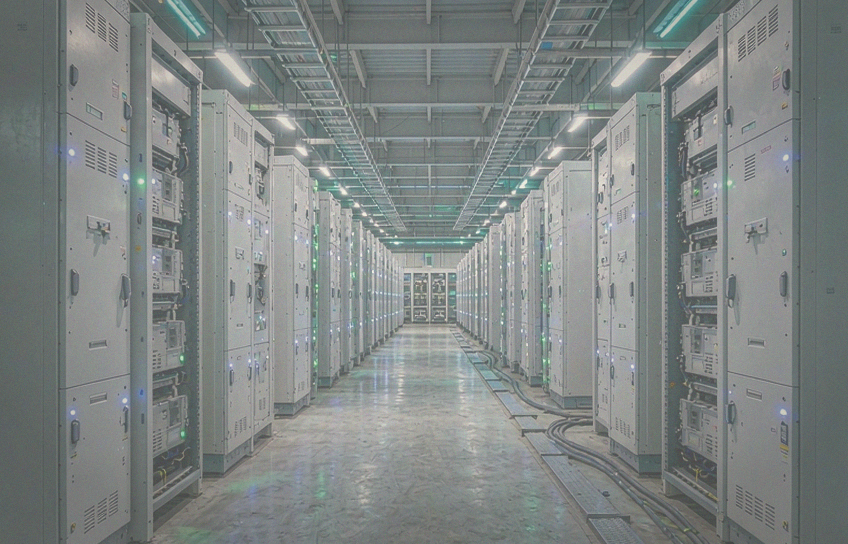
Stationary energy storage is one of the major areas being developed for sodium-ion batteries. Sodium-ion technology can be attractive where weight and volume are less restrictive and supply-chain diversification or temperature performance is important. The IEA expects sodium-ion batteries to play a growing role in battery storage, although lithium-ion technologies remain dominant.
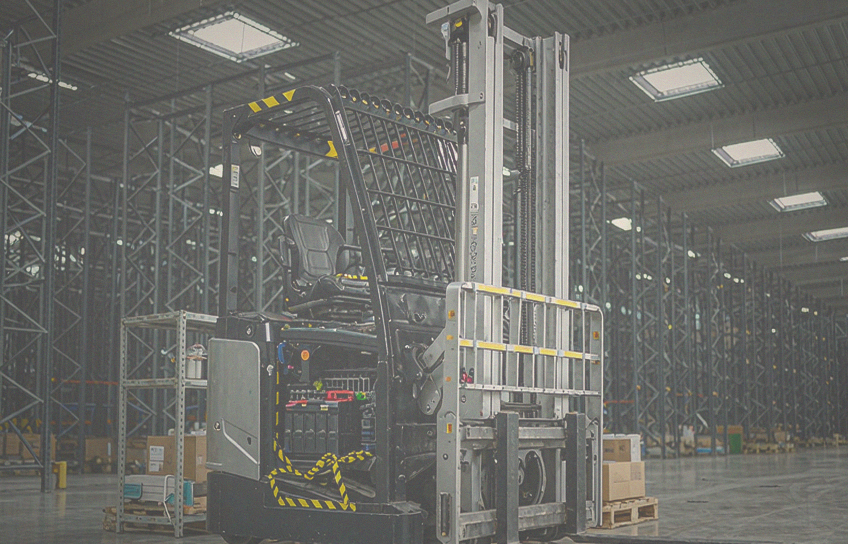
Industrial equipment can benefit from battery technologies that provide reliable power, long operating life and suitable performance under challenging environmental conditions. Potential applications include industrial equipment, material handling equipment, backup power systems, commercial equipment, low-temperature applications and specialty electric vehicles.
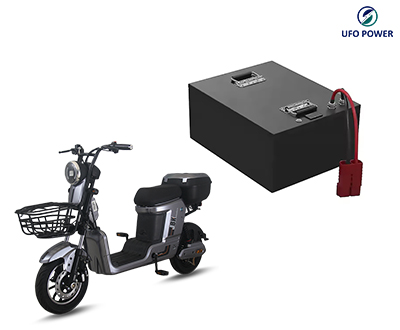
Sodium-ion batteries are also being developed for selected mobility applications. The IEA identifies small-range electric vehicles, light commercial vehicles operating in urban environments, two- and three-wheelers and certain industrial equipment among potential applications.
Choosing the right sodium-ion battery supplier requires more than comparing prices. For OEMs, distributors and industrial equipment manufacturers, we recommend evaluating at least the following factors.
The battery pack is only as reliable as its cells. Ask potential suppliers about cell manufacturer, cell chemistry, nominal voltage, capacity, energy density, cycle-life testing, cell consistency and batch traceability. A professional supplier should be able to provide clear technical specifications and quality-control information.
The battery management system is critical to battery safety and performance. A suitable BMS may provide overcharge protection, over-discharge protection, overcurrent protection, short-circuit protection, temperature monitoring, cell balancing, state-of-charge monitoring and communication functions. For OEM applications, BMS parameters and communication protocols may also need to be customized to match the equipment controller.
Industrial customers rarely need a completely standard battery. Depending on the application, OEM customers may require customization of voltage, capacity, battery dimensions, connector, terminal configuration, enclosure, BMS, communication protocol, mounting structure and charging requirements. A sodium-ion battery manufacturer with strong engineering capabilities can provide more value than a supplier that only sells standard battery packs.
Before choosing a supplier, ask how the battery is tested. A professional battery manufacturer should have quality-control procedures covering cell testing, capacity testing, charge and discharge testing, BMS testing, temperature testing, safety testing, end-of-line inspection and aging or performance verification. Certification requirements should also be evaluated according to the battery’s intended market and application.
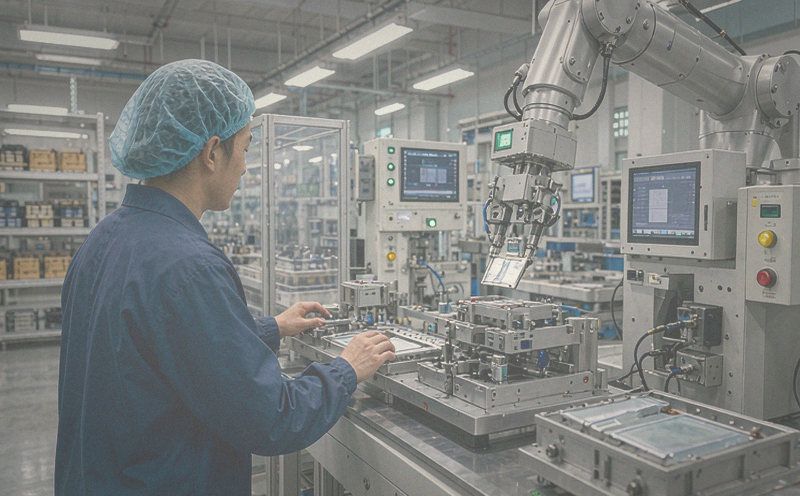
For distributors and OEM customers, production capability is an important consideration. Evaluate production capacity, manufacturing equipment, quality management system, lead time, batch consistency, OEM/ODM capability, export experience and after-sales technical support. A supplier should be capable of supporting both sample development and future volume production.
UFOPOWER is a professional battery manufacturer specializing in lithium battery solutions and developing advanced sodium-ion battery solutions for industrial and commercial applications. Our approach is focused on matching battery technology to the actual requirements of the equipment and application.
For OEM and B2B customers, UFOPOWER can support battery development around requirements such as voltage and capacity, battery dimensions, BMS configuration, electrical connections, communication requirements, charging requirements, application environment and mechanical integration. Rather than treating sodium-ion technology as a universal replacement for lithium-ion batteries, UFOPOWER evaluates the requirements of each application and helps customers select the appropriate battery chemistry and configuration — backed by in-house engineering, factory-direct production and OEM/ODM service.
There is no single battery supplier that is the best choice for every application. A reliable sodium-ion battery supplier should be able to demonstrate:
Consistent cell quality
Professional battery pack design
Reliable BMS integration
Application-specific customization
Quality-control and testing procedures
Relevant certifications
Stable production capability
OEM/ODM experience
Technical support
Clear communication and after-sales service
For OEM buyers, the ability to provide a complete battery solution is often more important than simply offering the lowest unit price.
Sodium-ion batteries are moving from research and early commercialization toward larger-scale deployment. The IEA describes 2026 as a potentially pivotal year for the technology’s scaling efforts, while also noting that LFP remains highly competitive because of its higher energy density, mature supply chain and cost advantages in many applications.
Recent industry developments also show that sodium-ion technology is moving into larger commercial applications. For example, CATL announced in June 2026 the commercial launch of its TENER sodium-ion energy storage system, while a May 2026 agreement between CATL and HyperStrong covered 60 GWh of sodium-ion battery supply for energy storage. This suggests that sodium-ion batteries should increasingly be viewed not simply as an experimental technology, but as an emerging battery chemistry with specific commercial advantages.
At the same time, lithium-ion and LiFePO4 batteries will remain important for applications where energy density, established supply chains and proven large-scale manufacturing are priorities. The future battery market is therefore likely to include multiple chemistries serving different applications rather than one chemistry replacing all others.
Sodium-ion batteries are becoming an increasingly important part of the global battery technology landscape. Their potential advantages in low-temperature performance, material availability and supply-chain diversification make them attractive for selected industrial, commercial, mobility and energy storage applications.
However, choosing the right sodium-ion battery is not simply a matter of choosing the newest battery chemistry. Buyers should evaluate cell quality, energy density, operating temperature, BMS design, safety, customization, testing and total cost according to the actual application. For OEMs, distributors and equipment manufacturers looking for a reliable sodium-ion battery manufacturer or supplier, UFOPOWER provides customized battery solutions backed by battery engineering and manufacturing capabilities.
What is a sodium-ion battery?
Are sodium-ion batteries better than lithium-ion batteries?
Are sodium-ion batteries suitable for energy storage?
What should I look for in a sodium-ion battery manufacturer?
Can sodium-ion batteries be customized for OEM applications?
Is UFOPOWER a sodium-ion battery manufacturer?


 WhatsApp
 EN
EN AR
AR DE
DE ES
ES FR
FR JP
JP KO
KO PT
PT RU
RU Startseite >