A forklift lithium battery upgrade is not a purchase, it is a small engineering project. Between the moment a fleet manager decides to retire lead-acid and the moment the fourth truck returns to service, someone has to check voltage platforms, measure battery compartments, size packs in kWh, plan chargers, arrange disposal of old packs and retrain drivers who have spent years plugging into a central charging room.
Get those steps right and the payoff is real: two to three times the service life of a lead-acid pack, no watering routine, no cool-down window, and a workspace with no acid spills or hydrogen venting. Get them wrong and the usual failures appear, which are trucks that derate on the second shift, packs that never fit the compartment, and data plates nobody updated. As a professional lithium battery manufacturer, UFOPOWER supplies factory-direct packs for these conversions, so this checklist follows the order a real retrofit actually happens in.

Why Fleets Make the Switch: Three Business Cases
Before the engineering, be clear about which business case is actually driving the project. Most upgrades are justified by one of three arguments, and each one changes the specification.
| Business Case | What Drives It | What It Changes in the Specification |
|---|
| Cost of ownership | Two to three times the service life of lead-acid, no watering or equalization labor, floor space released from the battery room | Prioritise cycle life, cell quality and warranty terms over lowest price per kWh |
| Safety and compliance | Sealed packs with no acid spill risk and no hydrogen venting, fewer hazardous-waste streams | Prioritise BMS protection, enclosure integrity and transport test documentation |
| Operational uptime | One to four hour charging, opportunity charging during breaks, consistent power to the last pallet | Prioritise charge rate, charger layout and CAN integration with the truck controller |
Factories running multiple shifts on lead-acid often report the investment recovered in roughly two to three years, mainly through labour and downtime removed from the shift plan. Single-shift sites with light duty cycles rarely match that pace, which is worth knowing before the project is approved.
Step 0: Audit the Fleet Before You Buy Anything
The most expensive mistakes in a conversion are discovered in the first week. Measure them out of the fleet before any purchase order is raised.
Compatibility: voltage, current and compartment
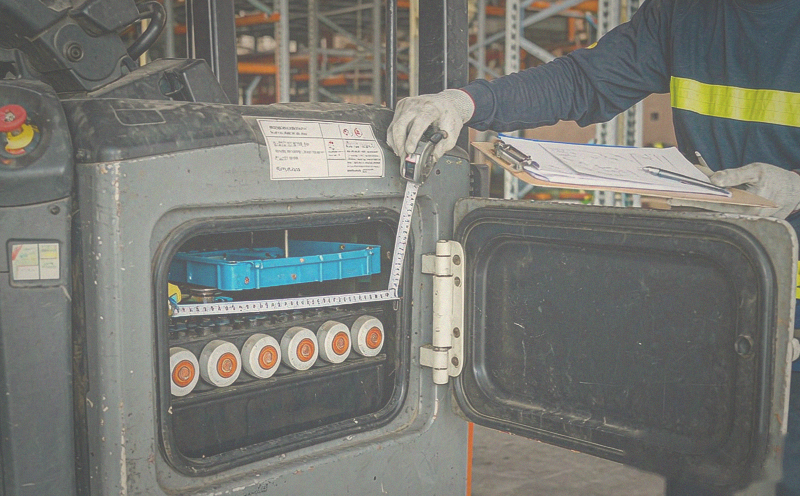
Confirm the voltage platform of every truck and record it per unit, because mixed fleets are common. Check the continuous and peak current the controller expects, and measure the battery compartment in three dimensions including the cable exit direction, the restraint points and the clearance for lifting gear. Not every truck is a good retrofit candidate, and finding that out from drawings is cheaper than finding it out from a hoist.
Duty cycle: kWh per truck-hour, not Ah
Record shift length, pallets moved per shift, average and peak lift height, and the heaviest attachment in use. If the site has telematics, export energy consumption per truck-hour; if it does not, a week of manual logging is still cheaper than an undersized pack. Cold-store applications need extra attention on two points: discharge performance at low temperature, and charge protection below freezing, where LiFePO4 cells must not be charged without heating or a BMS low-temperature cutoff.
Weight and stability: the data plate question
A lithium pack is substantially lighter than the lead-acid block it replaces, and on counterbalance trucks the battery is part of the counterweight. Removing that mass changes the stability envelope. The conversion plan has to state whether ballast is required, who recalculates the capacity rating, and who updates the data plate. Leaving this to the installer on the day of fitting is how trucks end up outside their rated capacity.
Selecting the Pack and the BMS
Size in energy, then in protection. A useful starting point is the usable kWh the truck needs per shift, divided by the usable depth of discharge you are willing to design for. Lead-acid packs are normally limited to about 50 percent depth of discharge, while a LiFePO4 pack can run 80 to 90 percent, which is why a direct Ah-for-Ah swap usually oversizes the battery and overspends the budget.
| BMS Function | Why It Matters in a Forklift |
|---|
| Cell over-voltage and under-voltage cutoff | Stops a single weak group from being driven past its limits during hard multi-shift use |
| Over-current protection | Covers stall conditions and simultaneous lift and travel, where current spikes far above nominal |
| Temperature monitoring and low-temperature charge cutoff | Required for cold-store sites, where charging below freezing damages LiFePO4 cells |
| Active or passive cell balancing | Keeps capacity from drifting away over thousands of cycles |
| CAN or RS485 communication | Lets the truck display state of charge and derate gradually instead of cutting power mid-aisle |
| Event log and cycle counter | Turns warranty conversations and fault finding into data instead of guesswork |
Planning the Charging Layout
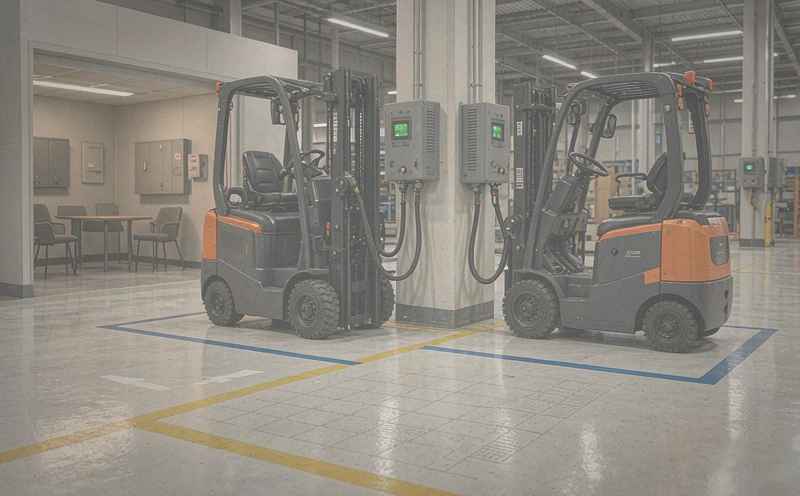
Charging is the part of a retrofit that touches the building, so it needs an electrician and a floor plan, not just a battery supplier. The goal is to replace one central battery room with small chargers placed where trucks already stop: break rooms, aisle ends, loading docks.
| Charge Rate | Current (48V 400Ah example) | Charger Power | Approx. Charge From Empty |
|---|
| 0.3C | 120A | About 5.8kW | About 3.3 hours |
| 0.5C | 200A | About 9.6kW | About 2 hours |
| 1C | 400A | About 19.2kW | About 1 hour |
The figures above are arithmetic from nameplate capacity at 48V, not a product claim, and real charge time depends on the charger curve and the pack temperature. The practical point is that a modest 0.3C charger placed at the right spot often beats a fast charger in the wrong one, because a twenty-minute opportunity charge at a break area removes the need for a full cycle at all. Check the site's spare electrical capacity before ordering chargers; that constraint has cancelled more retrofits than battery lead times ever have.
The Conversion, Step by Step
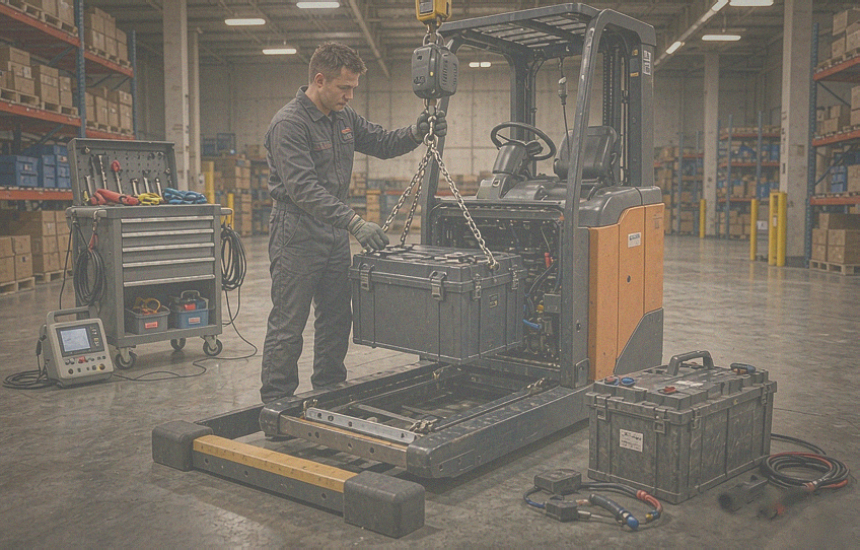
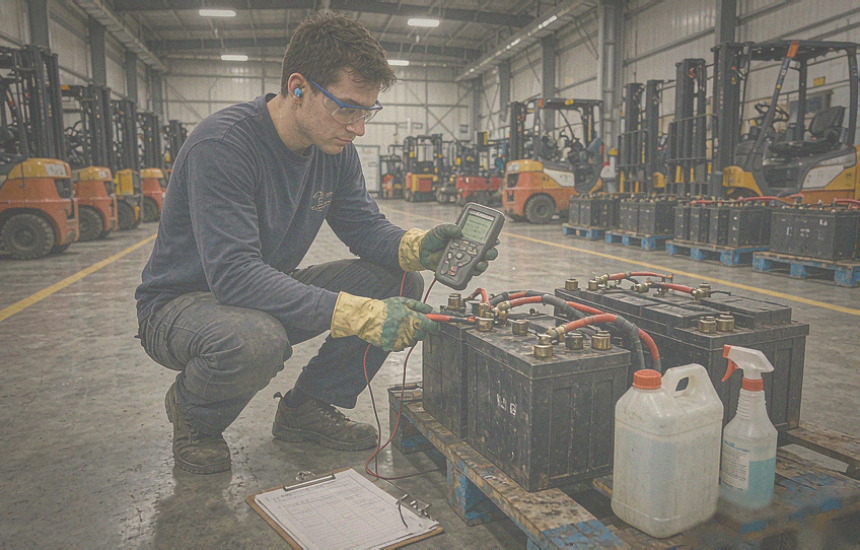
• Step 1: Remove the lead-acid pack safely. Confirm retrofit suitability first. The old pack is heavy and corrosive, so removal needs the right lifting gear, PPE and a documented hazardous-waste route to a licensed recycler rather than a skip.
• Step 2: Prepare the compartment. Clean residue, inspect for corrosion on the tray and restraints, verify the cable path and confirm the mounting interface matches the new enclosure drawing.
• Step 3: Install the pack and BMS. Secure the enclosure to the restraint points, torque to specification, connect the main leads and the communication cable, and confirm the charger and the BMS speak the same protocol.
• Step 4: Test and calibrate. Run a controlled charge and discharge, verify state of charge reporting, check that the truck derates as designed at low SOC, and recalibrate or add ballast where the weight change affects stability. Update the data plate before the truck goes back on the floor.
• Step 5: Train operators and maintenance staff. New charging habit, no watering, what the fault codes mean, what to do when a pack goes into protection, and who to call. Training is the cheapest part of the project and the one that determines whether the pack reaches its rated cycle life.
• Step 6: Watch the first 30 days. Log charge events, depth of discharge and any derating alarms per truck. A conversion is validated by data from real shifts, not by the commissioning sheet.
Four Risks That Stall Retrofit Projects
• Sticker shock. A lithium pack costs more per unit than lead-acid. Build the payback case on packs per truck, labour hours and downtime avoided, not on unit price, and keep the comparison over five years.
• Unplanned electrical work. Existing lead-acid chargers usually cannot serve lithium packs, and new circuits may need panel capacity. Price the electrical scope in the first budget, not the third.
• Safety assumptions left unmanaged. Lithium packs are safe when the BMS, enclosure and handling procedures are right, and risky when a short circuit or an overcharge is left to chance. Daily inspection and a clear procedure for damaged packs belong in the plan.
• A supplier who disappears. Ask for the lead time, the warranty terms, the spare parts path and who answers the phone in year three. A conversion is a ten-year relationship with a pack, not a one-off shipment.
What UFOPOWER Provides for a Retrofit
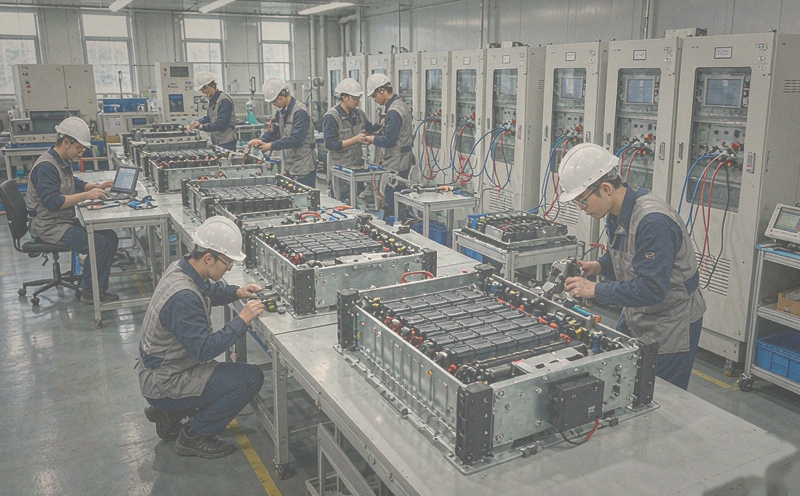
UFOPOWER is a professional lithium battery manufacturer building forklift packs on in-house production lines, factory-direct and to specification rather than from a fixed catalogue. For retrofit projects that means the pack is built around the truck instead of the other way around.
• Custom voltage and capacity. 24V, 48V and 80V platforms, with capacity derived from your duty-cycle data.
• Mechanical matching. Enclosure dimensions, restraint points, counterweight blocks and connector type built to fit the existing compartment.
• Controller communication. CAN or RS485 with a configurable protocol so the truck reports state of charge and derates cleanly.
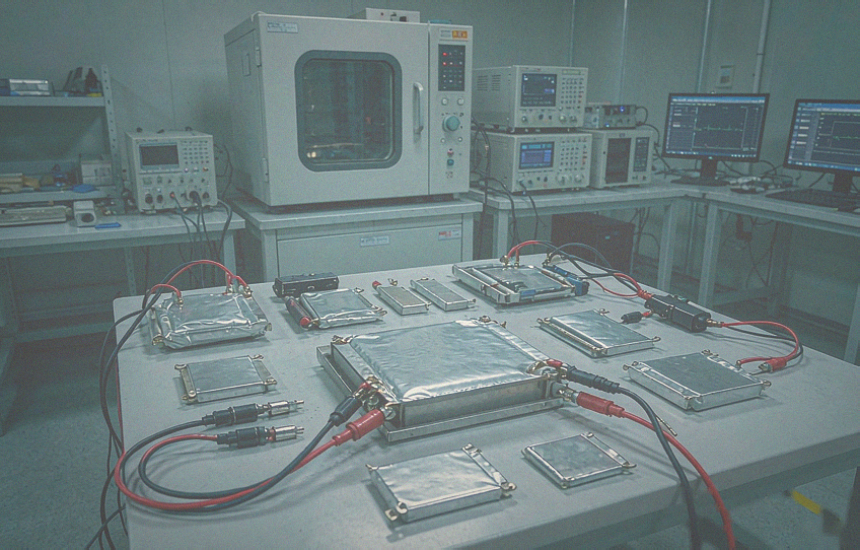
• Validation before volume. Sample build, bench and on-truck validation, then OEM or ODM production with batch traceability and 100 percent factory testing of capacity, internal resistance, charge and discharge behaviour and enclosure sealing.
If you are planning a conversion, send the truck models, shift pattern, peak lift loads and compartment dimensions. UFOPOWER will return a pack proposal in kWh, a charger layout and a five-year comparison against the lead-acid setup you are running today.


 EN
 AR
 DE
 ES
 FR
 JP
 KO
 PT
 RU
 Inicio >
 Nov 04, 2026








 de WhatsApp